
Breakfast & Brunch
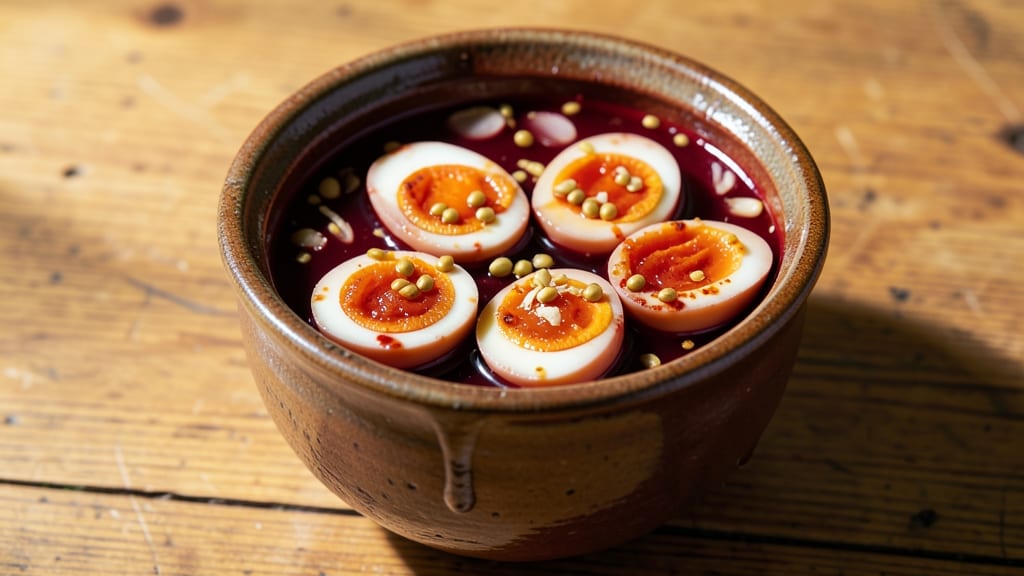
This red hot pickled eggs recipe transforms ordinary hard-boiled eggs into fiery, tangy bites that elevate any charcuterie board or breakfast spread. The secret lies in a carefully balanced brine of vinegar, cayenne, and aromatic spices that penetrates each egg, creating a perfect harmony of heat and acidity.
I developed this method after realizing how quickly store-bought pickled eggs lose their kick—this version keeps its bold flavor for weeks.
The process begins with hard-boiling eggs, then soaking them in a vinegar-based brine infused with cayenne, mustard seeds, and garlic for at least 24 hours. This isn't just pickling—it's a flavor transformation that turns simple eggs into restaurant-worthy appetizers.
The result is eggs with crisp edges, vibrant red coloring, and a heat level you can adjust to your preference.
What makes these eggs truly special is their versatility—serve them as a spicy snack, charcuterie centerpiece, or breakfast side. The tangy-spicy flavor profile cuts through rich meats and cheeses while adding a bold contrast to creamy spreads.
With just 10 minutes of active prep and minimal ingredients, you'll have a batch ready to impress.
Store them in the refrigerator for up to four weeks, where the flavors deepen and the heat intensifies. Perfect for meal prep or gifting, these pickled eggs prove that simple ingredients can deliver extraordinary results when combined with the right technique. Let's get started!
Ingredients for red hot pickled eggs
Twelve eggs transformed into bold, fiery bites—just five key ingredients and patience.
| Ingredient | Amount | Notes |
|---|---|---|
| Large Eggs 🥚 | 12 whole | Freshly boiled, peeled |
| White Vinegar 💧 | 2 cups | Distilled for clarity |
| Water 💧 | 2 cups | Filtered preferred |
| Cayenne Pepper 🔥 | 2 tbsp | Adjust for heat preference |
| Mustard Seeds 🌾 | 1 tbsp | Whole, yellow preferred |
| Garlic Cloves 🧄 | 4 cloves | Smashed, not minced |
| Salt 🧂 | 1 tbsp | Diamond Crystal preferred |
| Black Peppercorns 🌶️ | 1 tsp | Freshly cracked |
| Red Wine Vinegar 🍷 | ½ cup | For deeper color |
| Bay Leaves 🍃 | 2 whole | Dried, for aroma |
| Red Food Coloring 🎨 | ¼ tsp | Optional, for vibrancy |
The eggs are the foundation, so start with fresh, high-quality eggs—the yolks should be vibrant and firm. Costco or local farms often carry larger eggs with thicker shells, which hold up better during pickling. Boil them just until fully set (around 9 minutes), then cool in ice water to stop cooking. For the vinegar, distilled white vinegar is ideal—it’s neutral and won’t impart off-flavors, while red wine vinegar adds depth and color. If you’re using store-bought vinegar, check the label for purity; Heinz or White House brands are reliable choices. The cayenne is non-negotiable for heat—Penzeys or local spice shops carry high-quality cayenne, but even the basic grocery store variety works if it’s fresh (no clumping or dull color).
No red wine vinegar? Extra white vinegar plus a pinch of beet powder mimics the color. Short on mustard seeds? Ground mustard at half the amount works, though texture will differ slightly. The garlic cloves should be freshly smashed—this releases more flavor than mincing. For a milder heat, reduce cayenne to 1 tbsp and add 1 tsp smoked paprika instead. If you’re avoiding food coloring, the red wine vinegar and cayenne will still give a deep red hue, though it may vary slightly. Trader Joe’s often carries pre-smoked paprika if you want to experiment with flavor layers.
This brine keeps for up to 4 weeks in the fridge, with flavors intensifying over time. The eggs themselves stay crisp for 3-4 weeks if submerged fully. For gifting, transfer to clean jars with fresh brine—Ball or Mason jars are ideal. If you’re meal prepping, portion into small containers for easy snacking. The eggs can also be frozen for up to 3 months (though texture may soften slightly upon thawing). Always store with the brine to maintain flavor and safety.
Why You'll Love This Recipe
- Here’s what sold me: I can make a big jar on Sunday, and by Friday, I’m still snacking on them. They keep for weeks, cost next to nothing, and turn basic eggs into something special. My wallet and my taste buds both win.
- No-Stress Simplicity: I’ll be real—this recipe is the kind of thing you can make while scrolling through your phone. Hard-boil the eggs ahead, toss them in a jar with vinegar and cayenne, and walk away. No fussy peeling, no chopping, just a quick shake before popping them in the fridge.
- Heat That Stays: That cayenne and mustard seed combo? It’s not just spicy—it’s lingering. The eggs stay crispy on the outside with a creamy, tangy center that clings to your taste buds like a good story. Honestly, I’ve had people ask for seconds and then thirds.
- Party-Proof Snack: Between us, these are my secret weapon for gatherings. Serve them chilled with beer, toss them in a sandwich, or just eat them straight from the jar—no one will judge. They’re the kind of dish that disappears fast, so make a batch and thank me later.
Step-by-step instructions for red hot pickled eggs
Here’s the precise method for vibrant, fiery pickled eggs that elevate any charcuterie spread.
Boil and Peel the Eggs
Place the 12 whole large eggs in a saucepan and cover them with cold water by about 1 inch. Bring to a rolling boil over high heat, then reduce to a gentle simmer for exactly 9 minutes. This timing ensures firm whites and perfectly set yolks without overcooking.
Drain the hot water and transfer the eggs to an ice bath for 5 minutes to stop the cooking process. Using a small spoon or egg turner, gently tap each egg on a hard surface to crack the shell all over. Peel under cool running water to remove shells completely—this prevents discoloration in the brine. Set aside at room temperature until fully peeled.
Prepare the Spiced Brine
In a medium saucepan, combine the 2 cups white vinegar, 2 cups water, 2 tablespoons cayenne pepper, 1 tablespoon mustard seeds, the 4 smashed garlic cloves, 1 tablespoon salt, 1 teaspoon black peppercorns, 0.5 cup red wine vinegar, and the 2 whole bay leaves. Bring to a boil over medium-high heat, stirring occasionally to dissolve the salt and cayenne completely.
Real talk: The cayenne should be fully incorporated—if you see undissolved powder, strain the mixture through a fine-mesh sieve into a clean glass jar. This ensures even distribution of heat throughout the eggs. Let the brine cool to room temperature before proceeding, about 15 minutes.
Add Color and Assemble the Pickling Jar
Once the brine is cool, stir in the 0.25 teaspoon red food coloring until fully dissolved. This step is optional but creates that signature deep red hue that makes these eggs visually striking for gatherings. Transfer the cooled brine to a clean, sterilized quart-sized mason jar or airtight container.
Arrange the peeled eggs in a single layer at the bottom of the jar, standing upright. If using a jar, leave about 1 inch of headspace to prevent overflow during the pickling process. The eggs should be fully submerged in the brine—if not, add a bit more water to cover them completely.
Seal and Refrigerate for Maximum Flavor
Seal the jar tightly and refrigerate for at least 48 hours before consuming. The longer they pickle—up to 2 weeks—the more intense the flavor becomes. I like to give them 72 hours for a perfect balance of heat and tang.
After the initial 48 hours, check the eggs daily. They’re ready when the brine takes on a deep red hue and the eggs develop a subtle spicy aroma. Store in the fridge for up to 2 weeks, though they’ll disappear from your charcuterie board much sooner.
Pro Tips For Making Red Hot Pickled Eggs
- USE FRESH EGGS ONLY: I learned this the hard way—old eggs (over two weeks) turn rubbery and absorb too much vinegar, making them mushy. Crack them into ice water first to test freshness; if they sink flat-side down, they’re perfect for pickling.
- BOIL EGGS 9 MINUTES: Nine minutes gives you a jammy yolk without overcooking the whites. Start timing from when the water returns to a full boil after adding eggs—don’t trust the clock on your stove. Undercooked eggs? They’ll taste raw. Overcooked? You’ll regret it.
- STEER CLEAR OF ALUMINUM: Vinegar eats through aluminum pots like they’re not there, leaving a metallic taste in your pickling liquid. Use stainless steel or glass—it’s worth the extra few bucks to avoid that weird aftertaste that ruins everything.
- TOAST YOUR MUSTARD SEEDS: Dry-toast the mustard seeds in a skillet for 30 seconds before adding them to the vinegar. This cracks their skins just enough to release flavor without bitterness—trust me, it makes a real difference. Skip this, and you’ll just be chewing tiny, bland pebbles.
Pro cooking tips for great red hot pickled eggs
Brine Temperature Control
Your brine should be room temperature (about 70°F) when added to the jar to prevent thermal shock that could crack the eggs. If the brine cools too quickly after boiling, place the jar in a lukewarm water bath for 5 minutes to stabilize the temperature.
I use a thermometer to check—brine below 60°F risks condensation and uneven pickling. 🌡️
Egg Selection Matters
Choose large eggs with thick shells—they hold up better during pickling. I recommend Costco or local farm eggs because their shells are less porous, preventing premature discoloration. Crack the shells gently before peeling to avoid breaking the yolks.
For extra crispness, boil eggs in salted water (1 tbsp salt per quart) to firm up the whites faster.
Spice Distribution
Stir the brine vigorously after adding cayenne to ensure even heat distribution. For extra bold flavor, add 1 tsp smoked paprika to the brine before cooling. If you prefer a smoother texture, strain the brine through a fine-mesh sieve to remove whole mustard seeds and peppercorns.
This step is optional but creates a cleaner, more refined bite. 🔥
Color Consistency
For vibrant red eggs without food coloring, use 1 tbsp beet powder in the brine. If you’re using red wine vinegar, add 1 tsp turmeric for extra depth. The color will intensify over 48 hours—check after 2 days to avoid over-pickling.
Store eggs in amber glass jars to protect from light, which can dull the hue over time.
Storage Longevity
Transfer eggs to a clean jar with fresh brine every 2 weeks to maintain crispness. For longer storage, freeze eggs in their brine for up to 3 months—thaw in the fridge overnight before serving.
I like to portion them into small mason jars for easy snacking. Always keep them submerged in liquid to prevent spoilage. ❄️
Heat Level Adjustments
For milder heat, reduce cayenne to 1 tbsp and add ½ tsp ground cinnamon for warmth. If you love spice, increase cayenne to 3 tbsp and add 1 tsp crushed red pepper flakes to the brine.
Taste the brine before adding eggs—it should be noticeably spicy but not overwhelming. Adjust gradually to avoid burning your palate. 🌶️
Nutrition facts
Frequently asked questions
Can I use regular vinegar instead of white vinegar for these pickled eggs?
White vinegar is ideal because it's neutral and won't add unwanted flavors. However, if you only have apple cider or red wine vinegar, you can use them—just reduce the amount by ½ cup and add ½ cup extra water to maintain the same liquid ratio. The flavor profile will be slightly different but still delicious.
How do I make these pickled eggs less spicy?
Reduce the cayenne to 1 tablespoon instead of 2, and add ½ teaspoon ground cinnamon or 1 teaspoon smoked paprika for warmth without heat. You can also briefly rinse the eggs in cold water before serving to mellow the spice. Taste the brine before adding eggs to adjust!
Can I make these pickled eggs in a smaller batch?
Halve the recipe by using 6 eggs, 1 cup white vinegar, 1 cup water, 1 tablespoon cayenne, and ½ tablespoon mustard seeds. Use a pint-sized jar instead of a quart jar. The flavor will be just as bold, but the portion will be perfect for 2-3 people or a small charcuterie board.
Why did my pickled eggs turn out pale or dull in color?
Pale eggs usually mean the vinegar wasn't acidic enough or the eggs weren't fully submerged. For deeper color, add ½ teaspoon red food coloring or 1 tablespoon beet powder to the brine. Also, ensure the eggs are completely covered and use red wine vinegar for extra vibrancy. Light exposure can also dull the color, so store in an opaque or amber jar.
How long can I keep these pickled eggs before they go bad?
When stored properly in the fridge, these pickled eggs stay fresh for 4-6 weeks. The flavor actually improves over time! For longer storage, transfer to a clean jar with fresh brine every 2 weeks. If you notice any off smells or slimy texture, discard them immediately. Freezing is also an option for up to 3 months.