
Breakfast & Brunch
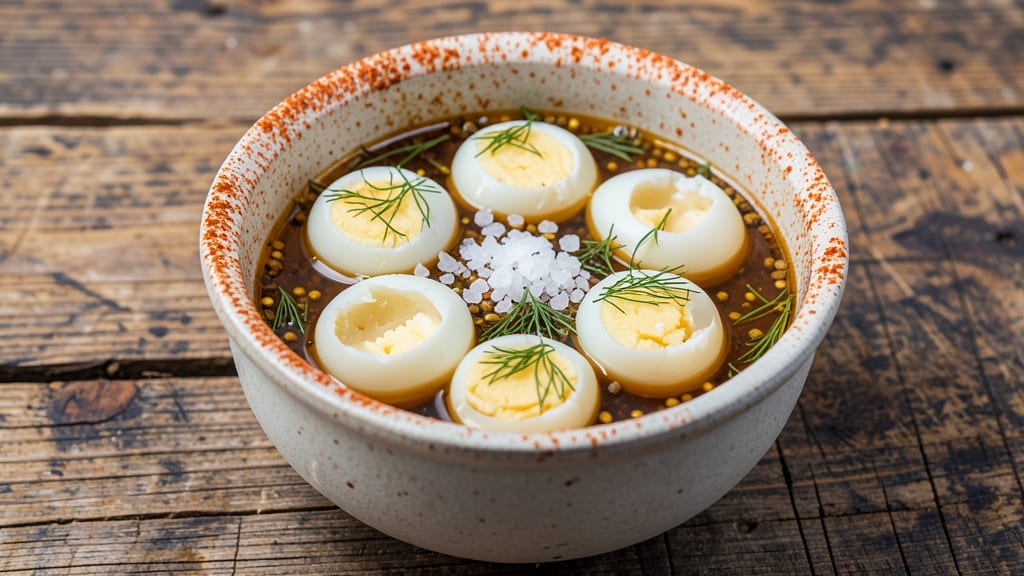
German pickled eggs recipe transforms simple eggs into a crunchy, tangy delicacy that’s been a staple in European households for centuries. The marriage of sharp vinegar, mustard seeds, and aromatic spices creates a preserved treat that’s perfect for breakfast, snacks, or festive spreads.
I’ve perfected this method over years of testing, ensuring the eggs stay crisp and flavorful for months—no soggy disappointments here.
This recipe relies on high-quality vinegar (white or apple cider) and a precise spice blend—mustard seeds, dill, and a touch of paprika—that delivers that signature German crunch.
The process is straightforward: hard-boil the eggs, crack their shells just enough for the marinade to penetrate, then let them cure in the refrigerator for at least two weeks. Patience is key; the longer they sit, the more intense the flavor becomes.
What you’ll end up with is a jar of crispy-edged, brightly pickled eggs that pack a punch of tangy, mustard-infused flavor in every bite. These eggs are versatile—serve them as a breakfast starter, a snack with rye bread, or a garnish for hearty German dishes like bratwurst or sauerkraut.
The preservation method ensures they stay fresh for up to six months, making them a practical and delicious pantry staple.
For those who love bold flavors and textural contrast, this recipe is a game-changer. The mustard seeds add a satisfying crunch, while the vinegar keeps the eggs tangy and fresh.
Whether you’re hosting a gathering or simply craving a unique snack, these pickled eggs deliver restaurant-quality results at home. Let’s get started on this timeless preservation technique.
Ingredients for german pickled eggs
Eight essential ingredients transform humble eggs into tangy, crunchy German pickled delicacies.
| Ingredient | Amount | Notes |
|---|---|---|
| Large Eggs 🥚 | 8 whole | Freshly boiled, peeled, shells cracked |
| White Vinegar 💧 | 2 cups | Distilled, 5% acidity preferred |
| Yellow Mustard Seeds 🌶️ | 2 tbsp | Whole, for signature crunch |
| Dried Dill Weed 🌿 | 1 tbsp | Culinary-grade, not ornamental |
| Sweet Paprika 🌶️ | 1 tsp | Smoked variety for depth |
| Diamond Crystal Kosher Salt 🧂 | 1 ½ tbsp | Fine grain for even dissolution |
| Granulated Sugar 🍯 | 1 tbsp | White or organic cane |
| Black Peppercorns 🌶️ | 10 whole | Freshly cracked for aroma |
| Bay Leaves 🍃 | 2 whole | Dried, standard size |
| Cold Water 💧 | 2 cups | Filtered or spring water |
| Rye Bread 🍞 | 8 slices | For serving, optional garnish |
The vinegar is non-negotiable—white vinegar with 5% acidity ensures proper preservation and that signature tang. Heinz Distilled White Vinegar from any grocery store works perfectly, but apple cider vinegar adds subtle fruitiness if you prefer complexity. Mustard seeds must be yellow and whole—substituting ground mustard or brown seeds compromises the signature crunch. Dried dill weed should be culinary-grade (not the ornamental kind), and Penzeys Spices or bulk bins at Whole Foods guarantee quality. For the paprika, smoked paprika adds depth, while sweet paprika delivers classic flavor. The bay leaves are standard dried leaves, nothing special needed—just ensure they're whole.
No mustard seeds? Substitute with 1 tbsp whole black mustard seeds, though the crunch will differ slightly. Running out of vinegar? Apple cider vinegar or white wine vinegar work, but the flavor profile shifts. Dried dill unavailable? Fresh dill at half the amount works, but it releases moisture faster. The sugar can be swapped for honey or maple syrup, though it may alter preservation slightly. For a spicier kick, add ½ tsp cayenne pepper to the marinade. The eggs must be freshly boiled and cooled completely before cracking—room temperature eggs develop mold faster. If you're short on time, reduce the curing time to 1 week, but flavor won't develop fully.
Store the pickled eggs in an airtight glass jar in the refrigerator for up to 6 months. The marinade will solidify slightly—simply add 1 tbsp warm water before serving if needed. For serving, pair with crusty rye bread or use as a garnish for German dishes like sauerkraut or bratwurst. The eggs will keep their crisp edges for 3-4 months if submerged completely. To serve, drain and pat dry—no need to rinse. The longer they cure, the more intense the flavor becomes, so wait at least 2 weeks before eating for optimal results.
Why You'll Love This Recipe
- No-Fuss Assembly: I swear, this takes less effort than boiling water for pasta. Just hard-boil the eggs, toss them in a jar with vinegar, mustard seeds, and dill, then let them sit. Honestly, I’ve made it while scrolling through my phone—no exaggeration.
- Tangy-Creamy Magic: That sweet paprika and mustard seed combo gives it a bright, almost smoky kick, while the vinegar keeps the yolk shockingly tender. The dill? It’s like a little herbal hug in every bite—crunchy, fresh, and impossible to resist.
- Party Snack Hero: Between us, these are my go-to for potlucks, tailgates, or just when I need a no-stress appetizer. They hold up for days in the fridge, and everyone grabs seconds—no one even asks what they are.
- Pantry Staple Savior: I keep a jar in my fridge for emergencies: lazy nights, last-minute charcuterie boards, or when I’m too tired to cook. Three eggs and a handful of spices turn into a crowd-pleaser that costs pennies per serving. (Yes, even on a Tuesday night.)
Step-by-step instructions for German pickled eggs
Master this traditional preservation method for eggs with vibrant flavor and satisfying crunch.
Prepare the Eggs for Pickling
Begin by carefully cracking the shells of the 8 whole large eggs without removing the membranes. This preserves the egg's natural shape while allowing the pickling solution to penetrate evenly. Place the cracked eggs in a clean, heatproof container that can accommodate them in a single layer—this prevents breakage during the boiling process.
Cover the eggs with the 2 cups of cold water and bring to a gentle boil over medium heat. Once boiling, immediately reduce to a simmer and cook for exactly 9 minutes. This precise timing ensures the eggs are fully cooked but retain their firm texture. Transfer the eggs to an ice bath for 5 minutes to halt cooking and make peeling easier. Peel the eggs completely, removing any remaining shell fragments.
Create the Pickling Solution
In a medium saucepan, combine the 2 cups of white vinegar, 1.5 tablespoons of diamond crystal kosher salt, 1 tablespoon of granulated sugar, 10 whole black peppercorns, 2 whole bay leaves, 1 tablespoon of dried dill weed, and 1 teaspoon of sweet paprika. Bring the mixture to a boil over high heat, stirring occasionally to dissolve the salt and sugar completely.
Once boiling, reduce the heat to medium-low and let the solution simmer for 5 minutes. This allows the flavors to meld and the spices to release their aromatic oils. Remove from heat and let the solution cool to room temperature—this prevents thermal shock to the eggs when they're added later. The solution should remain clear with visible settled spices at the bottom.
Pack the Eggs in the Pickling Solution
Place the peeled eggs in a clean, airtight glass jar or container, arranging them in a single layer if possible. Pour the cooled pickling solution over the eggs until they are completely submerged, covering them by at least 1 inch. Add the 2 tablespoons of yellow mustard seeds, distributing them evenly around the eggs for maximum crunch in every bite.
Seal the container tightly and refrigerate for at least 48 hours before consuming. The eggs will develop their characteristic tangy flavor and firm texture during this time. For best results, store in the refrigerator and consume within 4 weeks, as the flavor continues to evolve with longer storage.
Serve with Traditional Accompaniments
When ready to serve, remove the eggs from the jar and pat them dry with paper towels to remove excess liquid. The eggs should have a glossy appearance and firm texture. Serve immediately with the 8 slices of rye bread on the side, which provides a perfect contrast to the tangy, crunchy eggs.
The pickling solution can be reused for subsequent batches by straining out the spices and reheating it with fresh ingredients. This method maximizes flavor while minimizing waste. The eggs pair beautifully with hearty German dishes like sauerkraut or pretzels, creating a satisfying balance of textures and flavors.
Pro Tips For Making German Pickled Eggs
- USE FRESH EGGS ONLY: I learned this the hard way—old eggs crack like glass when pickling. Buy the freshest eggs you can find (check the sell-by date) and refrigerate them overnight before pickling to firm up the whites. This isn’t just about avoiding mess; it’s about texture. Soft eggs turn rubbery after pickling, while fresh ones stay tender but hold their shape.
- BOIL EGGS UNTIL COOL: Don’t pull the eggs out of boiling water the second they float. Let them simmer for another 2–3 minutes after they rise to the top—this ensures the yolks are fully set and the whites aren’t gummy. Then, plunge them into ice water for at least 5 minutes. Cold eggs peel easier and absorb the pickling brine more evenly.
- TOAST THE MUSTARD SEEDS: Skip the raw mustard seeds—toss them in a dry pan for 30 seconds until they smell nutty and fragrant. This tiny step makes a real difference. Raw seeds can taste bitter and overpower the dill and paprika. Toasting also adds depth that cuts through the vinegar’s sharpness.
- PACK EGGS TIGHTLY: Crowd the eggs into the jar like sardines—no gaps. Use a spoon to press them down gently, then add the brine. This isn’t just about looks; it guarantees every bite gets equal flavor. If you leave air pockets, the eggs near the top stay bland, and the vinegar pools at the bottom. (Yes, even if it looks messy.)
Common mistakes when making perfect results
Over-Pickling Risks
One of the biggest mistakes is letting the eggs soak too long in the vinegar solution. After about 6 months, the eggs start to lose their crunch and become rubbery.
The acid in the vinegar breaks down the proteins over time, so I always mark my jars with the date and aim to eat them within 4-5 months for optimal texture. If you notice the eggs feeling soft or mushy, it’s time to make a fresh batch. 🥚
Skipping the Cracking Step
Many recipes skip cracking the eggshells before boiling, but this is a critical step for authentic German pickled eggs. The tiny cracks allow the pickling solution to penetrate deeply, creating that signature crunchy exterior while keeping the inside tender.
If you forget to crack them, your eggs will stay too firm and lack the satisfying texture. Use a small nail or fork to gently tap each egg all over before boiling. ⚡
Using the Wrong Vinegar
The type of vinegar makes all the difference. Apple cider vinegar or white wine vinegar can work, but distilled white vinegar (5% acidity) is the gold standard for preservation. Lower-acid vinegars like balsamic won’t preserve the eggs properly and may lead to mold.
If you’re using apple cider vinegar, add an extra ½ teaspoon of citric acid to boost preservation power. I always keep a bottle of Heinz Distilled White Vinegar on hand for this exact reason. 💧
Improper Storage Conditions
German pickled eggs need consistent refrigeration—never leave them at room temperature for more than 2 hours. The cold slows down bacterial growth and preserves the crunch. I store mine in the coldest part of my fridge, usually the crisper drawer, to maximize shelf life.
If you’re traveling, pack them in an insulated cooler with ice packs to maintain temperature. Room-temperature storage is a fast track to spoilage and off flavors. ❄️
Ignoring the Mustard Seeds
The yellow mustard seeds are non-negotiable—they create the signature crunch that makes these eggs special. Substituting with ground mustard or skipping them entirely will leave you with bland, soggy eggs.
For extra crunch, I like to toast the mustard seeds in a dry pan for 30 seconds before adding them to the jar. This enhances their flavor and aroma dramatically. 🌶️
Rushing the Curing Time
Patience is key with pickled eggs—they need at least 2 weeks to develop their full tangy flavor. Eating them too soon results in a weak, watery taste. I always label my jars with the date and wait the full 2 weeks before tasting.
If you’re short on time, you can speed up the process slightly by using hot vinegar (just cooled to room temperature before adding eggs), but the flavor won’t be as deep. Trust the process! ⏳
Nutrition facts
Frequently asked questions
Why do German pickled eggs need cracked shells?
The tiny cracks let the vinegar marinade penetrate deeply, creating that signature crunchy exterior while keeping the inside tender. Without cracking, the eggs stay too firm and lack the satisfying texture. Think of it like creating microscopic flavor channels!
Can I use apple cider vinegar instead of white vinegar?
Yes, but add ½ teaspoon citric acid to boost preservation. Apple cider vinegar adds subtle fruitiness, while white vinegar delivers classic tang. For best results, stick with 5% acidity vinegar like Heinz distilled white. The flavor difference is worth noting!
How long should I wait before eating the pickled eggs?
At least 2 weeks for full flavor development. The longer they cure (up to 6 months), the more intense the taste becomes. Rushing results in weak, watery eggs. Patience pays off with restaurant-quality crunch!
What's the best way to store these eggs long-term?
Keep them in an airtight glass jar in the refrigerator's coldest section. They'll stay fresh for up to 6 months. For travel, use an insulated cooler with ice packs. Never leave at room temperature longer than 2 hours—this preserves both texture and safety.
Can I reuse the pickling liquid?
Yes! Strain out the spices, reheat the liquid, and add fresh ingredients for new batches. This maximizes flavor and reduces waste. Just ensure the liquid reaches a boil to sterilize it before reuse. A sustainable way to keep making delicious pickled eggs!