
Beverages
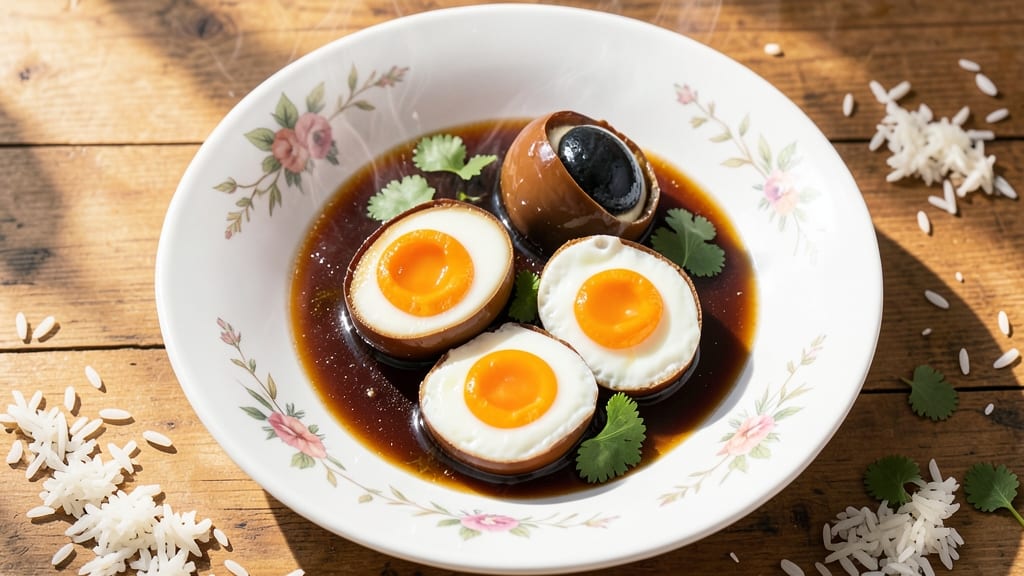
This steam egg with century egg recipe transforms two iconic Chinese ingredients into a single, umami-rich dish that balances textures and flavors perfectly. The century egg's salty-sweet profile meets the delicate, custardy steam egg in a harmonious bite that's both traditional and unexpected.
I first discovered this combination while researching regional Chinese cuisine, where contrasting textures create depth that single ingredients simply can't match.
The beauty of this dish lies in its simplicity—just two main components that require precise preparation techniques. The century egg needs proper soaking and marinating to develop its signature flavor, while the steam egg achieves its signature silky texture through gentle heat control.
Together, they create a dish that's as impressive to serve as it is delicious to eat, perfect for introducing guests to authentic Chinese flavors.
What you'll achieve is a bowl where each spoonful delivers a perfect marriage of textures: the creamy, almost jelly-like steam egg paired with the century egg's firm yet tender bite.
The umami depth comes from the century egg's preservation process, while the steam egg adds a clean, delicate contrast that keeps the palate refreshed. This isn't just a recipe—it's an introduction to how Chinese cuisine plays with texture and flavor in ways Western palates often miss.
Serve with a side of steamed jasmine rice to soak up every last bit of the rich, briny-sweet sauce, or accompany with pickled vegetables for additional tang.
The contrast of temperatures and textures makes each bite an experience. Let's create this dish that bridges tradition and innovation in a single bowl.
Ingredients for steam egg with century egg
Two iconic Chinese ingredients meet precise technique for a dish that balances umami and texture perfectly.
| Ingredient | Amount | Notes |
|---|---|---|
| Century Eggs 🥚 | 4 whole | High-quality, properly preserved |
| Egg Whites 🥚 | 4 large | Room temperature for even cooking |
| Egg Yolks 🥚 | 4 large | Room temperature for silky texture |
| Jasmine Rice 🌾 | 1 ½ cups | Uncooked, long-grain preferred |
| Light Soy Sauce 🥢 | 2 tbsp | High-quality, low-sodium preferred |
| Dark Soy Sauce 🥢 | 1 tbsp | For authentic umami depth |
| Sesame Oil 🫒 | 1 tbsp | Toasted, for finishing |
| White Vinegar 🍶 | 1 tbsp | For century egg marinade |
| Granulated Sugar 🍚 | 1 tbsp | For century egg marinade |
| Fresh Ginger 🧄 | 1 inch | Thinly sliced, peeled |
| Green Onions 🧅 | 3 whole | Thinly sliced, for garnish |
| Salt 🧂 | ½ tsp | Diamond Crystal preferred |
| Vegetable Oil 🫒 | 2 tbsp | High smoke point for steaming |
The century eggs are the foundation—authentic preservation is critical. Look for eggs with bright green yolk centers and smooth, unbroken shells at specialty Asian markets like H Mart or 99 Ranch Market. If you can't find them fresh, frozen century eggs work but require extra soaking time. The steam egg's success hinges on room-temperature eggs—cold whites won't set properly. For the rice, jasmine rice from Thailand delivers the ideal fragrance, though any long-grain variety will suffice. The soy sauces should be Japanese-style for the light variety and Chinese dark soy for depth—substituting with regular soy sauce will dilute the complexity.
No century eggs? Preserved duck eggs offer a similar salty-sweet profile, though the texture differs slightly. For the steam egg, silken tofu at half the quantity creates a comparable custardy texture when steamed. The ginger can be substituted with 1 tsp ground ginger, but fresh is ideal for its aromatic punch. If you're short on green onions, scallions or chives work equally well for garnish. The sesame oil must be toasted—regular sesame oil lacks the nutty depth. For an extra umami boost, add 1 tsp fish sauce to the century egg marinade, though it's optional. The vegetable oil should have a high smoke point (375°F+)—canola or peanut oil works best.
Century eggs should be soaked in cold water for 20 minutes before slicing to enhance their flavor. Store them in an airtight container in the fridge for up to 2 weeks after opening. The steam egg mixture keeps for 2 days in the fridge before serving—reheat gently in a steamer or microwave. For long-term storage, freeze the steam egg mixture in ice cube trays and transfer to a bag; thaw overnight in the fridge. The rice reheats beautifully—simply steam again with a splash of water. Garnishes like green onions should be stored in a damp paper towel-lined container to maintain freshness for 5-7 days.
Why You'll Love This Recipe
- Five-Ingredient Magic: I swear, this dish proves you don’t need a fancy pantry. Century eggs, egg whites, yolks, jasmine rice, and a splash of soy—that’s it. No chopping, no blending, just a steamer and 15 minutes of hands-off time.
- Umami Bomb Combo: The century egg’s deep, funky richness meets the delicate silkiness of steamed whites and yolks. Honestly, that first bite where the flavors collide? It’s the kind of dish that makes you pause mid-chew because it’s that good.
- Lunchbox Hero: Between us, this is my go-to for meal prep. Pack the rice and eggs separately, then assemble when you’re ready—no soggy textures, just restaurant-quality bites. (Yes, even on a Tuesday night.)
- Budget Breakthrough: Century eggs might sound exotic, but they’re cheaper than takeout for two. Plus, the rice stretches forever, so you’re feeding a crowd without breaking the bank. My wallet and my taste buds both win.
Step-by-step instructions for steam egg with century egg
This method balances delicate textures and bold flavors in a single bowl—here's how to execute it flawlessly.
Prepare the Century Egg Marinade
In a small bowl, whisk together the 1 tablespoon white vinegar, 1 tablespoon granulated sugar, 2 tablespoons light soy sauce, and 1 tablespoon dark soy sauce until the sugar fully dissolves. This marinade enhances the century eggs' signature texture while adding depth of flavor. The acidity in the vinegar helps tenderize the eggs slightly, while the sugars caramelize during cooking for a subtle glossy sheen.
Peel the 4 whole century eggs—gently crack the shells and slip out the yolks, then rinse the whites under cold water to remove any membrane. Place the peeled eggs in the marinade and let them soak for at least 15 minutes at room temperature. This ensures even flavor absorption and prevents the eggs from drying out during steaming.
Assemble the Steaming Components
In a heatproof bowl large enough to hold all ingredients, combine the 4 large egg whites and 4 large egg yolks. Whisk gently until just blended—no need for stiff peaks, as we're creating a silky, custard-like texture rather than a meringue. Add the 1.5 cups jasmine rice and mix thoroughly to distribute the eggs evenly. The rice will absorb moisture and create a delicate, slightly chewy bite that contrasts beautifully with the century eggs.
Next, add the marinated century eggs to the bowl, nestling them gently among the rice-egg mixture. Sprinkle the 0.5 teaspoon salt and 1-inch fresh ginger (thinly sliced) over the top. The ginger adds a bright, aromatic counterpoint to the umami richness of the century eggs and soy sauce. Cover the bowl loosely with plastic wrap or a damp kitchen towel to prevent evaporation during steaming.
Steam to Perfect Texture
Fill a wok or deep pot with 2 inches of water and bring to a rolling boil. Reduce heat to medium-low until the water simmers gently—this ensures even heat distribution without scalding the delicate egg mixture. Place a heatproof steamer basket or colander over the pot, ensuring it sits 1 inch above the water to allow steam to circulate freely around the bowl.
Carefully transfer the bowl to the steamer basket, cover with a lid, and steam for 12-15 minutes. The mixture is ready when the egg-rice combination reaches 160°F internally and the century eggs feel slightly firm to the touch but still jiggly in the center. Avoid oversteaming—the eggs should remain tender, not rubbery. If the water boils vigorously during steaming, reduce heat immediately to prevent condensation from diluting the flavors.
Finish and Serve with Umami Garnish
Remove the bowl from the steamer and let it rest for 5 minutes before serving. This resting period allows the residual heat to set the eggs slightly, creating a firmer texture that holds its shape when sliced. Drizzle with 1 tablespoon sesame oil and garnish with 3 whole green onions (thinly sliced), dividing them evenly over each serving. The sesame oil adds a nutty aroma and ties all the flavors together, while the green onions provide a fresh, crisp contrast.
Serve immediately while the steam egg is still warm. Each bite should offer a harmonious interplay of textures—the tender, custard-like egg-rice mixture, the creamy century egg yolk, and the slightly chewy rice. The dark soy sauce garnish (optional, brushed on top) adds visual drama and an extra layer of umami depth. For best results, serve with a side of pickled vegetables to cut through the richness.
Pro Tips For Making Steam Egg With Century Egg
- Peel Century Eggs First: I learned this the hard way—peeling century eggs before steaming saves you from a messy surprise later. The gelatinous skin sticks to the rice if you wait, and nobody wants to dig through their dish. Use a spoon to scoop out the yolk and white separately, then chop the whites into tiny cubes (they’ll soften beautifully when steamed).
- Whisk Yolks Until Ribbon-Thin: Don’t just crack the yolks in—whisk them until they’re glossy and stretch like silk before folding into the whites. This keeps the steam egg’s texture light and airy instead of dense. I used to skip this, and the result was always sad, compact puffs. Five extra seconds of whisking makes a real difference.
- Layer Rice Wet, Not Dry: Jasmine rice should be just damp when you pack it into the steamer basket—like a wrung-out sponge, not dripping. Dry rice burns on the bottom, and soggy rice turns the whole dish mushy. Spritz the rice with a spray bottle or toss it with a teaspoon of water before layering, then press it down firmly so it holds its shape while steaming.
- Steam Over Boiling Water: Your steamer’s water should be at a rolling boil when you lower the basket in—no simmering, no half-hearted heat. If the water’s just warm, the steam egg will turn out lukewarm and gummy. Keep the lid slightly ajar the first 2 minutes to let excess steam escape, then seal it tight. This guarantees the egg sets evenly without a waterlogged center.
Essential equipment for great steam egg with century egg
Steamer Essentials
Your steamer is the heart of this recipe—opt for a bamboo steam basket with a heatproof ceramic or stainless steel base for even heat distribution. I recommend the OXO Good Grips Steamer Basket for its sturdy construction and precise fit over most pots.
For larger batches, a wok with a built-in steamer insert (like the Made In Wok Steamer) works beautifully. Ensure your pot has at least 2-inch water capacity to maintain consistent steam levels throughout cooking. 🌡️
Heatproof Bowls
Use a heatproof glass or ceramic bowl (like Pyrex or Corelle) that fits snugly in your steamer basket. Avoid plastic—it can warp under steam and release chemicals. The bowl should be large enough to hold all ingredients without overflowing, but not so deep that steam can't circulate properly.
For extra insurance, place a damp paper towel between the bowl and basket to prevent sticking. I use a 10-inch oval bowl for this recipe.
Precision Thermometer
A digital instant-read thermometer (like the ThermoWorks Thermapen ONE) is non-negotiable for perfect steam egg texture. Insert it into the egg-rice mixture to monitor 160°F internal temperature—this ensures the eggs are set but still silky.
For century eggs, check their firmness visually rather than by temperature. A laser thermometer (like Kizen) works well for checking water temperature without disturbing the steam.
Century Egg Tools
Invest in a small peeler (like Mercer Culinary Genius) to carefully remove century egg shells without damaging the delicate membrane. A pair of kitchen tweezers helps handle peeled eggs during marinating.
For storage, use airtight glass containers (like Le Parfait) to preserve century eggs' freshness. I also keep white vinegar and sugar in separate small bottles for quick marinade adjustments. 🧂
Garnish Prep Kit
For professional garnishing, use a sharp microplane (like Barbagallo) to zest fresh ginger and a mandoline (set to 1mm thickness) for perfect green onion slices. A small squeeze bottle (like OXO Good Grips) makes sesame oil drizzling effortless.
Store all garnishes in damp paper towel-lined containers to maintain crispness. I keep a small cutting board dedicated just to century egg prep to avoid cross-contamination.
Backup Equipment
Have a small saucepan ready for reheating century egg marinade if needed, and a fine-mesh strainer to rinse peeled eggs thoroughly. A kitchen timer (like the Cuisinart Digital Timer) ensures precise steaming times.
For busy cooks, a multi-tiered steamer (like Norpro) lets you prep multiple components simultaneously. Keep a spray bottle with water nearby to refresh steam if it starts to dissipate mid-cook. ⚡
Nutrition facts
Frequently asked questions
What makes century eggs different from regular eggs?
Century eggs undergo a multi-week preservation process with clay, ash, salt, quicklime, and rice hulls, creating their signature dark green yolk and pale gray-white. This transforms them into a salty-sweet, firm yet creamy texture with umami depth. Regular eggs lack this complex flavor profile and delicate texture. The preservation process also removes the original yolk entirely, replacing it with the distinctive green center.
Can I substitute century eggs with preserved duck eggs?
Yes, but expect texture differences. Preserved duck eggs have a slightly firmer bite and less vibrant yolk color, but they deliver similar salty-sweet umami. For best results, soak duck eggs in the same marinade for 20-30 minutes to enhance flavor. The steam egg component will remain identical in preparation. For visual appeal, use duck eggs with darker shells as they often have richer yolks.
Why does the steam egg turn rubbery if overcooked?
Oversteaming causes the egg proteins to overcoagulate, creating a dense, rubbery texture instead of the desired silky custard. The ideal internal temperature is 160°F—any higher and the proteins tighten excessively. Use a digital thermometer to monitor precisely, and never exceed 15 minutes of steaming time. For extra insurance, remove the bowl 2 minutes early and let it rest covered.
How do I store leftover steam egg mixture?
Transfer leftovers to an airtight container and refrigerate for up to 2 days. To reheat, steam for 5-7 minutes until warmed through—microwaving can make the eggs grainy. For longer storage, freeze the mixture in ice cube trays, then transfer to a bag. Thaw overnight in the fridge before reheating. Century eggs keep 2 weeks refrigerated in their marinade.
What's the best way to serve this dish beyond plain rice?
Pair with pickled vegetables (like daikon or cucumber) to cut through the richness, or serve over congee for a comforting texture contrast. For a modern twist, add crispy fried shallots or toasted sesame seeds as garnishes. The dish also works beautifully as a banquet-style appetizer—slice into small portions and serve with chopsticks. For heat lovers, add a dash of Sichuan peppercorn oil or chili crisp before serving.