
Sauces & Condiments
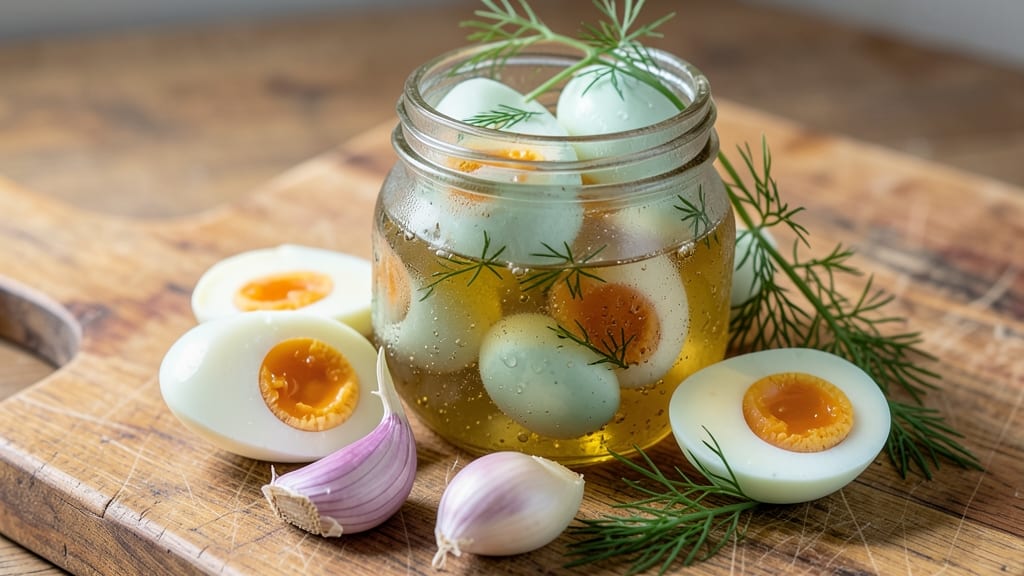
This pickled egg recipe transforms simple boiled eggs into tangy, crunchy bites without relying on dry pickling spices—just a few key ingredients and a quick brine soak.
The magic lies in balancing vinegar, sugar, and salt to create a flavorful liquid that tenderizes the whites while keeping yolks vibrant and firm. I developed this method after realizing store-bought pickled eggs never quite hit the mark, so I stripped it back to essentials.
The process is faster than you'd think—about 15 minutes of active prep followed by 24 hours of brining, which you can do hands-off in the fridge. No special equipment needed beyond a jar and a fine-mesh strainer for peeling eggs efficiently.
The result? Eggs with a tender yet slightly crisp texture, brightened by the tangy brine that clings to every bite. This technique works equally well with hard-boiled or soft-boiled eggs, depending on your preference.
What makes this recipe stand out is its versatility. Use the basic brine as a foundation, then customize with additions like mustard seeds, fresh dill, or a splash of hot sauce for extra depth. Serve them as a crunchy appetizer, tucked into sandwiches, or paired with charcuterie boards.
The eggs keep well in the fridge for up to 2 weeks, so you can make a big batch and enjoy them throughout the week.
For those who love texture contrast, try adding a pinch of smoked paprika or a few slices of jalapeño to the brine before adding the eggs. The key to success is patience—letting the flavors meld during the brining process ensures every bite is perfectly balanced.
Let's get started on this simple yet impressive dish!
Ingredients for pickled egg recipe no pickling spice
Eight simple ingredients create tangy, crunchy pickled eggs without pickling spices—just vinegar, sugar, and bold flavors.
| Ingredient | Amount | Notes |
|---|---|---|
| Large Eggs 🥚 | 8 whole | Hard-boiled or soft-boiled preferred |
| White Vinegar 🍶 | 2 cups | Distilled or white vinegar only |
| Granulated Sugar 🍚 | ½ cup | White or raw cane sugar |
| Diamond Crystal Kosher Salt 🧂 | ¼ cup | Not table salt—use 1:1 ratio |
| Fresh Dill Sprigs 🌿 | ¼ cup | Optional but recommended |
| Garlic Cloves 🧄 | 4 cloves | Smashed for stronger flavor |
| Black Peppercorns 🌶️ | 1 tbsp | Crushed lightly for texture |
| Mustard Seeds 🌾 | 1 tsp | Yellow or brown preferred |
| Red Wine Vinegar 🍷 | ¼ cup | For depth of flavor |
| Bay Leaves 🍃 | 2 whole | Dried, for subtle aroma |
| Jalapeño Slices 🌶️ | 2 slices | Seeds removed for mild heat |
| Water 💧 | 2 cups | Filtered preferred |
The vinegar is non-negotiable—white vinegar for classic tang, red wine vinegar for depth. Grab the cheapest white vinegar at Walmart or Trader Joe's; no need to splurge. Sugar balances the acidity, so raw cane sugar adds subtle caramel notes. For salt, Diamond Crystal kosher dissolves better than table salt—use 1:1 ratio if that's all you have. Fresh dill and garlic are worth hunting down at the farmers market (or grab the frozen section at Costco for budget-friendly options). The bay leaves and mustard seeds? Bulk bins at Whole Foods have the freshest, but grocery store dried works fine.
No fresh dill? Dried dill at half the amount gets you close. Short on mustard seeds? Ground mustard at 1/4 tsp works in a pinch. Want extra heat? Add 1/2 tsp cayenne pepper to the brine. The jalapeños can be swapped for banana peppers if you prefer mild heat. For a smoky twist, add 1/2 tsp smoked paprika to the brine. The eggs must be peeled carefully—cold water bath after boiling makes them easier to handle. No fine-mesh strainer? Rubber gloves work too—just be gentle.
This brine keeps for 1 month in the fridge, so make extra for future batches. Store the pickled eggs in their brine—no need to transfer. They’ll stay crispy for 2 weeks if submerged completely. For a quick snack, pop them straight from the fridge. Need to transport? Pack in a jar with extra brine—keeps them fresh for 3 days unrefrigerated. The yolks stay vibrant if you use fresh eggs (sell-by date within 2 weeks).
Why You'll Love This Recipe
- No-Spice Shortcut: I swear by this method—just eggs, vinegar, sugar, and salt. No measuring cups, no spice blends, no fuss. You crack, simmer, and let the fridge do the work. That’s it.
- Tangy-Creamy Magic: The vinegar cuts through the richness of the egg yolk like a cool breeze on a summer day. Fresh dill adds a bright, herby punch that makes every bite feel like a little celebration.
- Party-Ready Snack: Between us, these are my go-to for game day or brunch spread. No reheating, no last-minute stress—just pull them from the jar and watch them disappear. (Yes, even on a Tuesday night.)
- Pantry Goldmine: A jar lasts weeks, and the cost? Ridiculously cheap. Hard-boiled eggs get a second life with zero waste, and the sugar-salt brine keeps them crispy and addictive. Budget win.
Step-by-step instructions for quick pickled eggs without pickling spice
Here's how to create vibrant, tangy pickled eggs in under an hour using just pantry staples.
Prepare the Eggs for Brining
Begin by hard-boiling the 8 whole large eggs. Place them in a saucepan and cover with cold water by about 1 inch. Bring to a rolling boil over high heat, then immediately reduce to low heat and simmer for exactly 10 minutes. This ensures perfectly set whites while keeping yolks tender. Transfer eggs to an ice bath for 5 minutes to stop cooking, then peel carefully under cool running water to remove any residual shell fragments.
While the eggs cool, crush the 1 tablespoon black peppercorns lightly with a mortar and pestle or rolling pin to release their aroma. Smash the 4 cloves garlic with the flat side of your knife to intensify their flavor. These small preparations will elevate your brine's complexity without needing specialty spices.
Create the Flavor-Packed Brine
In a medium saucepan, combine the 2 cups white vinegar, 0.25 cup red wine vinegar, 0.5 cup granulated sugar, and 2 cups water. Bring to a gentle simmer over medium heat while stirring until the sugar dissolves completely. This should take about 3 minutes—the mixture should be clear with no graininess remaining.
Remove from heat and let cool slightly for 2 minutes, then stir in the 0.25 cup diamond crystal kosher salt, 2 whole bay leaves, 2 jalapeño slices, 0.25 cup fresh dill sprigs, crushed peppercorns, and smashed garlic. The liquid should turn a pale golden hue with visible herb flecks. Let the brine steep at room temperature for 10 minutes to allow flavors to meld.
Pack and Preserve the Eggs
Sterilize your preserving jars by rinsing with boiling water. Pack the peeled eggs tightly into the jars, leaving about ½ inch headspace at the top. Ladle the warm brine over the eggs until completely covered, then add the 1 teaspoon mustard seeds to each jar. The seeds will sink to the bottom, infusing subtle mustard notes throughout.
Seal the jars immediately with sterilized lids and let cool to room temperature. This cooling process creates a partial vacuum seal that preserves the eggs. For best results, refrigerate for at least 24 hours before eating—this allows the flavors to fully penetrate the eggs' surfaces.
Store and Enjoy Your Quick Pickles
The pickled eggs will keep in the refrigerator for up to 2 weeks, developing deeper flavor with each passing day. When ready to serve, remove an egg and pat dry with a paper towel. The exterior should be glossy with a faint golden tint, while the interior reveals a vibrant yolk surrounded by tender, tangy white.
For serving, slice the eggs in half lengthwise or leave whole for dipping. The brine makes an excellent condiment too—strain and reduce it slightly for a quick pickling sauce. These eggs shine on charcuterie boards, in salads, or simply enjoyed straight from the jar with crusty bread.
Pro Tips For Making Pickled Egg Recipe No Pickling Spice
- Boil Eggs 1 Minute Less: I learned this the hard way—overcooked eggs turn rubbery, no matter how much vinegar you add. Pull them from the water when the whites are just set (about 8-9 minutes for large eggs) and still slightly wobbly in the center. They’ll firm up perfectly in the pickling liquid.
- Use 1:1 Vinegar-to-Water: Equal parts white vinegar and water (1 cup each) keeps the eggs crisp without making them taste like a science experiment. Too much vinegar? They’ll soften faster. Too little? The flavor stays flat. Stick to the ratio—it’s foolproof.
- Pack Dill Tightly: Stuff the jar with dill sprigs before adding eggs—crush a few stems to release flavor, but leave the fronds intact. If you’re lazy and just toss them in after, the eggs won’t get that bright, herby punch you’re after.
- Add Salt Last: Wait until the vinegar mixture is just simmering before dissolving the sugar and salt. If you add salt to cold vinegar, it clumps like sad grits. Stir until fully dissolved, then pour over eggs while still warm—this guarantees even flavor distribution.
Regional styles of pickled egg recipe no pickling spice
Southern U.S. Mustard-Dill
The Southern approach to pickled eggs leans into bold, tangy flavors with a mustard-dill twist that’s become a classic at tailgates and picnics.
Here, I combine 2 tbsp yellow mustard seeds with 1 tbsp whole dill seeds in the brine, along with 1 tbsp apple cider vinegar swapped for half the white vinegar. The result?
A crunchy exterior with a creamy, slightly spicy bite—perfect for deviled egg fillings or as a crunchy topping on fried chicken sandwiches. 🌶️
For extra authenticity, add ½ tsp cayenne pepper to the brine and serve these eggs alongside pimento cheese or collard greens. The heat from the cayenne cuts through the richness of Southern fried foods beautifully.
I like to use Mason jars with wide mouths for easy serving straight from the fridge.
German-Style Beer Brine
In Germany, pickled eggs often use a beer-based brine for a malty depth that pairs perfectly with hearty dishes. Replace the white vinegar with 2 cups dark lager (like Guinness or Samuel Adams Black Lager) and add 1 tbsp coriander seeds and 1 tsp caraway seeds to the brine.
The beer’s bitterness balances the sweetness of the sugar, creating a complex flavor profile. These eggs are fantastic with pretzels, bratwurst, or sauerkraut.
For an authentic touch, use freshly cracked black pepper and thin slices of red onion layered between the eggs in the jar. The beer brine keeps the eggs tender for up to 3 weeks in the fridge, making it ideal for meal prep.
I’ve even used this technique for pickled quail eggs with stunning results.
Japanese Soy-Ginger
Japanese pickled eggs (tsukemono tamago) take a completely different approach, using a sweet and spicy soy-ginger brine that’s both vibrant and addictive. Replace the vinegar with 1 cup soy sauce, ½ cup mirin, and 2 tbsp rice vinegar.
Add 1 tbsp grated fresh ginger, 1 tbsp sesame seeds, and 1 tsp red pepper flakes to the brine. These eggs are a staple in bento boxes and pair wonderfully with sushi rolls or miso soup.
The key here is to marinate the eggs for at least 48 hours to let the soy sauce penetrate fully. For extra crunch, add crushed nori strips to the jar before sealing.
The result is a glossy, umami-rich egg with a subtle kick—perfect for those who love bold, Asian-inspired flavors. 🍶
Mediterranean Lemon-Oregano
Mediterranean pickled eggs shine with bright citrus and herbal notes, making them a refreshing addition to mezze platters. Use 1 cup white vinegar, ½ cup lemon juice, 2 tbsp olive oil, and 1 tbsp dried oregano in the brine.
Add 2 sprigs fresh rosemary and 1 tsp fennel seeds for depth. These eggs are incredible with hummus, olives, and warm pita bread.
For a coastal twist, add thin slices of lemon peel and a few kalamata olives to the jar. The olive oil in the brine keeps the eggs moist and adds a luxurious texture.
I love serving these with grilled lamb kebabs or as a topping for Greek salad. The lemon brightens the dish while the oregano adds an earthy warmth.
Nutrition facts
Frequently asked questions
Can I use apple cider vinegar instead of white vinegar?
Apple cider vinegar works beautifully and adds a subtle fruity depth to the flavor. Use it as a 1:1 replacement for white vinegar in the recipe. For extra complexity, try mixing half white vinegar with half apple cider vinegar—it creates a more nuanced tang that many home cooks prefer.
How do I get the eggs to stay crispy after pickling?
The secret is in the boiling and cooling process. Always use fresh eggs (sell-by date within 2 weeks) and boil them for exactly 10 minutes in well-salted water. The ice bath after boiling stops cooking instantly, while peeling them under cool running water preserves their texture. Store them fully submerged in the brine—they'll stay crispy for up to 2 weeks in the fridge.
What can I do if my eggs float in the brine?
Floating eggs usually mean the brine isn't acidic enough or the eggs weren't properly boiled. First, check that your vinegar-to-water ratio is correct (2:2 cups). If needed, add an extra ½ cup vinegar and stir. For the eggs, try re-boiling them for 2 extra minutes next time—they need a slightly denser interior to sink properly. If they're already floating, gently press them down with a clean spoon.
Can I make this recipe without fresh herbs like dill?
No problem! Use ½ teaspoon dried dill instead of fresh, or swap it entirely for 1 teaspoon mustard seeds or ½ teaspoon celery seeds for a different but equally delicious flavor profile. The key is maintaining the texture contrast—crushed peppercorns and mustard seeds work perfectly as substitutes while keeping that satisfying crunch.
How long can I store the pickled eggs?
When properly stored in an airtight container in the fridge, these pickled eggs will stay fresh and delicious for up to 2 weeks. The flavor actually improves over time as the eggs absorb more of the tangy brine. For longer storage, you can freeze the eggs (without the brine) for up to 3 months