
Breakfast & Brunch
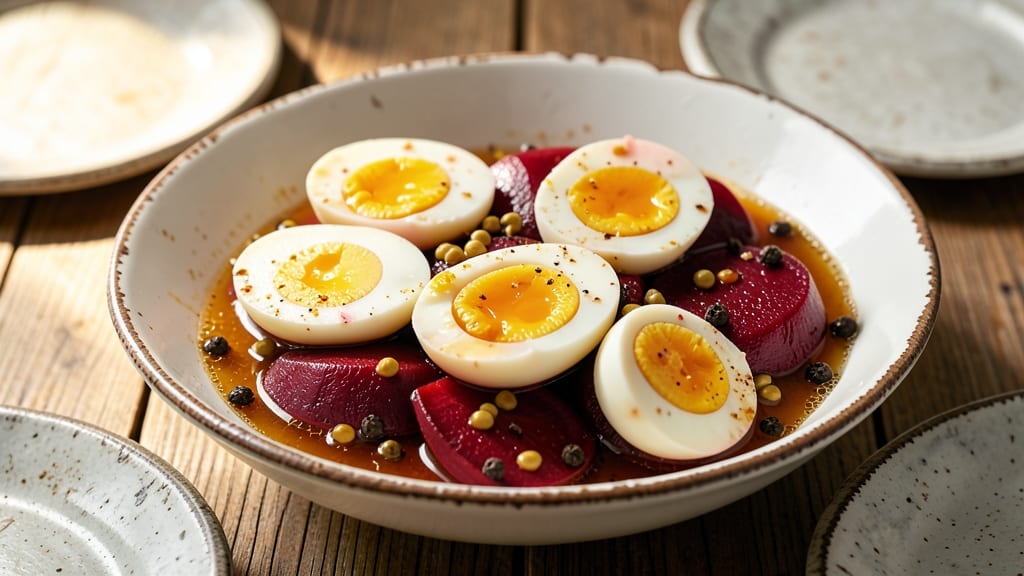
This old-fashioned pickled beets and eggs recipe brings a taste of Southern tradition to your breakfast table with its perfect balance of tangy, crunchy beets and creamy hard-boiled eggs.
The method preserves the beets in a bright vinegar-sugar brine infused with mustard seeds and black peppercorns, while the eggs boil up tender and ready to slice.
I first discovered this dish at a family reunion where my grandmother served it as a side to fried chicken, and it became an instant favorite—simple yet deeply satisfying.
The beauty of this recipe lies in its two-part process: first pickling the beets in a flavorful brine that enhances their natural sweetness, then boiling the eggs just until they reach that perfect firm-yolk stage.
The pickling liquid itself becomes a tangy, slightly sweet dressing that elevates every bite, while the eggs add a rich, creamy contrast. It’s the kind of dish that feels nostalgic yet fresh, with flavors that build on one another in every forkful.
What you’ll end up with is a Southern breakfast classic that’s as much about texture as it is about taste—crisp beets, smooth eggs, and a briny-sweet dressing that ties it all together.
The dish keeps well in the fridge, making it perfect for meal prep or serving at gatherings where hearty, no-fuss sides are always appreciated. This recipe delivers restaurant-quality results with minimal effort, proving that tradition and simplicity can go hand in hand.
Serve it alongside cornbread, fried chicken, or even as a standalone dish for a brunch that feels both comforting and refined. The key to success is patience—letting the beets pickle overnight ensures they absorb the flavors fully, while the eggs must be boiled just right to avoid overcooking.
Let’s get started on this Southern staple that’s as much about heritage as it is about flavor.
Ingredients for old fashioned pickled beets and eggs recipe southern
Southern tradition meets tangy crunch—just nine ingredients for this nostalgic breakfast classic.
| Ingredient | Amount | Notes |
|---|---|---|
| Medium Beets 🧅 | 2 whole | Red or golden, peeled and sliced |
| White Vinegar 🍶 | 1 ½ cups | White or apple cider vinegar |
| Granulated Sugar 🍚 | 1 cup | White or raw sugar |
| Large Eggs 🥚 | 4 whole | Room temperature for even cooking |
| Yellow Mustard Seeds 🌶️ | 1 tbsp | Whole seeds for texture |
| Black Peppercorns 🌶️ | 1 tsp | Crushed lightly for flavor |
| Salt 🧂 | 1 tsp | Kosher or sea salt |
| Fresh Dill 🌿 | 2 tbsp | Chopped, optional but traditional |
| Water 💧 | 1 ½ cups | Filtered or tap water |
The beets are the star here. Red or golden both work, but red holds its color best. Grab the pre-washed ones from Trader Joe's or Whole Foods—they're already peeled and ready to slice. If you're feeling fancy, try organic beets from the farmers market; they're sweeter and more vibrant. Slice them evenly so they pickle at the same rate. Mustard seeds and peppercorns? Penzeys has the best bulk bins, but any grocery store carries them. Just don't skip crushing the peppercorns—they add a subtle kick that balances the sweetness.
No mustard seeds? Dijon mustard at half the amount works in a pinch, but the crunch is key here. Fresh dill is traditional, but dried dill at one-third the amount gets you close. Vinegar options? Apple cider vinegar adds a fruity note, while white keeps it classic. The sugar can be swapped for honey or maple syrup if you prefer a deeper sweetness. And if you're short on eggs, extra-firm tofu cubes can mimic the texture—just boil them for 10 minutes instead of 9.
The pickled beets keep for 2 weeks in the fridge, and the eggs stay fresh for 1 week once boiled. Store them separately—beets in their brine, eggs in cold water. For meal prep, portion the beets into small jars with a splash of the pickling liquid. The eggs? Peel them right before serving so they don't get rubbery. This dish reheats beautifully—just warm the beets and eggs together for a quick Southern-style breakfast.
Why You'll Love This Recipe
- No-Fuss Pantry Magic: I swear by this one—just beets, vinegar, sugar, and eggs. That’s it. The mustard seeds add a tiny pop of heat, but the real work is done by the tangy brine soaking overnight. Honestly? It’s the kind of recipe where you don’t even need to chop much—just peel, slice, and let the jar do the rest.
- Sweet-Tart Bite Every Time: The vinegar cuts through the earthy beets while the sugar softens the edges, and those hard-boiled eggs? Perfection. The mustard seeds give it a subtle crunch, but the real star is the balance—like a Southern kiss of sweet and sour that sticks with you. (Yes, even on a Tuesday night.)
- Picnic to Potluck Hero: This keeps forever in the fridge, so it’s my go-to for church dinners, tailgates, or when I’m too tired to cook. Pack it in a mason jar, and suddenly you’ve got a showstopper side that’s zero effort. My in-laws think I’m a genius—between us, it’s just smart prep.
- Budget Meal Upgrade: Beets and eggs are dirt cheap, but this tastes like a fancy charcuterie board. I make a big batch for $8 and feed four people for days. The eggs add protein, the beets bring color, and the vinegar keeps it fresh. It’s my secret for stretching groceries without sacrificing flavor.
Step-by-step instructions for old-fashioned pickled beets and eggs
This Southern classic comes together faster than you'd think—crispy eggs, tangy beets, and a bright pickling liquid that makes every bite unforgettable.
Prepare the Pickling Liquid
In a medium saucepan, combine the 1.5 cups white vinegar, 1 cup granulated sugar, 1.5 cups water, 1 tablespoon yellow mustard seeds, 1 teaspoon crushed black peppercorns, and 1 teaspoon salt. Bring to a gentle boil over medium-high heat, stirring until the sugar dissolves completely—this should take about 2-3 minutes. The mixture will smell sweet and vinegary, with tiny seeds and peppercorns floating at the surface.
Once boiling, immediately reduce heat to low and let it simmer for 5 minutes to infuse the flavors. This step is crucial—it ensures the pickling liquid is flavorful enough to penetrate the beets and eggs. If you notice any sugar crystals lingering, give it a quick stir to dissolve them completely. The liquid should be clear with a golden hue from the sugar.
Cook and Pickle the Beets
While the pickling liquid simmers, peel and slice the 2 whole medium beets into ¼-inch thick rounds. You’ll want even slices so they cook uniformly. Add the beets to the simmering liquid and cook for 15-20 minutes until they’re fork-tender and slightly translucent at the edges. The beets should still hold their shape but yield easily when pierced with a fork.
Here’s the thing—don’t overcook them or they’ll turn mushy. You want that perfect balance of tenderness with a slight crunch. Once done, use a slotted spoon to transfer the beets to a clean glass jar, leaving the pickling liquid behind for now. The beets will continue to absorb flavor as they cool, so let them sit at room temperature for 10 minutes before proceeding.
Hard-Boil the Eggs
While the beets pickle, place the 4 whole large eggs in a small saucepan and cover them with cold water by about 1 inch. Bring to a boil over medium-high heat, then immediately reduce to low and simmer for exactly 10 minutes. This timing ensures the yolks stay creamy and the whites are firm enough to slice neatly. Don’t skip this step—overcooking turns eggs rubbery, and that ruins the whole dish.
Drain the eggs in an ice bath for 5 minutes to stop the cooking process. Once cooled, peel the eggs and slice them in half lengthwise. You can leave the yolks intact or gently press them to create a well for extra pickling liquid when serving. The eggs should be cool to the touch—this makes them easier to handle and ensures they don’t steam when combined with the warm beets later.
Combine and Serve
Return the pickling liquid to a gentle simmer (if it’s cooled completely) and pour it over the beets in the jar. Add the 2 tablespoons chopped fresh dill and let the mixture sit at room temperature for at least 30 minutes—this allows the beets to soak up the tangy, spiced liquid. The longer they sit, the more flavor they absorb, so if you have time, let them marinate overnight in the fridge for an even deeper taste.
To serve, arrange the beets and sliced eggs on a platter, drizzling the pickling liquid generously over the top. The contrast of the bright, tangy beets with the creamy eggs is what makes this dish so special. Garnish with extra dill if desired, and serve immediately while everything is still vibrant. This dish keeps well in the fridge for 3-4 days, so it’s perfect for meal prep—just reheat the eggs gently before serving.
Pro Tips For Making Old Fashioned Pickled Beets And Eggs Recipe Southern
- PEEL BEETS AFTER COOKING: Raw beets stain like a crime scene, but cooked ones peel effortlessly with a spoon. Roast them first—425°F for 45-50 minutes until tender—then shock in ice water. The skins slide off clean, and you won’t waste an hour scrubbing.
- BOIL EGGS HARDER THAN USUAL: Southern pickled eggs need to survive weeks in vinegar, so don’t skimp on the cook time. Use 12 minutes in boiling water, then ice bath immediately. Undercooked eggs get rubbery fast—trust the timer, even if they feel firm.
- BALANCE VINEGAR AND SUGAR: Too much vinegar makes the beets taste sour; too little sugar lets the acidity dominate. Aim for a 1:1 ratio by weight (e.g., 2 cups vinegar + 2 cups sugar for 4 beets). Taste the brine before adding eggs—adjust if it’s harsh.
- PACK EGGS IN TIGHT: Loose eggs in the jar? They’ll float, leaving gaps for mold. Nestle them snugly, then weigh them down with a small plate or beet slice. The pressure keeps them submerged, and the mustard seeds stay evenly distributed.
Essential equipment for this dish
Pickling Essentials
Start with a quart-sized glass jar—I use Ball Mason jars for their airtight seal and durability. These jars handle the acidity of vinegar and keep the beets crisp for up to 2 weeks in the fridge.
A medium saucepan with a tight-fitting lid is crucial for simmering the pickling liquid evenly without splattering. I recommend a stainless steel or enamel pan—they distribute heat better than aluminum and won’t react with the vinegar. 🍶
Egg Boiling Tools
For perfect hard-boiled eggs, a small saucepan (like a 3-quart stainless steel pot) works best—it heats water quickly and maintains even temperature. A slotted spoon is essential for transferring beets, and a fine-mesh strainer helps drain the eggs after boiling.
I also keep ice cubes in a bowl ready for the ice bath—this stops cooking instantly and makes peeling easier. A sharp chef’s knife (like a Wüsthof Ikon) is a must for slicing eggs cleanly. 🥚
Measuring Precision
Accurate measurements matter, so invest in a digital kitchen scale for the sugar and a liquid measuring cup for vinegar and water. A spice grinder or mortar and pestle helps crush peppercorns to your preferred texture.
I use a microplane for zesting optional citrus (like lemon) to brighten the pickling liquid. For storage, airtight containers (like Glasslock containers) keep the beets and eggs fresh separately. 🧂
Optional Upgrades
For a pro touch, a thermometer ensures the pickling liquid reaches 205°F—ideal for sterilizing jars and beets. A jar lifter makes handling hot jars safer, and silicon jar seals prevent leaks.
If you love dill, a small pair of kitchen shears chops it quickly. For presentation, a wooden serving board elevates the dish’s rustic Southern charm. 🌿
Budget-Friendly Swaps
No fancy tools? A large pot works for pickling, and a wooden spoon stirs just fine. Use a can opener to crush peppercorns (though it’s messier).
For storage, plastic containers with tight lids suffice temporarily. The key is keeping everything clean—hot soapy water and clean towels are your best friends. 💡
Nutrition facts
Frequently asked questions
Why do the beets need to pickle overnight?
Overnight pickling lets the beets fully absorb the tangy, spiced vinegar mixture, deepening their flavor and texture. The longer they soak, the more vibrant and complex the taste becomes—this is key to that authentic Southern tang you'd expect from a classic recipe.
Can I use canned beets instead of fresh?
Yes, but with adjustments! Drain and rinse canned beets, then simmer them in the pickling liquid for just 10 minutes to warm through. They won’t be as crisp, but the flavor will still shine. For best texture, fresh beets are ideal—they hold their shape and absorb flavors more evenly.
How do I prevent the eggs from turning greenish?
Use room-temperature eggs and an ice bath after boiling to stop cooking immediately. Overcooking causes the green ring—stick to exactly 10 minutes for perfect firm yolks. Also, avoid old eggs (older than 2 weeks), as they’re more prone to this issue.
What’s the best way to serve this dish?
This Southern classic pairs beautifully with warm cornbread, crispy fried chicken, or as a standalone brunch dish. For extra flair, drizzle the pickling liquid over everything and garnish with fresh dill. It’s also great in sandwiches or as a topping for salads!
Can I make this recipe without vinegar?
Vinegar is essential for pickling—it preserves the beets and creates that signature tang. However, you could try a lemon juice substitute (though it won’t pickle as effectively) or a fermented brine for a probiotic twist. The flavor will differ, but it’s worth experimenting!