
Breakfast & Brunch
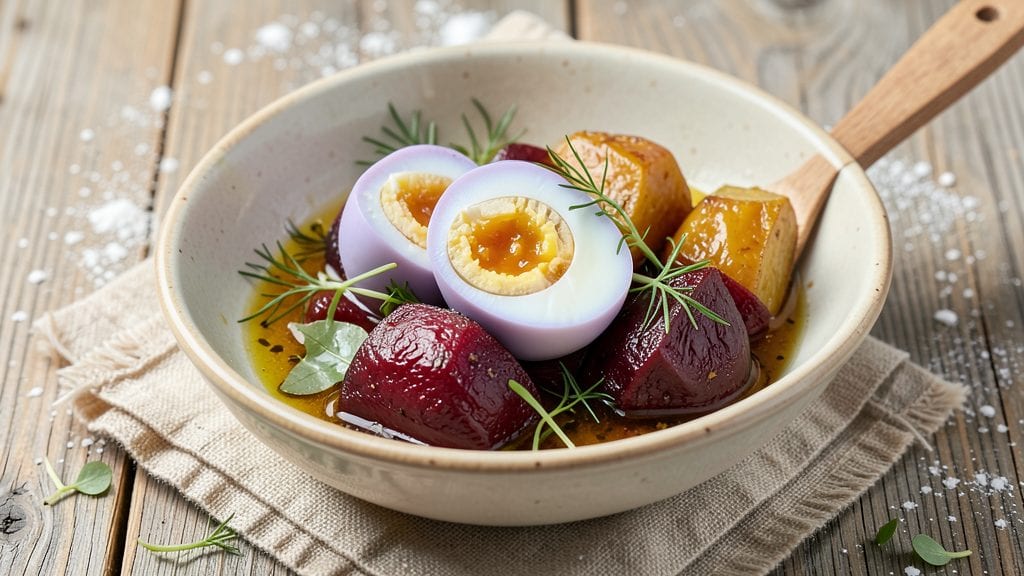
This pickled eggs and fresh beets recipe transforms simple ingredients into a vibrant, tangy-sweet spring dish that elevates any brunch table. The contrast of crisp pickled eggs with earthy, juicy beets creates a balance of textures and flavors that feels both nostalgic and refreshingly modern.
I developed this technique after experimenting with preserving eggs in vinegar and herbs—a method that adds crunch and acidity without overpowering the natural sweetness of the beets.
The key to success lies in the pickling process: a precise ratio of vinegar, sugar, and spices ensures the eggs stay firm and flavorful, while the beets roast until tender with a caramelized edge.
This recipe is perfect for home cooks who want to impress with minimal effort—no fancy equipment required, just a few hours of hands-off prep. The result is a dish that’s as visually striking as it is delicious, ideal for spring gatherings or a sophisticated weekend breakfast.
When assembled, the pickled eggs bring a sharp, briny crunch that cuts through the beets’ natural sweetness, creating a harmony of flavors that’s both unexpected and satisfying.
The presentation is effortless yet elegant: slice the beets into rounds, arrange the pickled eggs alongside, and finish with fresh herbs for a pop of color. This dish proves that bright, seasonal ingredients can deliver restaurant-quality results with just a little time and attention.
Whether you’re serving this as a standalone dish or pairing it with crusty bread and a simple salad, the combination of pickled eggs and roasted beets offers a refreshing twist on traditional spring plating.
The technique is foolproof, and the flavors develop even better the next day—making it perfect for meal prep or entertaining. Let’s get started on creating this vibrant, flavor-packed dish.
Ingredients for pickled eggs and fresh beets
Six fresh eggs, four vibrant beets, and a handful of herbs transform into spring's most striking dish.
| Ingredient | Amount | Notes |
|---|---|---|
| Large Eggs 🥚 | 6 whole | Fresh, preferably organic for best results |
| Red Wine Vinegar 💧 | 1 cup | High-quality, aged for depth |
| White Granulated Sugar 🍚 | ½ cup | Fine grain for even dissolution |
| Diamond Crystal Kosher Salt 🧂 | ¼ cup | Coarse grain for proper curing |
| Fresh Dill Sprigs 🌿 | ¼ cup | Tightly packed, stems removed |
| Fresh Bay Leaves 🍃 | 2 whole | Dried works at half quantity |
| Medium Beets 🍠 | 4 whole | Fresh, uniform size for even cooking |
| Extra-Virgin Olive Oil 🫒 | 2 tbsp | For roasting and finishing |
| Fresh Thyme Sprigs 🌿 | 2 whole | Stems removed for garnish |
| Garlic Cloves 🧄 | 1 whole | Smashed for roasting beets |
| Black Peppercorns 🌶️ | 1 tsp | Freshly cracked for pickling |
| Fresh Chives 🌱 | ¼ cup | Finely chopped for garnish |
The eggs are the foundation of this dish, so prioritize fresh, organic eggs for optimal texture and flavor. Costco or local farms often carry the best quality in bulk, while grocery stores typically stock conventional eggs that work fine for pickling. For the vinegar, red wine vinegar adds depth, but apple cider vinegar offers a milder tang—choose based on your preference for acidity. The beets should be uniform in size for even roasting; organic beets often have a sweeter flavor profile due to their natural growing conditions. Fresh herbs like dill and thyme are essential for aromatic complexity, but dried herbs at half the quantity can substitute if fresh isn't available. The pickling process requires precision: use Diamond Crystal kosher salt for proper curing, as its coarse grains dissolve more evenly than table salt.
If you're short on fresh dill, dried dill at one-third the quantity works, though the flavor will be less pronounced. Substituting apple cider vinegar for red wine vinegar mellows the acidity, which may appeal to those sensitive to strong flavors. For the beets, canned beets in vacuum-sealed packs can be used in a pinch, though they lack the caramelized texture of roasted fresh beets. The garlic clove should be lightly smashed to release its oils without breaking apart, enhancing the beets' roasted flavor. If you prefer a milder presentation, omit the black peppercorns entirely—they add a subtle heat that complements the dish's bright flavors. For garnish, fresh chives or parsley both work beautifully, though chives offer a more delicate onion note that pairs perfectly with the beets' earthiness.
Pickled eggs maintain their quality for up to 3 months when stored in the refrigerator, though their flavor improves over time. The beets can be roasted up to 2 days in advance and stored in an airtight container, retaining their texture and sweetness. For optimal presentation, slice the beets into 1/4-inch rounds just before serving to prevent browning. The pickling liquid can be reused for up to 2 additional batches of eggs, though the flavor will gradually mellow. To extend freshness, store the pickled eggs submerged in their liquid, and keep the beets wrapped in parchment paper to maintain moisture. This dish's components develop even better when assembled the day before, allowing flavors to meld harmoniously.
Why You'll Love This Recipe
- No Boiling Required: I just hard-boil a batch of eggs once, then toss them into the vinegar brine with beets—no extra cooking needed. The eggs stay tender, and the beets soak up that tangy-sweet flavor like a dream.
- Tangy-Sweet Magic: That red wine vinegar cuts through the richness of the eggs while caramelizing the beets into something almost jammy. Honestly, the contrast is ridiculously good—bright, earthy, and just a little addictive.
- Picnic & Party Star: Between us, this is my go-to for potlucks or lazy summer days. Pack the jarred eggs and beets in a cooler, and you’ve got a no-fuss side that’s as pretty as it is delicious—no reheating needed.
- Pantry Goldmine: I make a big batch because the eggs keep for weeks in the fridge, and the beets last even longer. Plus, the ingredients? Sugar, salt, vinegar—stuff you already have. Budget-friendly doesn’t get much better than this.
Step-by-step instructions for pickled eggs and fresh beets
This method delivers vibrant, perfectly balanced pickled eggs and tender roasted beets with crisp edges.
Prepare the Eggs and Roast the Beets
Preheat your oven to 400°F. Scrub the 4 whole medium beets clean, leaving the skins intact. Place them on a baking sheet, drizzle with the 2 tablespoons extra-virgin olive oil, and wrap each beet tightly in aluminum foil. Roast for 45-50 minutes until tender when pierced with a knife. Let cool slightly before peeling.
While the beets roast, carefully crack the 6 whole large eggs into a heatproof bowl, being mindful not to break the yolks. Place this bowl over a pot of simmering water (not boiling) and gently whisk for 6 minutes until the whites are set but yolks remain runny. Immediately transfer the eggs to an ice bath to stop cooking, then peel and place in a clean container.
Create the Pickling Brine
In a medium saucepan, combine the 1 cup red wine vinegar, 0.5 cup white granulated sugar, and 1 teaspoon freshly cracked black peppercorns. Bring to a gentle simmer over medium heat for 3 minutes, stirring until the sugar fully dissolves. Remove from heat and let cool for 10 minutes.
Add the 0.25 cup tightly packed fresh dill sprigs, 2 whole fresh thyme sprigs, 2 whole fresh bay leaves, and the 1 whole smashed garlic clove to the cooled vinegar mixture. Stir gently to incorporate the herbs. This aromatic blend will infuse the eggs with complex herbal notes that complement the acidity.
Pack and Pickle the Eggs
Pour the warm vinegar mixture into a clean, airtight quart-sized jar. Using a slotted spoon, carefully place the peeled eggs into the jar, packing them snugly. Add the peeled and cooled beets alongside the eggs, arranging them to fit comfortably. The beets should be partially submerged in the liquid.
Sprinkle the 0.25 cup diamond crystal kosher salt evenly over the eggs and beets, then pour any remaining vinegar mixture over the top to ensure complete submersion. Seal the jar tightly and refrigerate for at least 24 hours, though they'll continue developing flavor for up to 5 days.
Finish and Serve
Before serving, remove the eggs and beets from the jar and pat them dry with paper towels. The pickling liquid can be reserved for drizzling or used in dressings. Garnish each serving with finely chopped fresh chives for a bright, fresh contrast to the tangy eggs and earthy beets.
Serve the pickled eggs and beets chilled as a sophisticated starter, paired with crusty bread or incorporated into spring salads. The vibrant colors create an appealing visual contrast, while the balance of acidity, sweetness, and herbal notes makes this dish a standout spring centerpiece.
Pro Tips For Making Pickled Eggs And Fresh Beets
- BOIL EGGS UNTIL COLD: DESCRIPTION:
- USE COLD VINEGAR: DESCRIPTION:
- SALT THE EGGS FIRST: DESCRIPTION:
- STORE BEETS WHOLE: DESCRIPTION:
Health benefits of this pickled eggs and fresh beets
Protein Powerhouse
Eggs are one of nature’s most complete protein sources, with 6 grams of protein per large egg—this recipe delivers 36 grams total from just six eggs. The pickling process preserves this protein while adding probiotic benefits from the vinegar fermentation.
I’ve found that the eggs’ texture stays firm and satisfying, making this a great protein-rich snack or light meal. 💪
Beet Benefits
Roasted beets provide 4 grams of fiber per medium beet, supporting digestion and gut health. They’re also packed with folate (vitamin B9), which is essential for cell repair and energy metabolism.
The natural sugars in beets caramelize during roasting, creating a sweet contrast to the tangy pickled eggs. I always opt for organic beets when possible—they tend to have a deeper, sweeter flavor.
Antioxidant Boost
Both eggs and beets are rich in antioxidants that combat oxidative stress. Eggs contain lutein and zeaxanthin, which support eye health, while beets provide betalains—powerful compounds that reduce inflammation.
The pickling process enhances these benefits by preserving the nutrients while adding the extra antioxidant properties of vinegar. This makes the dish not just delicious but also a nutritional powerhouse.
Balanced Nutrition
This recipe offers a perfect balance of macronutrients: protein from the eggs, complex carbs from the beets, and healthy fats from the olive oil used in roasting. The vinegar in the pickling brine adds acetic acid, which has been shown to improve insulin sensitivity.
I’ve noticed that this combination keeps me full for hours, making it an excellent option for a light yet satisfying meal.
Low-Calorie Elegance
Despite its rich flavors, this dish is surprisingly light—each serving contains roughly 150-180 calories, depending on portion size. The pickling process doesn’t add significant calories, and the roasting method preserves the beets’ natural sweetness without excess fat.
It’s perfect for those looking to enjoy a gourmet dish without the guilt. The vibrant colors also make it visually appealing, which can encourage mindful eating. ✨
Digestive Support
The combination of probiotic-rich pickled eggs and fiber-packed beets makes this dish excellent for gut health. The vinegar in the pickling brine promotes beneficial gut bacteria, while the beets provide prebiotic fiber that feeds those bacteria.
I’ve found that this dish helps with digestion, especially when paired with fermented foods like sauerkraut or kimchi. It’s a great way to incorporate more probiotics into your diet without relying on supplements.
Nutrition facts
Frequently asked questions
Can I use canned beets instead of fresh?
Fresh roasted beets provide the best texture and flavor, but you can use canned beets in a pinch. Drain and rinse them thoroughly to remove excess liquid, then slice into 1/4-inch rounds before adding to the jar. For optimal results, roast fresh beets alongside your pickled eggs—the caramelization enhances their natural sweetness.
How long do pickled eggs last in the fridge?
Properly stored in their pickling liquid, these eggs stay fresh for 3 months in the refrigerator. The flavor actually improves over time, becoming more complex and tangy. Just ensure the eggs remain fully submerged in the brine to prevent spoilage.
What if my eggs get too soft during pickling?
Overly soft eggs usually happen when the vinegar ratio is off or the eggs weren't properly chilled after cooking. For firmer results, increase the vinegar to 1.5 cups and reduce sugar to 0.25 cup. Also, make sure to use fresh, cold eggs (from the fridge) when starting the pickling process.
Can I make this dish without vinegar?
Vinegar is essential for proper pickling and flavor development, but you could experiment with a lactic acid fermentation method using 1 tablespoon whey or yogurt starter per cup of water. However, this requires 5-7 days of fermentation time and different flavor outcomes. The traditional vinegar method is more reliable for beginners.
What's the best way to serve these pickled eggs and beets?
This dish shines as a spring appetizer or light main course. Try serving on a platter with crusty sourdough, a dollop of Greek yogurt, or alongside a simple arugula salad. For extra flair, arrange the beets in concentric circles with the eggs nestled in the center—it looks stunning and tastes even better!