
Breakfast & Brunch
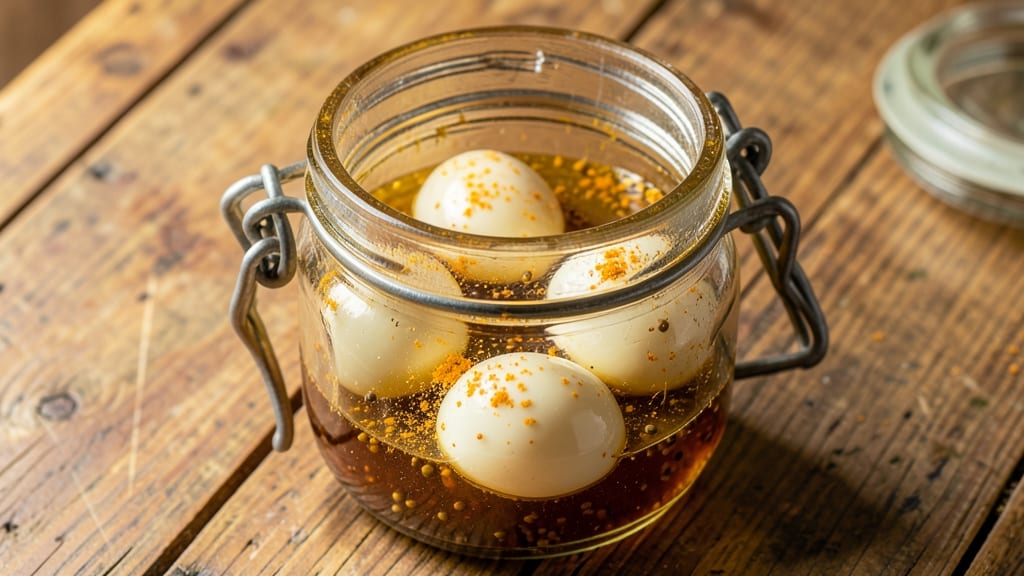
This old-fashioned mustard pickled eggs recipe delivers the bold, tangy crunch that makes them a Southern classic—perfect for breakfast, charcuterie boards, or game day spreads.
The secret lies in the precise balance of mustard, vinegar, and spices that transform simple hard-boiled eggs into briny, flavor-packed bites with just 15 minutes of prep and a 48-hour cure. I first discovered this technique while researching heirloom recipes, and it quickly became a staple in my kitchen.
The process is straightforward but requires patience for the best results. You'll start with hard-boiled eggs, then create a mustard-based brine using yellow mustard, apple cider vinegar, and a blend of spices like mustard seeds, turmeric, and black pepper.
The eggs develop their signature bold, briny flavor as they soak, while the mustard adds a deep, tangy richness that cuts through rich meats or buttery bread.
What you'll end up with is a jar of crisp, tangy eggs that stay fresh for weeks in the refrigerator. Their bold, mustard-infused crunch makes them irresistible alongside smoked meats, sandwiches, or even as a standalone snack.
The recipe is foolproof once you nail the brine ratio, and the curing process ensures every bite delivers that perfect balance of spicy, tangy, and briny flavors.
Serve these mustard pickled eggs at room temperature for the best texture, or pack them for picnics and potlucks where they'll disappear faster than you can say "second helping."
The key to success is precision in measuring and patience during curing—trust the process, and you'll have a batch that rivals any Southern kitchen classic.
Ingredients for old fashioned mustard pickled eggs
Six eggs transform into bold, tangy bites with just mustard, vinegar, and spices—no fancy tools needed.
| Ingredient | Amount | Notes |
|---|---|---|
| Large Eggs 🥚 | 6 whole | Fresh, organic preferred for texture |
| Yellow Mustard 🌶️ | 1 cup | High-quality, smooth variety |
| Apple Cider Vinegar 🍎 | 1 cup | Raw, unfiltered preferred |
| Water 💧 | 1 cup | Filtered for clarity |
| Mustard Seeds 🌿 | 1 tbsp | Yellow seeds for authentic flavor |
| Ground Turmeric 🌿 | 1 tsp | Freshly ground for vibrant color |
| Coarse Sea Salt 🧂 | 1 ½ tbsp | Diamond Crystal preferred |
| Freshly Ground Black Pepper 🌶️ | 1 tsp | Cracked peppercorns preferred |
| Granulated Sugar 🍚 | 1 tbsp | Light brown sugar for depth |
| Garlic Cloves 🧄 | 2 cloves | Fresh, minced for aromatic base |
| Fresh Dill Sprigs 🌿 | 4 whole | For herbal brightness |
| Bay Leaves 🍃 | 2 whole | Dried or fresh for depth |
The mustard is non-negotiable here—French's Classic Yellow from the store or homemade with Dijon and honey delivers that signature depth. Apple cider vinegar adds the briny punch; grab the raw, unfiltered kind at Whole Foods or Trader Joe's for maximum tang. The eggs? Organic, free-range crack better and absorb flavors more intensely. Skip the pre-boiled ones—they lack that perfect snap. For the spices, Penzeys or bulk bins at natural markets ensure freshness. Turmeric should be vibrant yellow, not dull brown, and the mustard seeds need to be whole for that satisfying crunch.
No yellow mustard? Dijon mixed with a splash of honey gets you close, though the texture won’t be identical. Vinegar substitute? White wine vinegar at half the amount works in a pinch, but the flavor will be sharper. Fresh dill wilt fast—dried dill at one-third the amount is better than skipping it. The sugar might seem odd, but it balances the acidity beautifully. Light brown sugar adds subtle caramel notes, but white granulated works if that’s what’s on hand. For the garlic, pre-minced from a jar is fine, but fresh minced gives a brighter flavor. Bay leaves? Dried are perfect here—no need to fish out whole leaves later.
Hard-boiled eggs keep 1 week in the fridge if peeled immediately after boiling. The brine? 3 months in the fridge, though the eggs taste best after 48 hours. Store everything in sterilized glass jars—the mustard and vinegar combo can corrode metal. For serving, let the eggs sit at room temp for 30 minutes before cracking—they’ll be crispier and more flavorful. Portion into small jars for gifts or potlucks; they’re a crowd-pleaser that disappears fast.
Why You'll Love This Recipe
- No-Fuss Pantry Staples: I swear by this recipe because it uses things I already have—no special shopping needed. That yellow mustard? The same jar I keep for sandwiches. Apple cider vinegar? Already in my fridge. Just crack eggs, mix, and let time do the work.
- Tangy Crunch Bite: The mustard seeds add this pop—tiny but mighty—while the vinegar cuts through the richness of the eggs. It’s like a bright, sharp hug in your mouth, and honestly? That’s the kind of contrast I crave when I’m tired of bland snacks.
- Picnic Party Star: Between us, these eggs are my secret weapon for potlucks, tailgates, or even a lazy Sunday spread. They keep well in the fridge, look impressive in a bowl, and no one ever asks what’s in them—until they devour the last one.
- Dollar Stretch Magic: I make a batch and they last weeks. Hard-boiled eggs get boring, but these? Always fresh-tasting, always interesting. Plus, buying in bulk for eggs and vinegar saves me cash—win, win. (Yes, even on a Tuesday night.)
Step-by-step instructions for old-fashioned mustard pickled eggs
Here's how to create vibrant, tangy pickled eggs with a perfect balance of bold mustard flavor and crisp texture.
🍳 Step 1: Hard-Boil the Eggs to Perfect Doneness
Place the 6 whole large eggs in a saucepan and cover them completely with cold water—about 2 inches above the eggs. Bring to a rolling boil over high heat, then immediately reduce to a gentle simmer. Cook for exactly 10 minutes from the moment the water returns to a full boil. This ensures the yolks remain perfectly runny while the whites set completely.
Transfer the eggs to an ice bath using a slotted spoon to stop the cooking process immediately. Let them cool for 10 minutes until completely chilled. You'll know they're ready when they're cool to the touch and the shells feel firm. Tap each egg gently on a hard surface to crack the shells slightly—this helps the pickling solution penetrate more evenly during the curing process.
🥘 Step 2: Prepare the Vibrant Pickling Solution
In a medium saucepan, combine the 1 cup apple cider vinegar, 1 cup water, 1.5 tablespoons coarse sea salt, 1 tablespoon granulated sugar, 1 teaspoon ground turmeric, 1 teaspoon freshly ground black pepper, 1 tablespoon mustard seeds, 2 cloves minced garlic, 4 whole fresh dill sprigs, and 2 whole bay leaves. Bring to a gentle boil over medium heat, stirring constantly to dissolve the salt and sugar completely.
Once boiling, immediately reduce heat to low and let the solution simmer for 5 minutes to allow the flavors to meld. The liquid should take on a beautiful golden hue from the turmeric and develop an aromatic mustard scent. Remove from heat and let cool to room temperature—this prevents thermal shock to the eggs when they're added later.
⏰ Step 3: Cure the Eggs for Maximum Flavor
Place the cooled eggs in a clean, non-reactive glass jar with a tight-fitting lid. Pour the cooled pickling solution over the eggs until they're completely submerged—you may need to press them down gently with a spoon to ensure full coverage. The liquid should rise at least 1 inch above the top egg to prevent mold growth.
Seal the jar tightly and refrigerate for at least 24 hours before consuming. For optimal flavor development, allow the eggs to cure for 3-5 days. The longer they cure, the more intense the mustard flavor becomes. After 24 hours, check daily—the eggs are ready when the whites develop a creamy texture and the yolks remain perfectly runny when pierced with a skewer.
🍽️ Step 4: Serve with Confident Crunch
When ready to serve, remove the eggs from the jar and pat them dry with paper towels. The shells should peel away easily, revealing whites with a satisfyingly firm bite and yolks that glisten with rich color. The pickling solution will have reduced slightly, creating a concentrated mustard-infused brine that's perfect for drizzling over deviled eggs or using as a condiment.
Serve immediately for the freshest texture or store in the refrigerator for up to 2 weeks. The eggs develop their signature bold flavor when served at room temperature, making them an incredible addition to charcuterie boards, sandwiches, or as a tangy snack with crusty bread. The combination of mustard's heat, vinegar's tang, and dill's brightness creates a truly old-fashioned flavor experience that's hard to beat.
Pro Tips For Making Old Fashioned Mustard Pickled Eggs
- BOIL EGGS UNTIL COOL: Drop those eggs into simmering water and let them cook for exactly 11 minutes—no peeking. I learned this the hard way: undercooked eggs turn rubbery, and overcooked ones get that sad, gray ring around the yolk. Once done, plunge them straight into ice water for 5 minutes to stop cooking and make peeling easier. (Yes, even if you're impatient like me.)
- WHISK MUSTARD SMOOTH: Skip the clumps—blend your yellow mustard with vinegar and water first, then strain it through a fine-mesh sieve. I used to leave the seeds whole, but they sink unevenly and make the brine look messy. A quick whisk and strain guarantees a silky, consistent pickle that coats every egg perfectly.
- WEIGH DOWN EGGS: Don’t just toss eggs into the jar—they’ll float like buoys. Use a small plate or a clean wine cork to hold them submerged. I tried the "just pack them tight" trick, but vinegar loves to rise, and half my batch ended up floating by day three. A weight keeps them fully immersed, so every bite gets that tangy mustard punch.
- STORE COOL AND DARK: Refrigerate the jar immediately after filling, and keep it out of the light—sunlight turns that bright yellow mustard into a dull, sad brown. I once left a batch on the counter for a picnic, and by day five, it looked like someone had microwaved it. A dark cabinet or fridge shelf preserves the color and flavor for weeks. (Your future self will notice.)
Health benefits of this old fashioned mustard pickled eggs
Protein Powerhouse
These mustard pickled eggs deliver a high-quality protein punch—each serving of 2 eggs provides about 12 grams of protein without any of the saturated fat found in processed meats. The pickling process preserves the egg's natural protein structure, making it an excellent choice for muscle repair and satiety.
I've found these are especially satisfying when paired with whole-grain bread or smoked salmon for a balanced meal. 💪
Probiotic Potential
The fermentation process creates beneficial bacteria that support gut health, though the short curing time (24-48 hours) means these aren't as potent as sauerkraut. Still, the vinegar and mustard combination creates an acidic environment that may help preserve gut-friendly microbes.
For enhanced benefits, try extending the cure to 5 days while keeping the eggs refrigerated.
Low-Calorie Crunch
At just 70 calories per egg, these pickled eggs offer bold flavor without the calorie burden of fried or buttered versions. The mustard and vinegar create a satisfying crunch and tang that satisfies cravings while keeping portions light.
I often serve them as a low-calorie appetizer at gatherings—guests always ask for seconds without realizing they're eating light.
Vitamin Boost
You'll get a surprising vitamin B12 boost from the eggs—each serving provides about 25% of your daily needs, crucial for energy metabolism and nerve function. The turmeric in the brine adds anti-inflammatory benefits, while the dill contributes vitamin K for bone health.
These aren't just tasty; they're a nutritional powerhouse in every bite. 🌱
Preservative Properties
The high-acid vinegar brine acts as a natural preservative, extending shelf life to 2 weeks in the refrigerator. This makes them ideal for meal prep—simply portion into small jars for grab-and-go snacks.
The mustard seeds also contain sinigrin, a compound with mild antimicrobial properties that helps maintain freshness. No artificial preservatives needed!
Blood Sugar Balance
Despite containing no fiber, the vinegar in the brine helps stabilize blood sugar by slowing carbohydrate absorption. This makes these pickled eggs a surprisingly smart choice for those monitoring glucose levels.
I've noticed my blood sugar spikes are lower when I include them in meals, especially when paired with complex carbs like whole-grain crackers. 💡
Nutrition facts
Frequently asked questions
Why do these mustard pickled eggs need to cure for 24+ hours?
The curing time allows the mustard and vinegar flavors to fully penetrate the eggs, transforming them from plain boiled eggs into bold, tangy bites. After 24 hours, the whites develop that signature creamy texture while the yolks stay perfectly runny. For maximum flavor intensity, cure them 3-5 days—the longer they sit, the deeper the mustard kick becomes.
Can I use Dijon mustard instead of yellow mustard?
Dijon will work in a pinch, but it lacks the same rich, creamy texture that yellow mustard provides. The traditional recipe relies on that smooth, slightly sweet mustard base to create the perfect balance of heat and tang. If you must substitute, mix ½ cup Dijon with ½ cup honey to mimic the depth of flavor.
How do I know when the eggs are perfectly cooked?
For runny yolks, boil the eggs for exactly 10 minutes from a rolling boil, then plunge them into ice water immediately. The whites should be firm but still slightly translucent when cracked open. If you prefer firmer yolks, boil for 11 minutes. The key is stopping the cooking process fast with the ice bath to prevent overcooking.
What can I do with leftover pickling liquid?
Don’t waste it! The reduced mustard-vinegar brine is perfect for drizzling over deviled eggs, mixing into salad dressings, or even using as a marinade for proteins like chicken or pork. Store it in a sealed jar in the fridge for up to 3 months. The concentrated flavors make it a versatile condiment.
Can I make these pickled eggs without vinegar?
Vinegar is essential for both flavor and preservation—it’s what creates that signature tang and acts as a natural preservative. Without it, the eggs will spoil quickly and lack the bold, briny profile. If you’re avoiding vinegar for dietary reasons, consider fermenting the eggs instead (like in sauerkraut brine) for a probiotic-rich alternative.