
Breakfast & Brunch
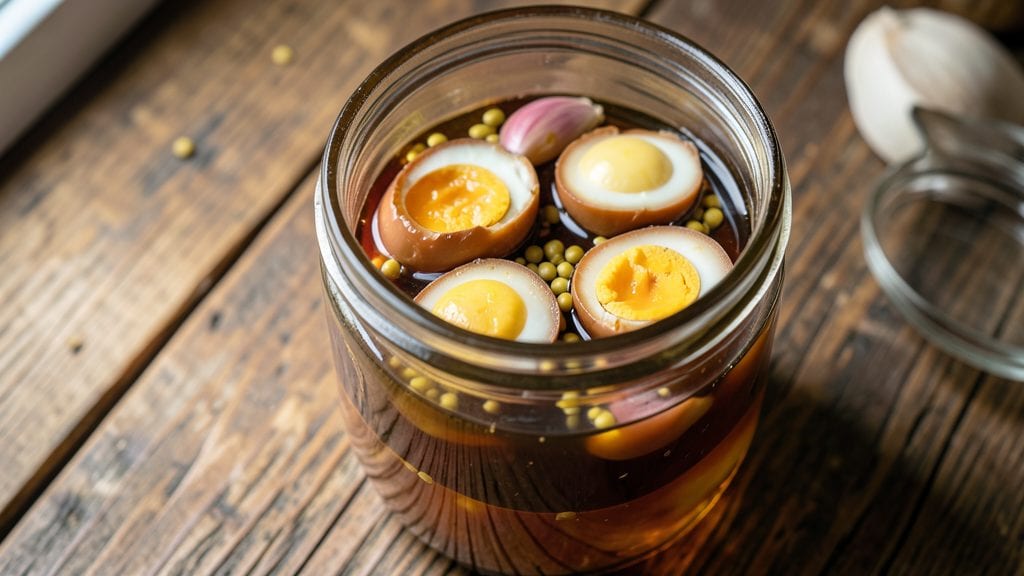
This old fashion pickled eggs recipe transforms simple hard-boiled eggs into briny, tangy bites that pack a crunchy texture and bold flavor. The secret lies in a carefully balanced brine of vinegar, spices, and time—where eggs cure for days to develop that signature sharpness and firm bite.
I first discovered this method while researching classic Southern preservation techniques, and it’s become a staple in my kitchen for its simplicity and impressive shelf life.
The process begins with hard-boiling eggs, then submerging them in a vinegar-based brine infused with mustard seeds, garlic, and black peppercorns. This isn’t just pickling—it’s a flavor transformation that turns ordinary eggs into a snackable delicacy.
The longer they cure, the more intense the tang, but even after just a few days, you’ll notice the difference in texture and taste compared to store-bought versions.
What you’ll end up with is a jar of eggs that are firm enough to eat with a spoon, yet still tender enough to slice for sandwiches or salads. The crunchy texture comes from the curing process, while the briny tang delivers that satisfying snap.
These eggs keep for weeks in the refrigerator, making them perfect for parties, picnics, or just snacking straight from the jar.
Serve them alongside charcuterie, pair with crackers and cheese, or use as a topping for salads and sandwiches. The possibilities are endless, but the method remains the same—simple, traditional, and foolproof. Let’s get started on creating your own batch of these timeless, tangy bites.
Ingredients for old fashion pickled egg
Eight whole eggs and a handful of pantry staples transform into briny, crunchy bites worth curing for weeks.
| Ingredient | Amount | Notes |
|---|---|---|
| Large Eggs 🥚 | 8 whole | Fresh, preferably organic for best results |
| White Vinegar 💧 | 2 cups | Distilled vinegar works too |
| Water 💧 | 1 cup | Filtered preferred for clarity |
| Diamond Crystal Kosher Salt 🧂 | ½ cup | Not table salt—it's coarser |
| Garlic Cloves 🧄 | 6 cloves | Smashed slightly for stronger flavor |
| Yellow Mustard Seeds 🌶️ | 1 tbsp | Whole seeds preferred over powder |
| Black Peppercorns 🌶️ | 1 tbsp | Crushed lightly for texture |
| Red Pepper Flakes 🌶️ | 1 tsp | Adjust for heat preference |
| Bay Leaves 🍃 | 2 whole | Fresh or dried works |
| Granulated Sugar 🍚 | ¼ cup | Light brown sugar for depth |
| Pickling Spice Blend 🌿 | 1 tbsp | Store-bought or homemade |
| Large-Mouth Mason Jars 🥫 | 2 jars | Quart size for 4 servings |
The eggs are the star, so farm-fresh or organic makes all the difference—they hold up better during curing. Costco or local farms often have the best prices for bulk eggs, but any large eggs work. Crack them gently into a bowl to avoid shell fragments in your jars. The vinegar is non-negotiable—white vinegar is classic, but apple cider vinegar adds a fruity twist. For the salt, Diamond Crystal kosher dissolves better than table salt and gives that authentic Southern tang. If you can't find mustard seeds, Dijon mustard at half the amount works in a pinch, though whole seeds add that signature crunch.
No mustard seeds? Dried mustard powder at one-third the amount gets you close, but texture suffers. The peppercorns can be swapped for whole black pepper if that's what you've got—just crush them lightly. Running short on bay leaves? Dried thyme at half the amount mimics that earthy depth. The sugar is key for balancing the brine—light brown sugar adds caramel notes, but white works fine. For the jars, quart-sized mason jars are ideal, but any clean, airtight container does the trick. Just make sure the eggs are fully submerged—they'll float at first, so weigh them down with a small plate or cabbage leaf.
These eggs taste better with time—at least 3 days for mild tang, up to 2 weeks for full briny punch. Store in the fridge, and they'll keep for months if the liquid stays clear. The longer they cure, the firmer they get—perfect for slicing on sandwiches or popping straight from the jar. If the brine gets cloudy, it's still safe to eat, just not as pretty. For parties, pull them out an hour before serving so they're nice and chilled. The crunch comes from the curing process, so don't rush it—patience is the secret ingredient.
Why You'll Love This Recipe
- No-Stress Pantry Magic: I’ll admit, I used to think pickling eggs required fancy jars and hours of prep. Turns out, it’s just eggs, vinegar, and salt—no fancy tools, no stress. The brine comes together faster than I can boil water, and honestly? The hardest part is waiting for them to pickle.
- Garlic Kiss Perfection: That first bite of a crispy, tangy egg with a whole garlic clove nestled inside? It’s like a flavor explosion in your mouth. The vinegar cuts through the richness, while the garlic adds this warm, punchy depth that makes every bite feel special—no fancy seasoning needed.
- Effortless Snack Attack: Between us, these eggs are my go-to for picnics, potlucks, or just munching straight from the jar. They’re sturdy enough to pack in a lunchbox, elegant enough for a charcuterie board, and my kids actually ask for them—no complaints, just empty jars.
- Budget-Friendly Staple: I buy eggs in bulk, and a single batch of brine lasts for weeks. No waste, no extra cost, just pure convenience. Plus, the more you make, the more you realize how versatile they are—breakfast, appetizer, or even a quick protein boost in salads. It’s the kind of recipe that pays for itself.
Step-by-step instructions for old fashion pickled eggs
Here's how to make briny, tangy pickled eggs with a satisfying crunch that keeps for weeks.
Prepare the Eggs for Pickling
Place the 8 whole large eggs in a medium saucepan and cover them completely with cold water. Bring to a gentle boil over medium heat, then immediately reduce to a simmer. Cook for exactly 9 minutes - this ensures the yolks stay firm but creamy while the whites set properly. You'll notice small bubbles forming around the eggs, but don't let them boil vigorously or they'll crack.
Drain the eggs in a colander and transfer them to an ice bath to cool completely. This stops the cooking process and makes them easier to peel. Once cool, gently tap each egg on a hard surface and roll to crack the shell all over. Peel under running water if needed - the cold water helps release the shells more easily. Keep the peeled eggs whole for that classic old-fashioned look.
Create the Pickling Liquid
In a large bowl, combine the 2 cups white vinegar, 1 cup water, 0.5 cup diamond crystal kosher salt, 0.25 cup granulated sugar, and 1 tbsp pickling spice blend. Stir until the salt and sugar dissolve completely - you should see the sugar crystals disappear and the salt integrate evenly. This brine needs to be fully saturated for proper preservation and flavor penetration.
Add the 6 smashed garlic cloves, 1 tbsp yellow mustard seeds, 1 tbsp black peppercorns, 1 tsp red pepper flakes, and 2 whole bay leaves. Gently stir to distribute the spices evenly throughout the liquid. The mixture should be aromatic with a tangy vinegar smell and visible flecks of all the spices. Let this sit at room temperature for 10 minutes to allow the flavors to meld together.
Pack and Preserve the Eggs
Divide the peeled eggs evenly between the 2 large-mouth mason jars. Using a funnel helps prevent cracking. Pour the pickling liquid over the eggs, making sure each egg is completely submerged. The liquid level should be at least 1 inch above the top egg in each jar to prevent mold growth. Tap the jars gently on the counter to remove any air bubbles trapped between the eggs.
Seal the jars tightly with their lids and place them in the refrigerator. The cold temperature slows down the pickling process, allowing the flavors to develop gradually. For best results, let them pickle for at least 3 days before eating - this gives the eggs that perfect briny tang and firm texture. They'll keep for up to 3 months in the fridge, with flavor intensifying over time.
Check and Enjoy
After the initial 3-day period, check one egg to test the doneness. The liquid should be cloudy with visible spices, and the egg should have a firm but slightly bouncy texture when gently pressed. If the flavor isn't strong enough, return the jar to the fridge for another 2-3 days. The eggs should have a bright white color with no grayish tint, indicating proper preservation.
To serve, remove one egg and pat it dry with a paper towel. The skin should peel off easily, revealing a creamy yolk and firm white. Serve chilled with crusty bread or as part of a charcuterie board. The pickling liquid makes an excellent dipping sauce for crackers or fresh vegetables. Each bite should deliver that perfect balance of briny vinegar, garlicky depth, and subtle heat from the pepper flakes.
Pro Tips For Making Old Fashion Pickled Egg
- BOIL EGGS 9 MINUTES: DESCRIPTION: I learned this the hard way—8 minutes gives you a runny yolk, 10 minutes turns them rubbery. Set a timer, cover the pot, and let them sit off the heat for a full 2 minutes after boiling. The eggs will finish cooking perfectly while you prep the brine.
- USE 1/4 CUP SALT: DESCRIPTION: Diamond Crystal measures differently than table salt—don’t eyeball it. For 4 cups of liquid, use a full ¼ cup of kosher salt. Too little and the eggs stay bland; too much and the brine turns cloudy. Trust the scale if you’re unsure.
- SMASH GARLIC CLOVES: DESCRIPTION: Whole cloves make the brine taste like perfume, not food. Smash them with the flat side of your knife first—just enough to bruise the skin. This releases flavor without turning the brine muddy. (Yes, even if you’re impatient like me.)
- COOL EGGS FAST: DESCRIPTION: Drain the hot eggs into an ice bath for 5 minutes before adding them to the brine. This stops the cooking process immediately and keeps the whites from turning gummy. Skip this, and your eggs will end up tough no matter how long you pickle them.
Wine and beer pairings for this old fashion pickled egg
Wine Pairings
For these briny, tangy eggs, I reach for crisp whites that cut through the vinegar's sharpness. A dry Riesling from Germany—like Dr. Loosen Blue Slate—balances the acidity with its mineral notes and subtle honeyed undertones. The stone fruit flavors complement the mustard seeds and garlic beautifully. 🍷
If you prefer reds, a light-bodied Pinot Noir from Oregon works surprisingly well. Look for Domaine Serene—its bright cherry and floral notes contrast the pickled eggs' funk without overpowering. Avoid heavy tannins; they clash with the vinegar's bite.
Beer Pairings
A Belgian witbier like Hoegaarden is my go-to beer pairing. Its coriander and orange peel notes echo the mustard seeds and citrusy vinegar, while the effervescence cleanses the palate. Serve it chilled for the best contrast. 🍺
For a hoppier option, try a German Helles Lager such as Weihenstephaner Original**. The malty sweetness softens the brininess, and the crisp finish refreshes between bites. Avoid IPAs—their bitterness can fight the eggs' tang.
Non-Alcoholic Options
For a sparkling alternative, serve San Pellegrino Aranciata—its blood orange and mandarin flavors bridge the gap between the eggs' sharpness and sweetness. The carbonation also enhances the crunchy texture. 💫
Herbal teas like hibiscus iced tea (brewed with 1 tbsp loose hibiscus per cup) provide a tart, floral contrast. Brew it strong and chill—it’s the perfect palate refresher for snacking straight from the jar.
Nutrition facts
Frequently asked questions
Can I use apple cider vinegar instead of white vinegar?
Yes, apple cider vinegar works beautifully! It adds a subtle fruity sweetness that complements the mustard and garlic. For best results, use the same amount (2 cups) and let the eggs cure for an extra 1-2 days to develop the flavor. The color will be slightly darker, but the tang remains sharp.
Why do my pickled eggs float to the top?
Eggs naturally float because air pockets form during cooking. To submerge them, place a small plate or cabbage leaf on top—this keeps them fully covered by the brine. If you don’t, the exposed parts may develop mold. Always ensure the liquid level is at least 1 inch above the eggs.
How do I know when the eggs are fully pickled?
Test one egg after 3 days: it should be firm with a bright white color and no grayish tint. The brine should smell tangy and cloudy with spices. If the flavor is too mild, return the jar to the fridge for another 2-3 days. Over-pickling (beyond 2 weeks) can make them rubbery.
Can I make these without mustard seeds?
Swap 1 tbsp mustard seeds for 1 tbsp Dijon mustard or 1 tsp dried mustard powder. The texture will be slightly softer, but the flavor remains bold. For extra crunch, add 1 tsp poppy seeds or celery seeds to the brine.
How long do pickled eggs last unopened?
Unopened jars keep for 2-3 months in the fridge if the brine stays clear. Once opened, consume within 1 month—discard if the eggs smell off or the liquid turns cloudy with a foul odor. Properly sealed jars with submerged eggs rarely spoil if refrigerated.