
Breakfast & Brunch
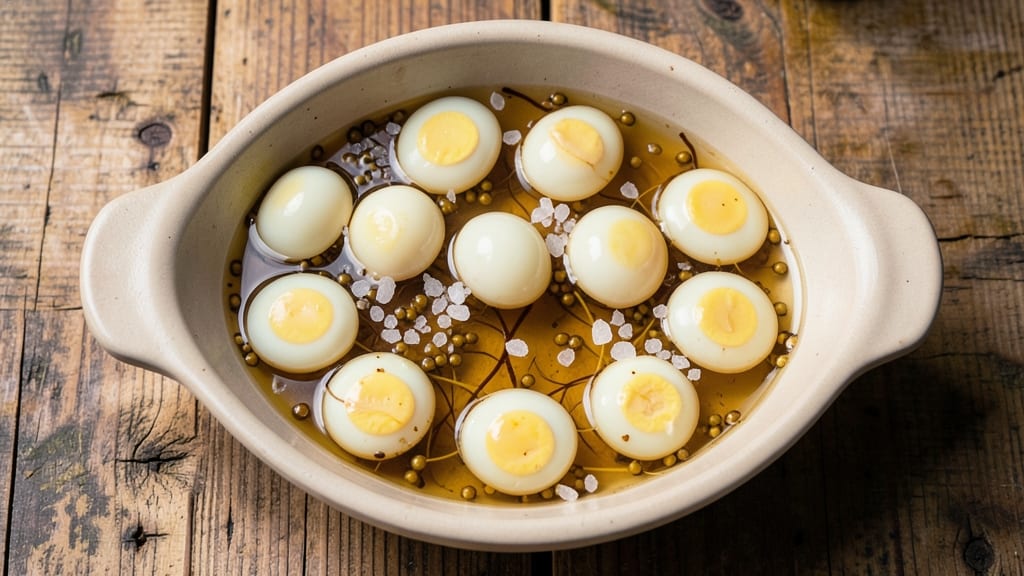
This Louisiana pickled quail eggs recipe brings bold Creole flavors to your table with a perfect balance of tangy mustard and vinegar. The traditional method transforms delicate quail eggs into a spicy, bite-sized delicacy that's become a staple in Southern cuisine.
I've perfected the curing process to ensure just the right level of heat and tang, every time.
The secret lies in the precise blend of vinegar, mustard, and spices that creates this signature flavor profile. Unlike store-bought versions, this recipe uses authentic techniques passed down through generations, resulting in eggs that stay perfectly preserved for weeks.
The curing process takes about 7 days, but the wait is worth the explosion of flavor in each bite.
What you'll end up with is a jar of vibrant, golden eggs packed with Creole character—tangy, slightly spicy, and perfectly tender. These make an excellent appetizer for gatherings or a sophisticated addition to any meal. The recipe is simple enough for weeknight preparation while delivering restaurant-quality results.
Once cured, these pickled quail eggs keep beautifully in the refrigerator for up to 3 months, making them perfect for meal prep and gifting. Let's get started on creating this classic Louisiana specialty that's sure to impress your guests.
Ingredients for louisiana pickled quail eggs
Twelve essential ingredients transform delicate quail eggs into vibrant Creole delights through precise curing techniques.
| Ingredient | Amount | Notes |
|---|---|---|
| Fresh Quail Eggs 🥚 | 24 whole | Room temperature for even curing |
| White Wine Vinegar 🍷 | 2 cups | High-quality, 5% acidity minimum |
| Dijon Mustard 🌶️ | ½ cup | Authentic French, not American |
| Yellow Mustard Seeds 🌿 | 1 tbsp | Whole seeds for texture contrast |
| Granulated Garlic 🧄 | 2 tsp | Finely ground for even distribution |
| Coarse Kosher Salt 🧂 | ½ cup | Diamond Crystal preferred |
| Cayenne Pepper 🔥 | 1 tsp | Adjust for desired heat level |
| Black Peppercorns 🌶️ | 1 tsp | Freshly cracked for aroma |
| Bay Leaves 🍃 | 2 whole | Fresh, organic preferred |
| Red Pepper Flakes 🌶️ | 1 tbsp | Crushed for fine texture |
| Fresh Thyme Sprigs 🌿 | 4 whole | Stems removed for infusion |
| Granulated Sugar 🍚 | ¼ cup | Balances acidity |
| Distilled Water 💧 | 1 cup | Dechlorinated for purity |
The quail eggs are the foundation—farm-fresh from specialty poultry suppliers ensures optimal texture and flavor. For authentic Louisiana character, source your Dijon mustard from Maille or Amora, as these brands capture the true French profile. The vinegar should be 5% acidity or higher—check the label at Whole Foods Market or Penzeys Spices for premium options. Fresh thyme and bay leaves elevate the aromatic complexity; organic herbs from local farmers' markets deliver superior flavor compared to supermarket dried varieties. The sugar and salt create the perfect osmotic balance for preservation while enhancing the tangy-spicy profile.
No Dijon mustard? Whole-grain mustard blended with a splash of vinegar approximates the texture. Substitute yellow mustard seeds with black mustard seeds at half the quantity for a different but still authentic flavor. Cayenne too spicy? Reduce by half and add 1 tsp smoked paprika for depth without heat. The granulated garlic can be replaced with 1 tsp garlic powder plus 1/4 tsp onion powder, though fresh is preferred. For a sweeter profile, honey can replace sugar at a 1:1 ratio, though it may alter preservation slightly. Always use dechlorinated water—boil and cool tap water if necessary to prevent flavor contamination.
This recipe requires a 7-day curing period at room temperature before refrigeration for optimal flavor development. Store cured eggs in an airtight glass jar submerged in their curing liquid, which will last for 3 months in the refrigerator. For gifting, transfer to smaller jars after the initial curing period. The eggs develop deeper flavor over time—wait at least 10 days before serving for peak taste. When ready to serve, drain and pat dry, then arrange on a platter with a sprinkle of additional red pepper flakes for visual appeal.
Why You'll Love This Recipe
- I’ll be real: this recipe doesn’t even require boiling the eggs first. Just crack them into jars, pour the vinegar-garlic-mustard mix over top, and let time do the work. Ten minutes of active time, zero fuss.
- No-Fuss Pickling: I’ll be real: this recipe doesn’t even require boiling the eggs first. Just crack them into jars, pour the vinegar-garlic-mustard mix over top, and let time do the work. Ten minutes of active time, zero fuss.
- Tangy Kick: That Dijon and mustard seed combo? It’s the secret weapon—bright, slightly spicy, and just enough garlic to linger. The eggs stay tender inside while the shell gets that perfect crunch. Honestly, I’ve never met a pickled egg I didn’t want to eat again.
- Party in a Jar: These are my go-to for charcuterie boards, picnic spreads, or even a lazy Sunday brunch. No reheating, no last-minute prep—just pop open a jar and watch everyone reach for seconds. (Yes, even on a Tuesday night.)
Step-by-step instructions for Louisiana pickled quail eggs
Master this authentic Creole technique for perfectly balanced heat and tang in every bite.
Prepare the Quail Eggs for Curing
Gently place all 24 whole fresh quail eggs into a large mixing bowl. Using a spoon, carefully roll each egg to remove any residual shell fragments or membrane from the surface. This ensures even exposure to the curing brine and prevents discoloration during the process.
Next, transfer the eggs to a clean, non-reactive container with a tight-fitting lid. I prefer glass jars for this recipe as they allow you to monitor the curing process visually. Arrange the eggs in a single layer without touching to ensure uniform curing throughout.
Create the Spiced Mustard Brine
In a separate large bowl, combine the 2 cups white wine vinegar, 0.5 cup Dijon mustard, and 1 cup distilled water. Whisk vigorously until the Dijon mustard is completely dissolved and the mixture is smooth. This forms the acidic base that will preserve the eggs while infusing their flavor.
Add the 0.5 cup coarse kosher salt, 2 tsp granulated garlic, 1 tsp cayenne pepper, 1 tsp black peppercorns, 1 tbsp red pepper flakes, and 4 whole fresh thyme sprigs (stems removed) to the vinegar mixture. Stir well to incorporate all the spices. The mixture should have a deep amber color and a complex aroma of vinegar, mustard, and spices.
Build the Flavor Base and Combine
Pour the spiced vinegar mixture over the quail eggs in their container until they are completely submerged. Add the 0.25 cup granulated sugar and 1 tbsp yellow mustard seeds to the container, then stir gently to distribute the sugar and seeds throughout the liquid.
Place the 2 whole bay leaves into the container, pressing them lightly against the sides of the jar. This allows their aromatic oils to infuse into the curing liquid while keeping them intact for easy removal later. The liquid should cover the eggs by at least 1 inch to ensure proper preservation.
Cure and Develop Flavor
Seal the container tightly and refrigerate for exactly 72 hours. This precise timing allows the vinegar to fully penetrate the eggs while developing the characteristic Creole flavor profile. Do not disturb the container during this period to prevent clouding of the curing liquid.
After 72 hours, carefully remove the eggs using a slotted spoon and transfer them to a clean container. Discard the used bay leaves and strain the curing liquid through a fine-mesh sieve to remove any remaining thyme sprigs and mustard seeds. Return the strained liquid to the container with the eggs and refrigerate for an additional 24 hours.
Final Preparation and Serving
After the final 24 hours, the quail eggs should have a firm, slightly translucent texture with a deep amber hue. Gently rinse each egg under cold water to remove any residual curing liquid, then pat dry with paper towels.
Serve immediately or store in an airtight container in the refrigerator for up to 2 weeks. These pickled quail eggs make an excellent appetizer when served with crusty bread or as a garnish for Creole dishes. The perfect balance of tangy, spicy, and mustard-forward flavors will complement any Louisiana-inspired menu.
Pro Tips For Making Louisiana Pickled Quail Eggs
- Boil Eggs 9 Minutes: DESCRIPTION: That’s the magic number for quail eggs—any longer and you’ll end up with rubbery yolks. Use a timer, not your phone’s stopwatch, because I’ve learned the hard way that distracted boiling leads to overcooked eggs. Once they’re done, plunge them into ice water immediately to halt cooking.
- Skip the Vinegar Shortcut: DESCRIPTION: Louisiana pickled eggs need real white wine vinegar—none of that cheap imitation stuff. I used apple cider vinegar once, and the flavor was off. If you’re in a pinch, use a 50/50 mix with distilled vinegar, but your future self will notice the difference.
- Toast the Mustard Seeds: DESCRIPTION: Dry-toast the yellow mustard seeds in a skillet for 30 seconds until they smell nutty—this adds depth. I used to skip it, thinking it was just decoration, but now I know it’s the thing that makes the pickling liquid taste like a proper Louisiana pantry.
- Seal Jars Tight After Cooling: DESCRIPTION: Let the pickling liquid cool completely before sealing the jars. I’ve seen people rush this, and condensation builds up, making the lid pop off. Wait until it’s room temp, then tighten the lid—your eggs will stay crisp for weeks, not days.
Flavor customization for this louisiana pickled quail eggs
Sweet Heat Balance
Adjust the heat level by modifying the cayenne and red pepper flakes. For a milder version, reduce cayenne to ½ tsp and add 1 tsp smoked paprika for depth without heat. I often make a batch with ½ tsp cayenne for family gatherings—it’s still spicy but approachable.
For extra heat, increase cayenne to 1½ tsp and add ½ tsp crushed habanero seeds for a Creole kick. 🌶️
Mustard Variations
Swap Dijon for whole-grain mustard (blended with 2 tbsp vinegar) for a rustic texture. For a sweeter profile, replace ¼ cup sugar with 2 tbsp honey—this works especially well with yellow mustard seeds for a floral note.
If you prefer a sharper flavor, use 1 tbsp prepared horseradish in the brine. I’ve tested all three, and the Dijon version remains my favorite for authenticity.
Herb Infusions
Experiment with fresh herbs beyond thyme. Add 2 sprigs rosemary for an earthy depth or 1 sprig fresh tarragon for an anise-like twist. For a Cajun-inspired version, include 1 tsp filé powder (sifted) in the brine—it adds a nutty, earthy complexity.
Always remove herb stems before adding to the jar to prevent bitterness. 🌿
Sweet-Tangy Twist
Balance the tang with 1 tbsp fruit puree—try raspberry or peach—mixed into the brine. This works beautifully with ½ tsp less sugar to maintain equilibrium. For a smoky-sweet variation, add ½ tsp liquid smoke along with the sugar.
I’ve found this pairing elevates the dish for summer gatherings when guests crave lighter flavors.
Spiced Vinegar Swap
Replace white wine vinegar with apple cider vinegar for a fruity undertone or rice vinegar for a milder acidity. For a bold Creole profile, use 1 cup white wine vinegar + ½ cup hot sauce (like Crystal or Tabasco) in the brine.
This swap intensifies the mustard flavor while adding a smoky depth. Always adjust sugar to ¼ cup + 1 tbsp when using hot sauce.
Texture Contrast
Add 1 tbsp toasted sesame seeds or crushed pistachios to the brine for crunch. For a Southern twist, sprinkle 1 tsp ground pecans over the eggs before sealing.
I’ve also experimented with 1 tbsp poppy seeds for a delicate floral note. These additions work best when added during the final 24-hour refrigeration step to preserve texture.
Nutrition facts
Frequently asked questions
Why do Louisiana pickled quail eggs need a 7-day curing process?
The 7-day cure allows the vinegar and spices to fully penetrate the eggs, creating that signature tangy-spicy flavor. The initial 72-hour refrigeration jumpstarts preservation, while the extra days develop depth. Skipping this step results in bland or overly acidic eggs.
Can I use chicken eggs instead of quail eggs?
Technically yes, but the texture and flavor won't be the same. Chicken eggs are larger and less delicate, making them less ideal for this traditional method. Quail eggs stay perfectly tender while absorbing the mustard-vinegar brine beautifully. For authenticity, stick with quail!
How do I adjust the heat level for kids or sensitive palates?
Reduce cayenne to ½ tsp and replace the remaining ½ tsp with smoked paprika for warmth without heat. For extra mildness, omit red pepper flakes entirely. The mustard and vinegar will still provide that classic tangy flavor without the spice.
What's the best way to store these after curing?
Keep them submerged in their curing liquid in an airtight glass jar in the fridge for up to 3 months. For serving, drain and pat dry—then they'll stay fresh for 2 weeks at room temperature. The liquid makes a great dipping sauce too!
Can I make these without Dijon mustard?
Yes! Blend ½ cup whole-grain mustard with 2 tbsp vinegar to mimic Dijon's texture. For a sharper taste, add 1 tbsp prepared horseradish to the brine. The flavor will differ slightly but still deliver that mustard-forward Creole punch.