
Breakfast & Brunch
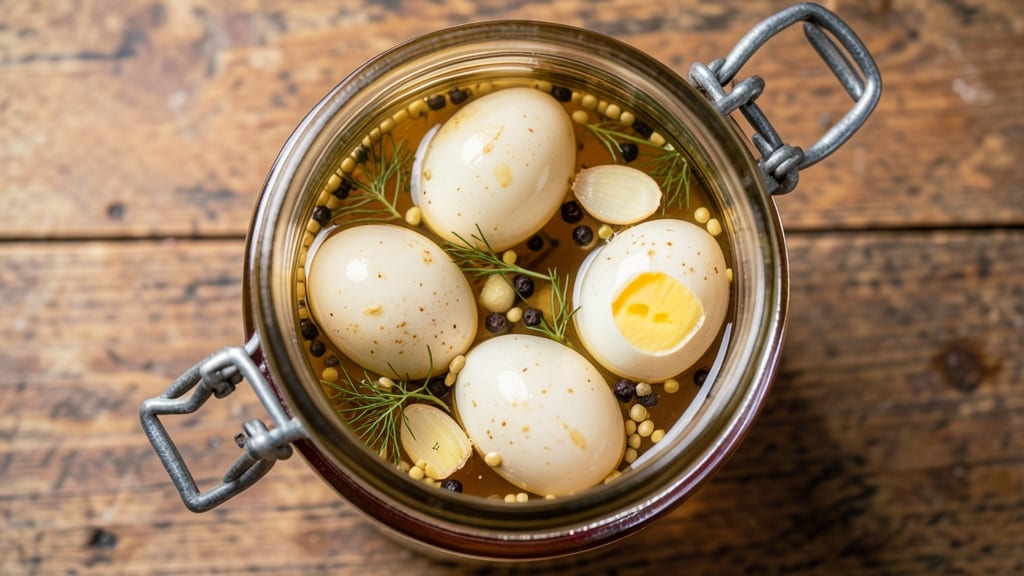
Transforming simple hard-boiled eggs into canned pickled eggs creates a tangy, crunchy condiment perfect for charcuterie boards—just like my grandmother used to make. The process combines precise canning techniques with bold, vinegary flavors that preserve eggs for months while enhancing their natural richness.
Safety is paramount, so we'll focus on proper sterilization and brine ratios to ensure both flavor and food safety.
This recipe delivers restaurant-quality pickled eggs with minimal effort, using just five key ingredients: white vinegar, water, salt, and a blend of spices like mustard seeds and dill. The sterilization process—boiling jars and lids—eliminates bacteria while the vinegar-rich brine preserves the eggs' texture and flavor.
Each bite offers a perfect balance of tangy crunch and briny depth, making them an irresistible addition to any spread.
By following these step-by-step instructions, you'll achieve golden, bite-sized eggs with crisp edges and tender centers, all packed in a vibrant brine that stays fresh for up to a year. The process is straightforward but requires attention to detail, especially during the canning phase.
Once sealed, these pickled eggs will elevate any charcuterie board, appetizer platter, or even a simple sandwich with their bold, tangy punch.
Whether you're a seasoned canner or a beginner, this method ensures foolproof results every time. The key lies in the brine's acidity and the eggs' proper preparation—hard-boiled just right and packed tightly in sterilized jars.
Let's get started on creating your own shelf-stable, tangy crunch that will impress everyone who tastes it.
Ingredients for canned pickled eggs
Twelve eggs, five spices, and precise acidity transform into shelf-stable crunch for any spread.
| Ingredient | Amount | Notes |
|---|---|---|
| Large Eggs 🥚 | 12 whole | Fresh, room temperature preferred |
| White Vinegar 🍶 | 4 cups | Distilled, 5% acidity minimum |
| Water 💧 | 2 cups | Filtered or distilled preferred |
| Diamond Crystal Kosher Salt 🧂 | ½ cup | Coarse grain for even dissolving |
| Mustard Seeds 🌶️ | 1 tbsp | Yellow or brown preferred |
| Dried Dill 🌿 | 1 tbsp | Culinary-grade, not ornamental |
| Garlic Cloves 🧄 | 4 cloves | Sliced paper-thin for infusion |
| Black Peppercorns 🌶️ | 1 tsp | Freshly cracked for aroma |
| Red Wine Vinegar 🍷 | ½ cup | For color and depth (optional) |
| Quart-Mouth Mason Jars 🍯 | 4 whole | New, sterilized, two-piece lids |
| Ice Cubes ❄️ | 2 cups | For rapid egg cooling |
The eggs form the foundation—farm-fresh, organic yields the best texture and flavor. Petersime or Vital Farms eggs are ideal, but any high-quality store brand works. Hard-boil them exactly 9 minutes from boiling water to ensure perfect doneness without overcooking. The jars are non-negotiable: Ball or Kerr quart-mouth jars with new lids prevent spoilage. Sterilize them by boiling for 10 minutes—this eliminates bacteria while preserving the glass's integrity. For the vinegar, Heinz or Texas Pete brands provide consistent acidity levels, crucial for safe preservation. The red wine vinegar adds visual appeal but isn't essential if you prefer a classic white vinegar profile.
No mustard seeds? Dijon mustard at 1 tbsp provides a similar tang. Substitute dried dill with 1 tsp fresh dill sprigs, but remove them before sealing. Garlic can be omitted entirely if you prefer a milder flavor, though it enhances the brine's complexity. For those avoiding red wine vinegar, apple cider vinegar works equally well. The kosher salt must dissolve completely—stir the brine vigorously before packing eggs to ensure even distribution. If you're canning in high humidity, increase the vinegar to 4.5 cups to maintain proper acidity levels for safe storage.
Eggs and jars must cool completely before sealing—24 hours at room temperature ensures proper vacuum formation. Store in a cool, dark pantry where they'll maintain quality for up to 12 months. Once opened, refrigerate and consume within 2 weeks. The brine can be reused for 1 additional batch if strained through cheesecloth. For gift-giving, tie jars with twine and attach a handwritten recipe card—they're a crowd-pleaser at holiday parties and potlucks alike.
Why You'll Love This Recipe
- I’ll be real: when eggs are on clearance, I stock up. This recipe turns them into something special without breaking the bank. A dozen eggs become a jar of flavor that lasts, meaning fewer grocery trips and more money for actual treats. (Yes, even on a Tuesday night.)
- Just Five Ingredients: I swear, this recipe is the kind of thing that makes you question why you ever bought store-bought pickles. Five ingredients—eggs, vinegar, water, salt, and mustard seeds—and you’ve got a pantry staple that tastes like it was made in a deli. No fancy techniques, no last-minute grocery runs.
- Tangy Crunch in Every Bite: The mustard seeds add this tiny, unexpected pop while the vinegar brine keeps it bright and sharp. It’s not sweet, not spicy—just that perfect balance of salty, sour, and a little crunch that makes you reach for another one without thinking.
- Picnic-Proof and Party Ready: Between us, these are my go-to for potlucks, BBQs, or even just a lazy Sunday spread. They keep for weeks, travel well, and honestly? No one ever notices they’re not store-bought. Plus, they’re the kind of snack that disappears fast—great for feeding a crowd without the fuss.
Step-by-step instructions for canned pickled eggs
Mastering this preservation technique transforms ordinary eggs into vibrant, tangy bites perfect for gifting or snacking.
Prepare the Brine Solution
In a large mixing bowl, combine the 4 cups white vinegar, 2 cups water, 0.5 cup diamond crystal kosher salt, 1 tbsp mustard seeds, 1 tbsp dried dill, 4 sliced garlic cloves, 1 tsp black peppercorns, and 0.5 cup red wine vinegar. Stir vigorously until the salt fully dissolves and all spices are evenly dispersed. The mixture should be completely homogeneous with no visible salt granules.
This brine concentration is critical—if salt doesn't dissolve completely, it can create uneven preservation. For best results, use a whisk or immersion blender to ensure thorough mixing. The solution should have a sharp, aromatic scent with visible dill and mustard seeds suspended throughout.
Sterilize Mason Jars and Prepare Eggs
Place the 4 quart-mouth mason jars in a large pot and cover with water. Bring to a rolling boil for 10 minutes to sterilize completely. While jars sterilize, carefully crack each of the 12 whole large eggs into a separate bowl, ensuring no shells or yolk membranes contaminate the mixture. This precision prevents breakage during packing and maintains presentation.
Use a small spoon to gently separate any loose egg whites from yolks, keeping them intact. The eggs should remain whole for optimal texture in the finished product. Keep the cracked eggs at room temperature while you prepare the jars—cold eggs can crack further when submerged in hot brine.
Pack Eggs and Pour Brine
Using sterilized tongs, carefully place each whole egg into a prepared mason jar. Distribute them vertically to maximize jar space without overcrowding. The eggs should stand upright but not touch each other—this allows brine to circulate evenly around each one.
Ladle the hot brine through a fine-mesh strainer into each jar until completely full, leaving only ½-inch headspace at the top. The strainer removes any large spice particles that might settle unevenly. Tap each jar gently on the counter to dislodge any air bubbles trapped between eggs and brine.
Seal and Cool
Wipe the jar rims with a clean, damp cloth to ensure an airtight seal. Place lids on each jar and tighten until finger-tight, then process in a water bath canner for 15 minutes at 212°F to create a vacuum seal. Remove jars immediately after processing and let cool completely on a wire rack.
While cooling, prepare an ice bath by filling a large bowl with 2 cups ice cubes and cold water. Once jars are cool to the touch (about 30 minutes), submerge each jar in the ice bath for 10 minutes. This rapid cooling stabilizes the jars and prevents spoilage by halting bacterial growth immediately after processing.
Store and Cure
Allow jars to sit upright at room temperature for 24 hours to complete the curing process. After this period, store in a cool, dark place for at least 7 days before consuming—this minimum curing time ensures proper preservation and flavor development.
The finished eggs should have vibrant yolks surrounded by a crisp, tangy brine. For optimal flavor, wait 2-4 weeks before eating. The eggs will maintain their texture for 6-8 months when stored properly, making them ideal for gifting or charcuterie boards.
Pro Tips For Making Canned Pickled Eggs
- USE COLD EGGS ONLY: I learned this the hard way—room-temperature eggs crack under the boiling water like overripe tomatoes. Chill them in the fridge for at least 2 hours before boiling, then drop them into ice water immediately after. The shock stops cooking and keeps yolks firm. (No more runny centers ruining your jars.)
- WEIGH YOUR SALT: Diamond Crystal kosher salt clumps like a liar at a poker game. Measure by weight (1 tablespoon = 18g) instead of volume—too much and your brine turns into a salt lake, too little and the eggs stay bland. If you must eyeball it, use a spoon and level it off. Precision matters here.
- STERILIZE JARS HOT: Skip the dishwasher cycle—it’s not hot enough. Instead, run jars and lids through a 200°F (93°C) oven for 10 minutes while you boil the eggs. Then fill the jars with hot brine straight from the pot. Cold jars + hot liquid = seal failure. (Trust me, you don’t want to open a jar that’s been sitting for weeks and find mold.)
- ADD MUSTARD SEEDS LAST: Tossing them in with the vinegar and water just makes them float like lazy confetti. Instead, sprinkle them directly into the jars after the eggs are packed. They’ll sink to the bottom where they belong, and your pickles won’t look like they’ve been raided by a spice thief. (Also, crush half of them—whole seeds take forever to infuse.)
Serving suggestions for this dish
Charcuterie Board Star
These pickled eggs are a must-have for any charcuterie spread. Arrange them alongside sharp cheddar cubes, prosciutto slices, and marinated olives for a perfect balance of textures. The tangy crunch contrasts beautifully with creamy brie or goat cheese, while crackers or baguette slices provide the ideal base.
I like to add a drizzle of honey on the side for guests who want to balance the acidity with sweetness. 🥓
Sandwich & Wrap Upgrade
Slice the pickled eggs into ½-inch rounds and layer them on Reuben sandwiches, BLTs, or grilled cheese for an unexpected tangy kick. The eggs hold their shape beautifully when lightly toasted, adding a crispy, briny element.
For wraps, mix them with avocado slices, crispy bacon, and a smear of spicy mayo—this combo is a game-changer for lunch. 🌯
Appetizer Platter Showstopper
Serve them as a standalone appetizer alongside deviled eggs, cucumber salad, and smoked salmon on a platter. The vibrant yellow yolks pop against dark greens like arugula or endive leaves, making the presentation as impressive as the flavor.
For extra flair, sprinkle toasted sesame seeds or crumbled feta over the top before serving. 💛
Gift-Worthy Presentation
Package them in mini mason jars tied with twine and a handwritten tag for the perfect hostess gift. Pair with homemade mustard or spicy jam for a complete set.
The jars double as drink stirrers—just pop one into a cocktail like a gin and tonic or whiskey sour for a salty, tangy surprise. 🎁
Breakfast Reinvention
Add them to breakfast charcuterie boards with crispy hash browns, sausage patties, and fresh fruit. The eggs work surprisingly well in avocado toast when sliced thinly and topped with everything bagel seasoning.
For a hearty meal, mix them into scrambled eggs or omelets—the briny flavor cuts through rich cheeses like Gruyère or fontina. 🍳
Global Flavor Twists
Inspired by Middle Eastern mezze, serve them with hummus, tabbouleh, and warm pita. For a Mexican-inspired twist, pair with queso fresco, pickled jalapeños, and tortilla chips.
In Asia, they’d shine alongside kimchi, soy-marinated tofu, and steamed rice—the acidity bridges Eastern and Western flavors beautifully. 🌍
Nutrition facts
Frequently asked questions about homemade pickled eggs
Can I use store-bought pickled eggs instead of making them from scratch?
Store-bought versions work in a pinch, but homemade offers better flavor and texture control. The canning process lets you adjust vinegar levels, spices, and sweetness to your taste—plus, you'll know exactly what's in your jars. For safety, always check that commercial jars have an intact seal before opening.
How do I know if my pickled eggs have spoiled?
Look for these red flags: cloudy brine, foul odors (beyond the expected tang), or eggs that feel mushy when pressed. If the jar lid pops when opened or shows mold, discard immediately. Properly sealed jars should last 6-12 months without spoilage when stored in a cool, dark place.
Can I adjust the spice level for kids or sensitive eaters?
Reduce mustard seeds to ½ teaspoon and omit peppercorns entirely. For extra mildness, add 1 teaspoon sugar to the brine. The vinegar's acidity naturally balances any spice, so you can still achieve that signature tang without heat.
Why did my eggs turn gray or greenish after pickling?
This happens when the iron in yolks reacts with sulfur compounds in eggs or vinegar. To prevent it, use fresh eggs and ensure complete brine coverage. The gray ring is harmless but unappetizing—simply discard affected eggs. For better results, add ½ teaspoon citric acid to the brine to inhibit discoloration.
How should I serve these pickled eggs at room temperature?
They're perfect straight from the jar as a snack, but try pairing with warm baguette slices or crispy prosciutto for contrast. For drinks, drop a whole egg into iced tea or sparkling water—it adds a salty crunch. Always serve with a small fork to prevent overhandling and maintain their crisp texture.