
Breakfast & Brunch
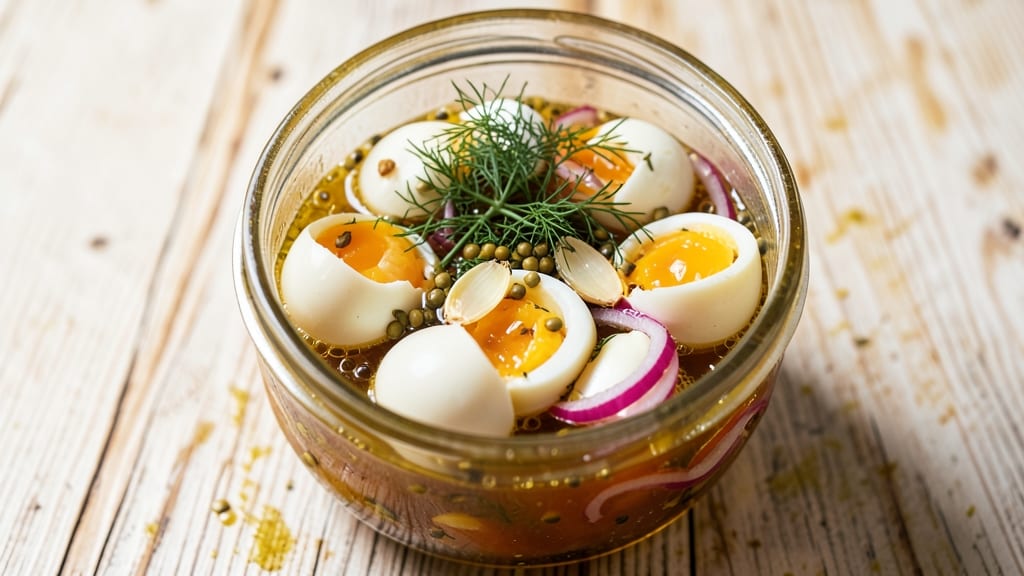
Grandma's pickled eggs recipe brings that tangy, crunchy nostalgia from the old country kitchen straight to your table. The secret lies in the perfect balance of vinegar, spices, and time—where hard-boiled eggs transform into bite-sized bursts of zesty flavor.
I've been perfecting this method for years, and it never fails to deliver that satisfying crunch and bright tang that makes every bite unforgettable.
This recipe stays true to tradition while offering flexibility for modern tastes—think classic dill and garlic or spicy mustard seeds for a kick. The process is straightforward: hard-boil eggs, prepare the brining solution with precise measurements, and let the flavors meld over time.
Safety comes first, so we'll ensure proper acidity levels to keep your pickled eggs fresh and flavorful for weeks.
What you'll end up with is a jar of vibrant, tangy pickled eggs that add a unique crunch to sandwiches, salads, or even as a standalone snack.
The texture is just right—crispy edges with tender centers—and the flavor profile is perfectly balanced between sharp vinegar, aromatic herbs, and just enough spice to keep things interesting. This is comfort food at its finest, with a little extra bite.
Whether you're preserving eggs for holiday gifts or treating yourself to a nostalgic snack, this recipe delivers restaurant-quality results at home. Let's get started on creating your own jar of tangy, crunchy nostalgia that'll have everyone asking for seconds.
Ingredients for grandma's pickled eggs
Eight whole eggs and a handful of pantry staples transform into nostalgic, tangy bites.
| Ingredient | Amount | Notes |
|---|---|---|
| Large Eggs 🥚 | 8 whole | Fresh, room temperature preferred |
| White Vinegar 💧 | 2 cups | 5% acidity minimum for safety |
| Water 💧 | 2 cups | Filtered preferred for clarity |
| Dried Dill Weed 🌿 | 1 tbsp | Or 2 tbsp fresh dill leaves |
| Garlic Cloves 🧄 | 4 cloves | Crushed for stronger flavor |
| Mustard Seeds 🌶️ | 1 tsp | Yellow or brown preferred |
| Black Peppercorns 🌶️ | 1 tsp | Crushed lightly for texture |
| Bay Leaves 🍃 | 2 whole | Fresh or dried |
| Granulated Sugar 🍯 | ½ cup | White or brown preferred |
| Salt 🧂 | 1 ½ tsp | Kosher or sea salt |
| Vegetable Oil 🫒 | ½ cup | For coating eggs |
| Celery Seeds 🌿 | ½ tsp | Optional for earthy depth |
| Red Wine Vinegar 🍷 | ½ cup | For depth of flavor |
| Pickling Spice Blend 🌶️ | 1 tsp | Or make your own mix |
The eggs are the foundation, so farm-fresh or high-quality store eggs make all the difference. Trader Joe's or local farms often have the best—look for eggs with bright orange yolks, a sign of rich flavor. The vinegar matters too: white vinegar for classic tang, but red wine vinegar adds complexity. I always grab a glass jar with a tight seal from Kirkland Signature at Costco—they're sturdy and keep everything fresh. For the spices, Penzeys or bulk bins at Whole Foods give you the freshest, most aromatic options. If you're feeling adventurous, toast your mustard seeds and celery seeds in a dry pan for 30 seconds—they'll release their oils and add an extra layer of flavor.
No dill? Fresh tarragon or even a pinch of asafetida can step in, though nothing beats the classic dill flavor. Short on mustard seeds? Ground mustard at half the amount works, but you'll lose that satisfying crunch. The pickling spice blend is flexible—mix your own with coriander, allspice, and cloves if you're feeling creative. For the vinegar, apple cider vinegar gives a milder tang, perfect if you prefer less sharpness. The sugar balances the acidity, so don't skip it—honey works too if you're avoiding refined sugar. And if you're making this for gifts, use smaller jars so they're easy to share.
Once pickled, these eggs keep for up to 3 months in the fridge—just make sure the eggs are fully submerged. I like to portion them into small jars or containers so they're ready to grab for snacks or gifts. The longer they sit, the more the flavors meld together—wait at least 24 hours before eating for the best taste. If you're giving them as gifts, add a ribbon and a handwritten note. They make a fantastic hostess gift, especially during the holidays when everyone's looking for unique, homemade treats.
Why You'll Love This Recipe
- No-Fuss Pantry Magic: I swear by this recipe because it uses stuff I already have—vinegar, garlic, and dill—no fancy shopping required. The eggs stay crisp after boiling, and the tangy brine comes together faster than ordering takeout.
- Garlic-Dill Bite: Between us, the garlic cloves and dried dill make these eggs ridiculously good. The vinegar cuts through the richness, leaving that bright, herby crunch that’s addictive after just one bite.
- Weeknight Workhorse: I keep a jar in the fridge for lazy nights—slip one into a sandwich, toss with pasta, or eat straight from the jar. It’s the ultimate no-stress side that works for picnics, potlucks, or when you’re too tired to cook.
- Budget Stretch: A dozen eggs and a few cents’ worth of spices turn into a snack that lasts for weeks. Honestly, it’s my secret weapon for stretching meals without sacrificing flavor—especially when I’m pinching pennies but still want something special.
Step-by-step instructions for grandma's pickled eggs
Here's how to make these tangy, crunchy bite-sized treats that taste just like grandma's.
Hard-Boil the Eggs for Perfect Texture
Place the 8 whole large eggs in a saucepan and cover them with cold water by about 1 inch. Bring to a boil over medium-high heat, then immediately reduce to a gentle simmer for 12 minutes. This timed boil ensures firm whites and creamy yolks without overcooking.
Transfer the eggs to an ice bath for 10 minutes to stop the cooking process. Once cooled, peel each egg carefully, reserving the shells if you want to use them for garnish later. The eggs should be completely cool before proceeding—this prevents cracking when they hit the vinegar bath.
Prepare the Pickling Liquid
In a medium saucepan, combine the 2 cups white vinegar, 2 cups water, 0.5 cup granulated sugar, 1.5 teaspoons salt, and 0.5 cup red wine vinegar. Bring to a boil over medium heat, stirring until the sugar and salt dissolve completely. This creates the flavor base for your pickling liquid.
Add the 1 tablespoon dried dill weed, 4 crushed garlic cloves, 1 teaspoon mustard seeds, 1 teaspoon black peppercorns, 0.5 teaspoon celery seeds, 2 whole bay leaves, and 1 teaspoon pickling spice blend. Let the mixture simmer for 5 minutes to infuse all the flavors. Remove from heat and let cool to room temperature.
Coat the Eggs for Crispy Texture
In a small bowl, whisk together the 0.5 cup vegetable oil with 1 tablespoon dried dill weed. This mixture creates a protective barrier that helps the eggs maintain their crunchy texture. Dip each egg in the oil mixture, coating them evenly all over.
Place the coated eggs in a clean quart-sized mason jar, packing them snugly but not too tightly. The oil coating will help preserve that satisfying crunch you get from grandma's version. Leave about 1 inch of headspace at the top of the jar for the pickling liquid.
Fill the Jar and Seal
Pour the cooled pickling liquid over the eggs until they're completely submerged. Use a wooden spoon to gently press down on the eggs, ensuring they stay covered by the liquid. This step is crucial for preventing mold growth and ensuring even pickling.
Seal the jar tightly and let it sit at room temperature for 24 hours. After this initial period, transfer the jar to the refrigerator. The eggs will continue to develop their tangy flavor over the next 3-5 days, with the best taste developing after 7 days of refrigeration.
Store and Enjoy
The pickled eggs will keep in the refrigerator for up to 3 months, though they're best enjoyed within the first 2 weeks for optimal texture and flavor. Serve them chilled as a tangy appetizer or snack, perfect for parties, picnics, or just as a nostalgic treat.
When ready to serve, remove one egg at a time and pat it dry with a paper towel. The crunchy texture and bright flavors will transport you right back to grandma's kitchen. These eggs make a fantastic addition to charcuterie boards or as a refreshing palate cleanser between rich dishes.
Pro Tips For Making Grandma'S Pickled Eggs
- USE COLD EGGS ONLY: Fresh eggs from the fridge crack like glass—wait 12 hours to bring them to room temp first. I learned this the hard way when my first batch turned into a vinegar soup of shattered shells. Cold eggs also pick up flavor better, so don’t rush this step.
- SMASH GARLIC CLOVES: Whole cloves float uselessly in the brine—crush them with the flat side of your knife first. My grandmother swore by this, and she was right: the flavor spreads evenly, not just in pockets. Takes 30 seconds but makes a real difference.
- WEIGH DOWN EGGS: Skip the floating eggs—place a small plate or clean stone on top to keep them submerged. I used to prop them with spoons, but they’d drift, leaving some eggs half-pickled. A weight guarantees even curing every time.
- STORE IN THE FRIDGE: Let the brine cool to room temp before refrigerating—hot vinegar creates condensation that dilutes flavor. I was skeptical until I tried it: the eggs stay crisp, the dill stays potent, and the garlic doesn’t turn bitter. (Yes, even if you’re impatient like me.)
Best sauces and condiments for this recipe
Classic Dill Sauce
This is the ultimate pairing for pickled eggs—creamy, tangy, and packed with fresh dill. Whisk together ½ cup sour cream, 1 tbsp mayonnaise, 1 tbsp fresh dill chopped, 1 tsp lemon juice, and ½ tsp garlic powder.
The sour cream balances the pickled eggs' sharpness while the dill echoes the jar's flavor profile. For extra richness, add a pinch of white pepper and serve chilled. 🥄
Spicy Mustard Aioli
If you love heat, this aioli is a game-changer. Mix ½ cup mayonnaise, 2 tbsp Dijon mustard, 1 tsp hot sauce (like Cholula), and ½ tsp smoked paprika. The mustard cuts through the pickled eggs' acidity, while the heat adds excitement.
For a smoky twist, add ½ tsp liquid smoke—just a drop makes a difference. Serve with toasted baguette slices for dipping. 🌶️
Honey-Sriracha Glaze
Sweet and spicy is the perfect contrast to tangy pickled eggs. Combine 2 tbsp honey, 1 tbsp sriracha, and 1 tsp rice vinegar in a small saucepan. Simmer for 3 minutes** on low heat until smooth.
Drizzle over pickled eggs or use as a dipping sauce. The honey softens the vinegar's bite, while the sriracha keeps things lively. Garnish with toasted sesame seeds for crunch. 🍯
Garlic-Herb Butter
For a richer, more decadent pairing, whip ½ cup softened butter with 2 minced garlic cloves, 1 tbsp chopped parsley, ½ tsp lemon zest, and a pinch of salt. Spread on warm crusty bread or serve as a topping for pickled eggs.
The garlic and herbs complement the dill and garlic in the pickling liquid beautifully. This works especially well for brunch or as a side for grilled meats. 🧈
Tahini-Yogurt Dip
For a Middle Eastern-inspired twist, blend ¼ cup tahini, ¼ cup plain yogurt, 1 tbsp lemon juice, 1 tsp honey, and 2 tbsp water until smooth. The tahini adds a nutty depth that pairs wonderfully with the pickled eggs' tang.
Add a pinch of cumin for warmth. Serve chilled with pita chips or as a dip for fresh veggies. 🥙
Pickled Onion Topping
Elevate your pickled eggs by topping them with quick-pickled onions. Thinly slice 1 small red onion and pack into a jar. Cover with ½ cup apple cider vinegar, ½ cup water, 1 tsp sugar, and ½ tsp salt.
Let sit for 30 minutes before draining. The sweet-tangy onions add another layer of flavor that complements the eggs perfectly. Sprinkle over the eggs just before serving. 🧅
Nutrition facts
Frequently asked questions
Why do I need to coat the eggs in oil before pickling?
The oil coating creates a protective barrier that preserves the eggs' crispy texture while they pickle. Without it, the eggs can become rubbery over time. This traditional technique is key to getting that satisfying crunch you'd expect from grandma's version.
Can I use fresh dill instead of dried in the pickling liquid?
Yes! Use 2 tablespoons fresh dill leaves instead of 1 tablespoon dried. Fresh herbs add a brighter flavor, but they'll settle to the bottom of the jar. Give the liquid a gentle stir before pouring it over the eggs to distribute the flavor evenly.
How do I know if my pickled eggs are safe to eat?
Your pickled eggs are safe if they're fully submerged in liquid and the vinegar solution maintains proper acidity (5% acidity or higher). The eggs should develop a tangy flavor and firm texture. If you notice any mold, an off smell, or slimy texture, discard them immediately. Always use clean jars and utensils to prevent contamination.
Can I make this recipe with brown eggs instead of white?
Brown eggs work perfectly and may even have a richer flavor. The pickling process treats all eggs the same regardless of shell color. Brown eggs are often fresher too, which can enhance the final texture. Just follow the same preparation steps for best results.
What's the best way to store pickled eggs for gifting?
Portion the pickled eggs into small, clean jars (like 8-ounce mason jars) and seal tightly. Label each jar with the date and contents. Store in a cool, dark place until ready to give. They'll keep for up to 3 months in the refrigerator. For long-distance gifting, pack with ice packs in an insulated container.