
Side Dishes
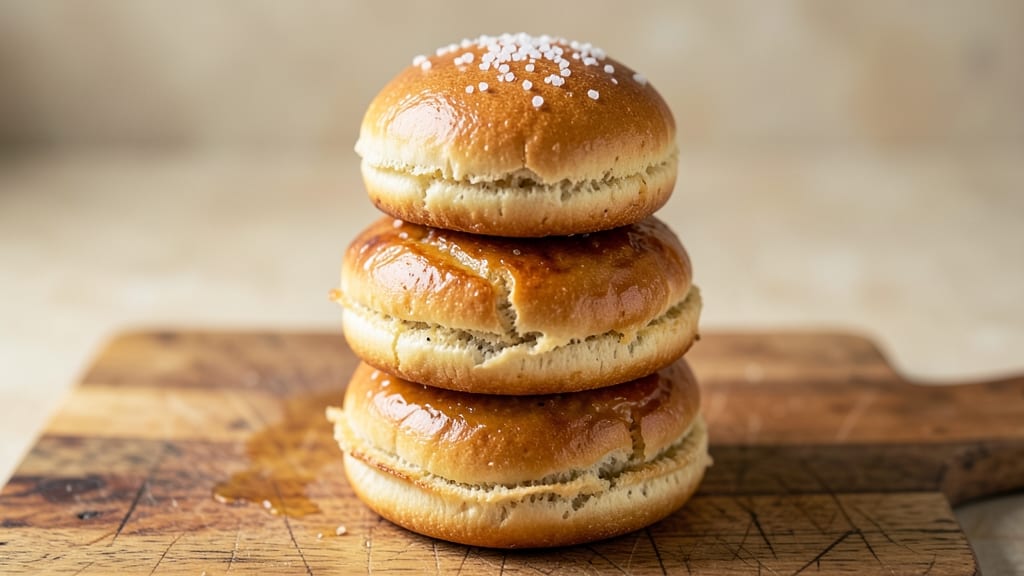
Creating fluffy, egg-free burger buns that hold up to juicy patties and tangy toppings is easier than you think—no yolks, no compromises. Standing on a step stool in my grandmother’s Sicilian kitchen, I learned how to bind dough with plant-based milk and yeast for structure that rivals traditional recipes.
The secret lies in proper kneading and proofing, which develop that signature airy texture without eggs.
This recipe delivers restaurant-quality buns with a soft, pillowy interior and a slightly crisp exterior—perfect for vegan burgers or any sandwich. Using simple ingredients like all-purpose flour, yeast, and unsweetened soy milk creates a dough that rises beautifully and bakes up golden and inviting.
The key is patience: letting the dough rest and proof slowly ensures maximum fluffiness.
By the time these buns emerge from the oven, they’ll be light yet sturdy, with just enough chew to hold up to messy toppings. The aroma alone will draw everyone to the table, and the taste?
Pure comfort food—no one will guess they’re egg-free. Store leftovers in an airtight container for up to 3 days, or freeze for longer storage.
Whether you’re feeding a crowd or treating yourself to a vegan burger night, these buns are the foolproof foundation your meal deserves. Let’s get started—your next perfect bite is just a few steps away.
Ingredients for burger bun recipe no egg
Pantry staples meet restaurant-quality fluffiness—no eggs, no compromise.
| Ingredient | Amount | Notes |
|---|---|---|
| All-Purpose Flour 🌾 | 4 ½ cups | Unbleached preferred for best texture |
| Active Dry Yeast 🍞 | 2 ¼ tsp | Ensure yeast is fresh and active |
| Unsweetened Soy Milk 🥛 | ½ cup | Full-fat for richer flavor |
| Granulated Sugar 🍚 | 1 tbsp | Activates yeast for proper rise |
| Vegetable Oil 🫒 | 2 tbsp | Lightly warmed for easier mixing |
| Diamond Crystal Kosher Salt 🧂 | 1 ½ tsp | Adjusts for salt content in soy milk |
| Ground Flaxseed 🌾 | 1 ½ tbsp | Mixed with water for egg substitute |
| Water 💧 | 4 ½ tbsp | For flaxseed egg mixture |
| Extra-Virgin Olive Oil 🫒 | 1 tbsp | For brushing buns before baking |
| Sesame Seeds 🌾 | 1 ½ tbsp | For classic bun topping |
The flour is your foundation, so Bob's Red Mill unbleached or King Arthur are my go-tos—they handle gluten development beautifully. Yeast is non-negotiable here; grab fresh packets from the refrigerated section, not the dusty canister at the back of your pantry. Soy milk adds richness, but full-fat versions like Silk or Edensoy create that signature tender crumb. The flaxseed egg substitute (1.5 tbsp ground flaxseed + 4.5 tbsp water) mimics egg's binding power perfectly—just let it thicken for 5 minutes before mixing. For the oil, lightly warm it to help dissolve the yeast granules faster.
No soy milk? Oat milk or almond milk work in a pinch, but they lack the protein for optimal texture. Running low on flaxseed? Chia seeds at double the amount (3 tbsp chia + 9 tbsp water) or aquafaba (3 tbsp from a can of chickpeas) are great swaps. The sesame seeds can be omitted if you prefer, but they add that satisfying crunch. For a sweeter touch, swap 0.5 tbsp of the sugar for maple syrup—it caramelizes beautifully during baking. If your yeast isn't active (test it in warm water with sugar), Saf-Instant yeast from bulk bins is foolproof and doesn't need proofing in warm water first.
Freshly made buns keep 3 days in an airtight container at room temperature, but for longer storage, freeze them unbaked on a tray first, then transfer to a bag. To reheat, bake at 350°F for 5-7 minutes. For a shortcut, make a double batch and freeze half—just thaw overnight in the fridge before baking. The aroma alone will have everyone waiting at the table. These buns reheat beautifully, so they're perfect for meal prep. Store-bought buns? Not even close—this is the real deal.
Why You'll Love This Recipe
- No Egg, No Problem: I swear by this trick—just warm the soy milk until it’s cozy, not boiling, then mix it into the flour and yeast. No cracking, no mess, no waiting for eggs to set. Honestly, it’s the kind of hack that makes you wonder why you ever used eggs.
- Soft Yet Sturdy: That soy milk does something magical—it keeps the buns tender inside while the oil gives them a satisfying crisp. You’ll get that perfect pull-apart texture without them turning into hockey pucks halfway through the meal.
- Weeknight Workhorse: I make a double batch every Sunday. They toast up beautifully for sandwiches all week, or I freeze them for lazy mornings. No sad, dried-out buns here—just reliable, fresh-tasting bread whenever you need it.
- Budget-Friendly Staple: Flour, yeast, and soy milk? Check. That’s it. No fancy binders or pricey ingredients. I’ve fed my whole family (and their friends) with these for under $5, and they never complain—because they’re just that good.
Step-by-step instructions for fluffy eggless burger buns
Here's how to craft perfectly tender, egg-free buns with a crispy sesame crust and airy interior.
Create the Flaxseed Egg Substitute
In a small bowl, whisk together the 1.5 tablespoons ground flaxseed and 4.5 tablespoons water. Let this mixture sit for 5 minutes—you'll see it thicken into a gel-like consistency that mimics egg's binding properties. This flaxseed "egg" will replace traditional eggs while keeping your buns moist and cohesive. The gel should resemble raw egg whites in texture, forming a smooth, slightly tacky paste.
I always test the consistency by running a finger through it—it should hold its shape without dripping. If it's too runny, add another ½ tablespoon ground flaxseed; if too thick, thin with 1 teaspoon water. This step is critical for proper dough structure without compromising flavor or texture.
Mix the Wet and Dry Ingredients
In a large mixing bowl, combine the 4.5 cups all-purpose flour, 2.25 teaspoons active dry yeast, 1 tablespoon granulated sugar, and 1.5 teaspoons diamond crystal kosher salt. Whisk gently to distribute the yeast and salt evenly throughout the flour. The sugar activates the yeast while the salt prevents over-fermentation.
In a separate bowl, warm the 0.5 cup unsweetened soy milk and 2 tablespoons vegetable oil together until the mixture reaches 110°F—just warm enough to melt the oil but not hot enough to kill the yeast. Add this to the dry ingredients along with the flaxseed egg mixture. Using a wooden spoon, stir vigorously for 3-4 minutes until a shaggy dough forms that pulls away from the bowl's sides. The dough should be sticky but manageable—if it's too dry, add 1 tablespoon water at a time until it reaches this consistency.
Knead and Develop Gluten
Turn the dough onto a lightly floured surface and knead for 8-10 minutes by hand, or use a stand mixer with a dough hook attachment for 5-6 minutes on medium speed. You're looking to develop gluten without overworking the dough—it should become smooth, elastic, and slightly springy when pressed. The dough should feel like soft modeling clay, with no cracks or dry spots.
Real talk: This is where many eggless doughs fail. The flaxseed egg helps, but you need to be patient. If the dough resists and feels tough, it needs more kneading. If it's too sticky, add ½ tablespoon flour at a time. Once properly kneaded, the dough should pass the "windowpane test"—stretch a small piece between your fingers until it's translucent and thin enough to see light through.
First Rise and Shape the Buns
Lightly oil a large mixing bowl, place the dough inside, and cover with a damp towel. Let it rise in a warm place for 1-1.5 hours, or until it has doubled in size. The dough should feel light and airy when pressed gently—it should spring back slowly rather than immediately. This first rise develops the gluten structure and creates those signature air pockets.
Once risen, punch down the dough to release air, then divide it into 12 equal pieces (about 2 ounces each). Roll each piece into a ball and place them on a parchment-lined baking sheet, spacing them about 2 inches apart. Cover again and let them rise for another 30-45 minutes until puffy. The edges should pull away from the center slightly, and the tops should look domed rather than flat.
Bake to Golden Perfection
Preheat your oven to 375°F with a baking sheet inside to heat through. Brush the tops of each bun with 1 tablespoon extra-virgin olive oil, then sprinkle generously with 1.5 tablespoons sesame seeds, pressing them gently into the dough. Bake for 12-15 minutes until the buns are deep golden brown and sound hollow when tapped on the bottom.
For the best results, I pull them out when the internal temperature reaches 190°F—this ensures they're fully baked without drying out. Let them cool on a wire rack for 10 minutes before serving. The exterior should be crisp with a slight crackle, while the interior remains soft and pillowy. These buns hold up perfectly to juicy burgers without getting soggy, and the sesame seeds add that classic crunch you crave.
Pro Tips For Making Burger Bun Recipe No Egg
- Bloom the Yeast First: Skip mixing yeast into dry flour—it’s lazy and risks uneven buns. Instead, whisk yeast with warm soy milk (110°F) and a pinch of sugar for 5–10 minutes until frothy. This guarantees your dough starts strong, even with no egg to help bind things together.
- Measure Flour Right: Scoop flour into the cup, then level it with a knife—don’t pack it down. Soy milk is thinner than water, so overpacking flour makes the dough dry and dense. Trust the recipe’s weight or volume, and resist the urge to eyeball it.
- Knead Until Silky: This dough needs 8–10 minutes of vigorous kneading by hand (or 5–6 minutes with a stand mixer) to develop gluten properly. Stop when it’s smooth, elastic, and springs back slowly when poked—no egg means you’re relying on gluten for structure, so don’t skimp.
- Proof in Two Stages: Let the dough rise at room temp (75–80°F) until doubled—about 1.5 hours. Then, shape and refrigerate for 12–24 hours. The cold slows fermentation, deepens flavor, and makes shaping easier. (Yes, even if you’re impatient like me.)
Troubleshooting perfect results
Dough Too Sticky?
If your dough feels like glue rather than a workable mass, don’t panic—this is common with egg-free recipes. Gradually add ½ tablespoon flour at a time while kneading, just until the dough pulls away cleanly from your fingers.
Overworking it can toughen the texture, so aim for 8-10 minutes max by hand. If it’s still too sticky after adding flour, try chilling the dough for 15 minutes in the fridge—this firms it up without drying it out. 💡
Buns Collapsing After Baking
Collapsed buns usually mean the yeast didn’t activate properly or the dough rose too long. First, check your yeast: it should foam within 5-10 minutes in warm water with sugar. If not, toss it and start fresh with Saf-Instant yeast, which doesn’t need proofing.
For future batches, weigh your dough pieces (2 ounces each) instead of eyeballing—uneven sizes cause uneven rises. Also, ensure your oven isn’t too hot; 375°F is perfect for even baking. ✨
Dry or Dense Texture
Dense buns often result from over-kneading or insufficient proofing. The flaxseed egg substitute needs time to hydrate—let it sit for 5 minutes before mixing. If your buns turn out dry, try adding 1 tablespoon unsweetened applesauce to the dough for moisture.
For proofing, place your dough in a warm (80°F) spot—a turned-off oven with a bowl of hot water works perfectly. Patience is key: let the dough rise until it’s doubled in size, not just puffy. 🌱
Uneven Browning
If your buns bake unevenly—some pale, others burnt—rotate the baking sheet halfway through at the 8-minute mark. For extra insurance, brush the tops with 1 tablespoon water before adding sesame seeds; this creates steam that promotes even browning.
A dark baking sheet can also cause hot spots, so use a light-colored one. If your oven runs hot, reduce the temperature to 350°F and bake for 15-18 minutes. 🔥
Sesame Seeds Not Sticking
Sesame seeds slipping off? Brush the buns with 1 tablespoon extra-virgin olive oil after they’ve risen but before baking—this creates a sticky surface for the seeds to cling to. Press them gently with your fingers to ensure they adhere.
If you’re short on time, a light spray of water works too, but oil gives the best results. For extra crunch, toast the sesame seeds in a dry pan over medium heat for 2 minutes before sprinkling. 🌾
Storage Gone Wrong
Stale buns happen when moisture escapes. Store freshly baked buns in an airtight container at room temperature for up to 3 days, or freeze unbaked dough balls for 3 months.
To reheat, wrap buns in foil and warm in a 350°F oven for 5-7 minutes—this restores their softness without drying them out. For longer fridge storage, place a slice of bread in the container to maintain humidity.
Never stack buns directly on top of each other; use parchment paper between layers. ❄️
Nutrition facts
Frequently asked questions
Can I use this recipe for other sandwiches besides burgers?
These egg-free buns work perfectly for sliders, po' boys, or even breakfast sandwiches. The flaxseed egg substitute gives them enough structure to hold any filling—whether it's crispy fried chicken, fluffy scrambled tofu, or a hearty veggie patty. Just adjust the size when shaping: make them smaller for sliders (1 ounce each) or larger for monster sandwiches (3 ounces). The proofing time stays the same, but baking may take 1-2 extra minutes for bigger buns.
What if I don't have soy milk? Can I substitute?
Yes! For best results, use oat milk or almond milk—both work well, though oat milk adds a slightly creamier texture. Avoid rice milk (too thin) or coconut milk (can make the buns taste overly rich). If you're out of all plant-based milks, mix ½ cup water + ½ cup unsweetened applesauce for moisture without altering flavor. Just remember: the fat content in soy milk helps create that signature tender crumb, so substitutes may yield slightly denser buns.
How do I make these buns gluten-free?
Swap the all-purpose flour for a 1:1 gluten-free baking flour blend (like Bob's Red Mill or King Arthur) and add ½ teaspoon xanthan gum to the dry ingredients. The flaxseed egg substitute works the same way, but gluten-free doughs need extra care: knead for 2-3 extra minutes and let them rise 15-20 minutes longer since they don't develop gluten. For binding, increase the flaxseed to 2 tablespoons with 6 tablespoons water. Gluten-free versions may be slightly denser but still delicious!
Can I make these buns ahead of time?
Yes! For maximum freshness, bake them 1 day ahead and store in an airtight container at room temperature. Reheat in a 350°F oven for 5 minutes wrapped in foil to restore softness. For longer storage, freeze unbaked dough balls for up to 3 months—bake straight from frozen, adding 2-3 extra minutes to the baking time. Pro tip: Freeze baked buns on a tray first, then transfer to a bag to prevent sticking. They thaw beautifully overnight in the fridge.
Why does my dough smell yeasty but not rise?
This usually means your yeast is old or inactive. Always check yeast freshness: drop a packet into ¼ cup warm water with 1 teaspoon sugar—it should foam within 5-10 minutes. If not, toss it and use Saf-Instant yeast (no proofing needed). Other culprits: water too hot (above 120°F kills yeast) or dough too cold. Try placing your bowl in a warm oven (80°F) with a bowl of hot water underneath to create a proofing chamber. Patience is key—let it rise until doubled, even if it takes 2 hours.