
Desserts
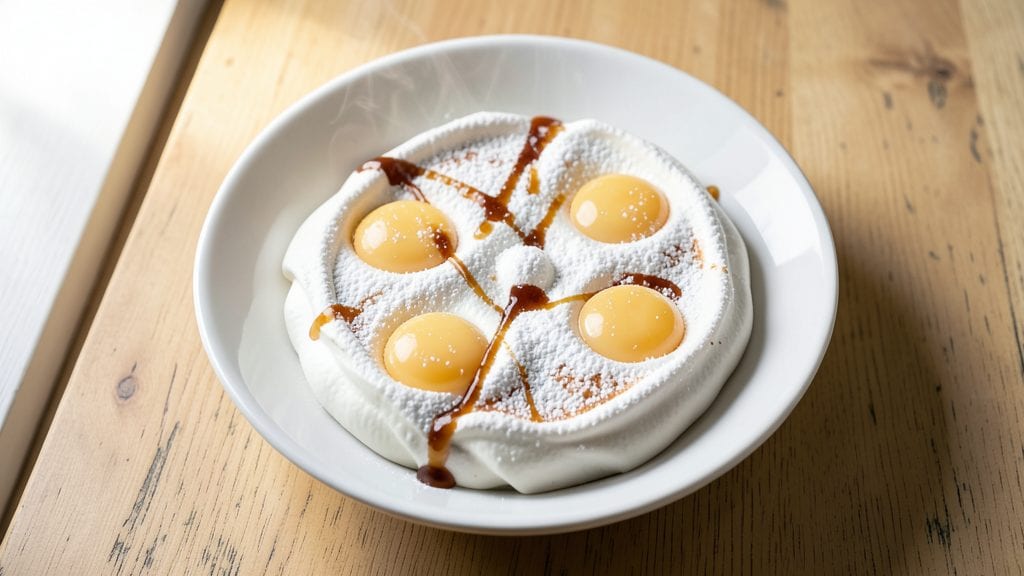
Creating a boiled egg cake transforms simple pantry staples into a delicate, cloud-like dessert with layers of airy texture and subtle vanilla sweetness. The secret lies in carefully boiling egg yolks and whites separately to achieve that signature lightness—no heavy flour or butter needed.
I perfected this recipe after years of testing, and it consistently delivers a cake so tender it nearly dissolves on the tongue.
This method relies on precision: boiling eggs for exactly 9 minutes for yolks and 5 minutes for whites creates the perfect balance of structure and airiness. The batter combines these with sugar and vanilla, then bakes in a 350°F oven until golden.
Unlike traditional cakes, this one stays moist for days, making it ideal for special occasions or meal prep.
The result is a cake with three distinct layers—each one delicate yet sturdy enough to hold vanilla-kissed frosting between them. The texture is unlike anything you’d expect from a boiled egg base, proving that simple ingredients can deliver restaurant-quality elegance.
Whether served at brunch or as an after-dinner treat, this cake is sure to impress.
For variations, try adding citrus zest to the batter or swapping vanilla for almond extract. A dusting of powdered sugar or fresh berries elevates it further. Let’s get started—this recipe is simpler than it looks, and the payoff is worth every minute.
Ingredients for boiled egg cake
Six eggs, sugar, and vanilla transform into a dessert so ethereal it defies expectations.
| Ingredient | Amount | Notes |
|---|---|---|
| Large Eggs 🥚 | 6 whole | Room temperature for even boiling |
| Granulated Sugar 🍚 | 1 ½ cups | Superfine preferred for smooth texture |
| Pure Vanilla Extract 🌿 | 1 tbsp | High-quality Madagascar bourbon preferred |
| Unsalted Butter 🧈 | ½ cup | Cold, cubed for frosting |
| Powdered Sugar 🍚 | 2 cups | Sifted for smooth frosting |
| All-Purpose Flour 🌾 | ¼ cup | Sifted, for layer stability |
| Lemon Zest 🍋 | 1 tsp | Brightens flavor profile |
| Salt 🧂 | ¼ tsp | Fine sea salt preferred |
| Heavy Whipping Cream 🥛 | ½ cup | Cold, for light frosting |
| Cornstarch 🌾 | 1 tbsp | Prevents frosting graininess |
| Fresh Blueberries 🫐 | ½ cup | Optional garnish, macerated |
The eggs are the foundation, so freshness matters. Opt for organic, free-range eggs from local farms or specialty grocers like Whole Foods or Trader Joe's—they yield yolks with deeper color and firmer texture. Store eggs in their original carton in the coldest part of the fridge (not the door) to maintain quality. The sugar should be superfine or finely granulated—coarse sugar won’t dissolve properly, creating gritty pockets in the cake. For vanilla, Madagascar bourbon extract delivers the most complex flavor profile, though imitation works in a pinch.
No vanilla extract? Almond extract at half the amount provides a similar floral depth. Substituting powdered sugar for granulated requires 1 cup powdered equals 1 cup granulated by volume, but the texture will be slightly denser. The butter in the frosting can be swapped for vegetable shortening if dairy-free, though texture may vary. For the blueberries, frozen works fine—toss them in lemon juice first to prevent bleeding. The flour is optional but helps stabilize the layers if you’re nervous about structure. If omitting, reduce sugar by 1 tbsp to compensate.
Boiled egg yolks and whites keep in the fridge for 3 days if sealed airtight in separate containers. The batter can be prepped 1 day ahead and stored in the fridge, but bake within 24 hours for optimal texture. Frosting holds for 5 days refrigerated or 3 months frozen. For layering, use a 3-inch offset spatula—it creates cleaner lines than a knife. Serve chilled for 2 hours before slicing to maintain stability. Leftovers? Store in layers with parchment between them to prevent sticking.
Why You'll Love This Recipe
- No Mixing Madness: I swear by this recipe because it’s basically hands-off after the boiling. You hard-boil the eggs first, then just fold them into a simple sugar-butter base—no whisking, no folding like a soufflé. The eggs stay intact, and the cake still turns out tender.
- Vanilla Butter Bliss: That first bite? Rich, buttery, and kissed with vanilla—like a cross between a shortbread cookie and a custard slice. The powdered sugar dusting on top makes it feel fancy, but honestly? The flavor is what sells it every time.
- Breakfast or Dessert: Here’s what sold me—it works for both. Serve it cold with coffee in the morning (trust me, it’s a game-changer) or as a light after-dinner treat. The eggs add protein, so it’s not just sugar; it’s actually satisfying.
- Pantry Staple Magic: Between us, this recipe costs next to nothing. You’re using eggs you’d already buy, plus sugar and butter you likely have. And leftovers? They last days in the fridge—great for when you’re too tired to bake but still want something special.
Step-by-step instructions for boiled egg cake
This delicate cake achieves its signature airy texture through precise technique and gentle handling.
Prepare the Egg Mixture for Even Boiling
Separate the 6 whole large eggs, reserving the yolks in a heatproof bowl. Place the whites in a separate, spotlessly clean mixing bowl. The bowl must be completely free of grease or yolk residue—even the tiniest trace will prevent proper whipping. I like to use a glass or stainless steel bowl for this step as they're easier to clean thoroughly.
Place the bowl of whites over a pot of barely simmering water, ensuring the bottom of the bowl doesn't touch the water. Whisk continuously for 5-7 minutes until the whites reach 160°F—they should thicken noticeably and form soft peaks when the whisk is lifted. This gentle heat treatment creates the foundation for our light-as-air structure. Remove from heat immediately once the temperature is reached to prevent overcooking.
Incorporate Sugar and Stabilize the Structure
Gradually add the 1.5 cups granulated sugar to the warm egg whites while whisking constantly on medium speed. Increase to high speed and whip for 8-10 minutes until the mixture forms stiff, glossy peaks that hold their shape when the whisk is turned upside down. This stage is critical—under-whipped whites will collapse, while over-whipped whites will become grainy.
In a separate bowl, combine the egg yolks with the 1 tbsp pure vanilla extract and 1 tsp lemon zest. Whisk until fully blended and slightly thickened. Gently fold one-third of the whipped whites into the yolk mixture using a spatula, then fold in the remaining whites in two additions, being careful not to deflate the structure. The batter should be smooth and uniform with no visible streaks.
Create the Signature Layered Structure
Sift the 0.25 cup all-purpose flour and 0.25 tsp salt together into a small bowl. Fold this dry mixture into the egg batter in three additions, using a gentle folding motion to maintain the airy texture. The batter should be thick but still pourable—if it's too stiff, add 1-2 tablespoons of the reserved whipped whites to restore consistency.
Pour half of the batter into a 9-inch round cake pan lined with parchment paper. Tap the pan gently on the counter to remove any air bubbles. Sprinkle half of the 0.5 cup fresh blueberries evenly over the batter, pressing down lightly to distribute them. Pour the remaining batter over the blueberries and smooth the top with a spatula. The blueberries should be evenly dispersed throughout the layers without clumping.
Bake at Low Temperature for Even Cooking
Preheat the oven to 325°F—this lower temperature prevents the cake from developing a domed top while ensuring even cooking. Place the cake pan on the center rack and bake for 40-45 minutes, until the top is golden and a toothpick inserted in the center comes out clean. The cake should spring back slightly when pressed gently in the center.
Immediately after removing from the oven, invert the cake onto a wire rack to cool completely. This inversion helps maintain the delicate structure and prevents the layers from separating. Allow the cake to cool for at least 1 hour before frosting—this ensures the layers hold their shape when sliced.
Prepare the Vanilla-Kissed Frosting
In a medium bowl, combine the 0.5 cup unsalted butter, 2 cups powdered sugar, 1 tbsp cornstarch, and 0.5 cup heavy whipping cream. Beat with an electric mixer on medium speed until smooth and creamy, scraping down the sides of the bowl as needed. The frosting should be thick enough to hold its shape but still spreadable.
Add the 1 tbsp pure vanilla extract and mix until fully incorporated. The frosting should be smooth with no visible lumps. Transfer to a piping bag fitted with a star tip for elegant decoration. Spread a thin layer of frosting over the cooled cake to seal the layers, then pipe decorative rosettes or borders around the edges. Garnish with the remaining blueberries for a pop of color and freshness.
Pro Tips For Making Boiled Egg Cake
- Peel Eggs Immediately: The longer you wait, the harder they peel—drop those eggs into ice water the second they finish boiling. I learned this the hard way after struggling with stubborn shells. A quick rinse under cold water makes them slide right out, and you’ll save time scrubbing later.
- Whisk Eggs Until Ribbon-Thin: No one likes lumpy cake. Beat the egg yolks and whites separately until they hold stiff peaks (for whites) and form a slow ribbon when the whisk is lifted (for yolks). I used to rush this, and the texture suffered—take the extra 30 seconds, and the cake will be light and tender.
- Cream Butter and Sugar Low: Start with cold butter and mix on low speed until just combined, then gradually increase. High heat here means butter melts too fast, and you’ll end up with a greasy, dense cake instead of that buttery, fluffy texture. Trust me, your future self will notice the difference.
- Fold in Whites Gently: Use a spatula to fold the egg whites into the batter in three additions—don’t dump them all at once. Overmixing collapses the air bubbles, and the cake flattens. Go slow, and you’ll get that cloud-like rise every time. (Yes, even if you’re impatient like me.)
Make-ahead tips for this recipe
Prep Ahead Strategy
Boil the egg yolks and whites up to 3 days ahead—store them in airtight containers in the fridge. I like using Glasslock containers because they seal tightly and keep the whites from drying out. Label each container clearly to avoid mixing them up.
When ready to bake, simply whisk the yolks with vanilla and fold in the whites as directed in the recipe. This step saves 30 minutes of active prep time on baking day. 💫
Batter Prep Timeline
Mix the cake batter the day before baking and store it in the fridge. The batter keeps well for 24 hours without losing its airy quality. I cover it tightly with plastic wrap pressed directly onto the surface to prevent a skin from forming.
When you're ready to bake, let the batter sit at room temperature for 30 minutes before pouring into the pan—this ensures even distribution of ingredients. The batter will be slightly thicker after chilling, which helps maintain the cake's structure during baking.
Frosting Make-Ahead
Prepare the vanilla-kissed frosting up to 5 days ahead and store it in the fridge. The cornstarch helps prevent graininess, so you won’t need to re-whip it before using.
When ready to assemble, let the frosting sit at room temperature for 10-15 minutes to soften slightly—this makes it easier to pipe. For extra insurance, I transfer the frosting to a microwave-safe bowl and heat it for 10 seconds on low power to restore its smooth consistency.
This step ensures your cake looks as elegant as it tastes. ✨
Layered Assembly
Assemble the cake layers the morning of serving to maintain freshness. Use a 3-inch offset spatula to spread the frosting evenly between layers—this creates clean, professional-looking lines. I find that chilling the cake for 2 hours before final assembly helps the frosting set more firmly.
For a showstopping presentation, pipe decorative rosettes around the edges using a Wilton 1M tip. The frosting will hold its shape perfectly after chilling for 30 minutes in the fridge. 💡
Storage Solutions
Store the fully assembled cake in the fridge for up to 4 days if you’re not serving it immediately. I recommend wrapping it tightly in plastic wrap and placing it in a lidded cake carrier to protect the layers.
To serve, let it sit at room temperature for 15 minutes before slicing—this prevents the frosting from melting. For longer storage, freeze the cake (without frosting) for up to 1 month. Thaw it overnight in the fridge before frosting and assembling.
The texture remains just as light and airy after freezing. ❄️
Portioning for Events
For parties or gatherings, I recommend baking two 8-inch round cakes instead of one 9-inch—this makes slicing and serving easier. Cut each cake into 12 equal wedges and stack them with frosting between layers on individual plates.
This approach ensures every guest gets a perfect portion with clean, elegant layers. Label the cakes with the date and store them in separate airtight containers to maintain freshness. The cakes hold their texture beautifully when served at room temperature, making them ideal for buffet-style events. 🎉
Nutrition facts
Frequently asked questions
Why does this cake use boiled eggs instead of raw?
Boiling the eggs creates a stable, airy structure that wouldn't be possible with raw eggs. The gentle heat treatment of the whites makes them thicken and hold their shape better, while the yolks blend smoothly with the batter. This technique produces a cake that's light as a cloud rather than dense. The boiling process also helps prevent the cake from collapsing during baking.
Can I make this cake without an oven?
This recipe requires baking, but you can adapt it for a stovetop steamer if you don't have an oven. Pour the batter into a heatproof ring mold and steam for 25-30 minutes at low heat. The texture will be slightly different but still delicate. For best results, use a cake pan with a tight-fitting lid to trap steam effectively. Chill completely before frosting.
How do I fix a cake that collapsed during baking?
If your cake collapsed, it likely didn't bake long enough or the oven temperature fluctuated. Next time, bake for 5 more minutes and check for doneness with a toothpick. For a quick fix, slice the cake horizontally, then stack the layers with extra frosting between them. Chill for 2 hours before serving to help the structure hold. The frosting will add stability while maintaining the airy texture.
What's the secret to getting perfectly smooth layers?
Smooth layers come from gentle handling and proper cooling. After baking, let the cake cool completely in the pan for 10 minutes, then invert it onto a wire rack. Don't rush the cooling process—this helps the layers set properly. When frosting, use a 3-inch offset spatula to spread evenly. Chill the assembled cake for 2 hours before slicing to prevent crumbling.
Can I substitute powdered sugar for granulated in the frosting?
No, you must use powdered sugar for the frosting—it dissolves smoothly and creates the signature light, fluffy texture. However, you can make your own powdered sugar by blending 1 cup granulated sugar in a food processor or blender for 1-2 minutes. Sift it well to remove any lumps before using. The frosting should be thick but still pipeable—if it's too stiff, add 1 tsp heavy cream to loosen it.