
Main Courses
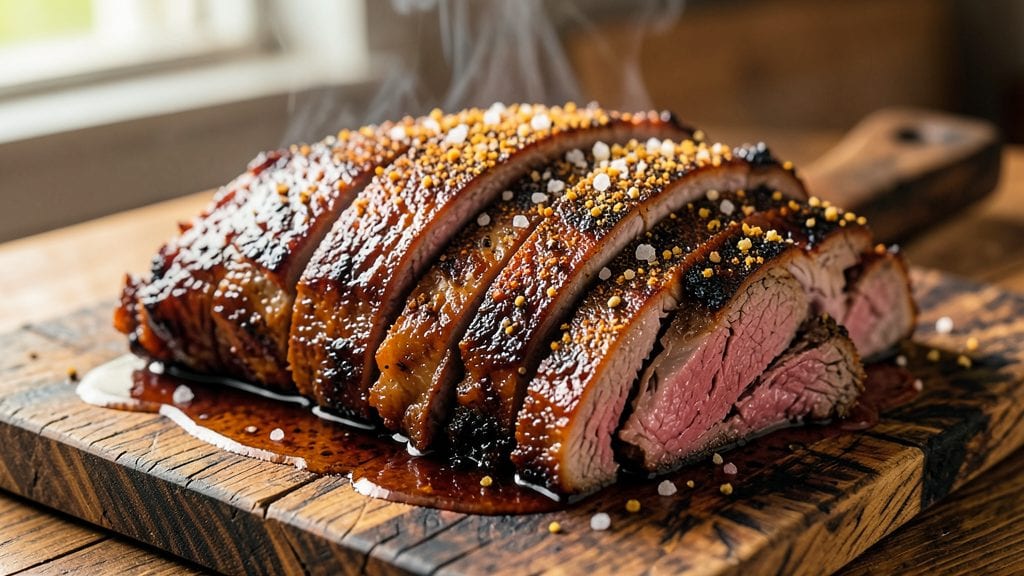
Cooking beef brisket in a Big Green Egg transforms tough cuts into melt-in-your-mouth tenderness with a smoky crust that rivals any competition entry. The key lies in precise charcoal heat and low-and-slow patience—something I perfected after years of experimenting with my own Big Green Egg in Portland’s backyard.
This recipe captures the essence of Texas-style brisket without requiring a full smoker setup.
The beauty of using a Big Green Egg is its ability to maintain consistent temperatures while allowing wood smoke to infuse the meat deeply. I start with a dry rub of coarse salt, black pepper, and smoked paprika, then let the brisket rest overnight to develop maximum flavor penetration.
Charcoal chunks provide steady heat, while hickory or pecan wood adds that signature smoky aroma that makes every bite irresistible.
By the time you pull it from the Egg, you’ll have a brisket with a dark, crackling bark and fork-tender meat that practically falls apart. The internal temperature should reach 203°F, where collagen breaks down into gelatin for that signature juiciness.
Resting is crucial—this isn’t just a step, it’s where all the magic happens as juices redistribute throughout the meat.
Serve with classic sides like buttery cornbread and tangy pickles to balance the rich, smoky flavors. This brisket keeps beautifully for days, making it perfect for meal prep or feeding a crowd. Let’s get started on creating your showstopping centerpiece!
Ingredients for big green egg beef brisket
Six pounds of brisket, a handful of spices, and the perfect Big Green Egg setup—this is all you need for competition-worthy tenderness.
| Ingredient | Amount | Notes |
|---|---|---|
| Beef Brisket 🥩 | 6 lb | Packer cut, fat cap intact |
| Coarse Kosher Salt 🧂 | ½ cup | Diamond Crystal preferred |
| Freshly Ground Black Pepper 🌶️ | 2 tbsp | Coarsely cracked |
| Smoked Paprika 🌶️ | 2 tbsp | Spanish or Hungarian |
| Granulated Garlic 🧄 | 1 tbsp | Not garlic powder |
| Onion Powder 🧅 | 1 tbsp | Finely ground |
| Brown Sugar 🍯 | 1 tbsp | Light or dark |
| Charcoal Chunks 🔥 | 2 lb | Lump charcoal preferred |
| Hickory Wood Chips 🌳 | 1 cup | Soaked 30 minutes |
| Pecan Wood Chips 🌳 | ½ cup | Soaked 30 minutes |
| Apple Cider Vinegar 🍎 | ¼ cup | For spritzing |
| Beef Tallow 🧈 | 2 tbsp | Or high-smoke-point oil |
| Yellow Onion 🧅 | 1 whole | Quartered, for spritz |
| Fresh Garlic Cloves 🧄 | 4 cloves | For spritz |
| Black Cherry Wood Chips 🍒 | ½ cup | Optional for sweetness |
The brisket cut is everything here. Packer cut with a thick fat cap is non-negotiable—it keeps the meat moist during the long cook. I always grab mine from Costco when it's on sale, or from my local butcher if I need it fresh. Look for bright red meat with good marbling; anything grayish or overly lean will turn out dry. The spices? Diamond Crystal kosher salt dissolves better than table salt, and Spanish smoked paprika gives that authentic Texas BBQ vibe. Freshly ground black pepper makes all the difference—pre-ground tastes flat in comparison. For the wood chips, Traeger brand is my go-to because they're consistent and soak up moisture well for better smoke production.
No lump charcoal? Brickettes work in a pinch, but they burn hotter and less evenly. Running out of hickory? Pecan or oak chips are solid substitutes—just adjust the smoke flavor profile to your taste. The apple cider vinegar spritz might seem odd, but it cuts through the fat and keeps the bark crispy. No beef tallow? Avocado oil or bacon fat works just as well. The brown sugar in the rub isn't just for sweetness—it helps caramelize the bark. Pro tip: Toast your spices in a dry pan for 30 seconds before mixing to wake up their flavors. And if you're feeling fancy, add those black cherry wood chips for a touch of sweetness that pairs perfectly with the smoky brisket.
This brisket tastes even better the next day as the flavors meld, so make a double batch if you're feeding a crowd. Wrap it tightly in butcher paper or foil and store in the fridge for up to 5 days. For longer storage, portion it into vacuum-sealed bags and freeze for up to 3 months. The bark stays crispy if you reheat it wrapped in a towel in a 250°F oven for 20 minutes. Leftovers make amazing sandwiches—just pile it high on toasted brioche with pickles and a smear of Whole Foods' honey mustard. Trust me, you'll want to make this at least once a month.
Why You'll Love This Recipe
- Five-Ingredient Magic: I swear, this recipe is my shortcut to restaurant-quality brisket. Just salt, pepper, smoked paprika, garlic, and beef—no fancy rubs or hours of prep. The Green Egg’s even heat turns that tough cut into melt-in-your-mouth perfection with almost no effort.
- Smoky Garlic Bomb: That crushed garlic and smoked paprika combo? It’s the secret weapon. The brisket gets this deep, savory crust that’s not too sweet, not too spicy—just pure, addictive flavor. Honestly, I’ve tried store-bought brisket mixes, and this beats them every time.
- Weeknight or Party Star: Make it for Tuesday dinner or double it for a crowd—this works anywhere. The Green Egg’s portability means I can cook it on the deck, tailgate, or even my kitchen counter. (Yes, even on a Tuesday night.) Leftovers? They’re just as good reheated or cold in sandwiches.
- Budget Hero: A whole brisket feeds my family for days—think tacos, nachos, or sandwiches. I’m talking $15 for a meal that lasts weeks, and the flavor only gets better as it rests. Between us, this is how I stretch my grocery budget without sacrificing taste.
Step-by-step instructions for Big Green Egg beef brisket
Master this low-and-slow technique for brisket that's melt-in-your-mouth tender with a perfect mahogany crust.
Prepare the Brisket and Dry Rub
Begin by trimming the fat cap of the 6 lb beef brisket down to about ¼-inch thickness using a sharp boning knife. Leave the fat intact elsewhere—this protects the meat during cooking. Pat the entire surface completely dry with paper towels, including the cavity, to ensure maximum bark development.
In a small bowl, combine the 0.5 cup coarse kosher salt, 2 tbsp freshly ground black pepper, 2 tbsp smoked paprika, 1 tbsp granulated garlic, 1 tbsp onion powder, and 1 tbsp brown sugar. Rub this mixture generously over all surfaces of the brisket, pressing it into the meat so it adheres well. Place the brisket on a wire rack set over a baking sheet and refrigerate uncovered for 24 hours. This dry-brining step ensures deep flavor penetration and a perfect crust.
Set Up the Big Green Egg for Indirect Heat
Soak the 1 cup hickory wood chips, 0.5 cup pecan wood chips, and 0.5 cup black cherry wood chips in water for 30 minutes. Assemble your Big Green Egg according to manufacturer instructions, then add the 2 lb charcoal chunks. Light the charcoal and let it burn until covered with a thin layer of white ash.
Spread the soaked wood chips evenly over the hot coals, then place the Egg's lid on top. Let the fire burn for 10 minutes to establish a steady 225°F temperature. Use a meat probe thermometer to check the internal temperature—this is crucial for consistent results. Once the temperature stabilizes, you're ready to cook.
Smoke the Brisket Low and Slow
Place the brisket fat-side up on the grill grate, positioning it away from direct heat. Maintain the 225°F temperature by adjusting the vents as needed—this is where patience pays off. Smoke the brisket for 6-8 hours, or until it reaches an internal temperature of 165-170°F. You'll notice a stall around this point where the temperature plateaus—this is normal and indicates the meat is releasing moisture.
Here's the thing—don't be tempted to peek or move the brisket. Every time you open the lid, you lose heat and extend cooking time. The bark will develop naturally as the fat renders and the rub caramelizes. Once the internal temperature hits 165-170°F, it's time for the wrap.
Wrap and Finish the Brisket
Prepare a spritz by combining the 0.25 cup apple cider vinegar, 2 tbsp beef tallow, quartered yellow onion, and 4 cloves fresh garlic cloves in a bowl. Mix well and strain through a fine-mesh sieve. Remove the brisket from the grill and wrap it tightly in two layers of butcher paper (not aluminum foil). Spritz the brisket generously with the mixture, then return it to the Egg.
Continue cooking at 225°F until the internal temperature reaches 203°F, which should take another 4-6 hours. The wrap helps break through the stall while preserving that beautiful bark. When the brisket is probe-tender (a knife should slide in like butter), remove it from the grill and let it rest for 1-2 hours wrapped in butcher paper and towels. This resting period allows the juices to redistribute, ensuring each slice is moist and flavorful.
Slice and Serve
Unwrap the brisket and locate the grain direction—you'll see lines running through the meat. Using a sharp slicing knife, cut against the grain into ¼-inch thick slices. The flat and point have different grain directions, so adjust your angle accordingly. Serve immediately with any accumulated juices spooned over the top.
Each slice should be fork-tender with a perfect balance of smoky flavor and crispy bark. The meat should pull apart easily with gentle pressure, not so soft it falls apart. Pair with classic barbecue sides like coleslaw and cornbread for the ultimate experience. The brisket will continue to tenderize slightly as it cools, so don't rush this step—it's worth the wait.
Pro Tips For Making Big Green Egg Beef Brisket
- Trim the Fat First: The flat isn’t the only part worth keeping—trim all but a thin layer of fat from the brisket before seasoning. I learned this the hard way when my Big Green Egg brisket turned greasy instead of crispy; that extra fat just melts into the coals instead of rendering into flavor. A sharp knife and steady hand save you from a soggy crust later.
- Salt Like It’s 1985: Coarse kosher salt isn’t just for garnish—use enough to make the brisket glisten. I mean generously rub it in, especially on the fat cap, at least 12 hours before cooking. (Yes, even if you’re impatient like me.) The Big Green Egg’s indirect heat needs that dry, salty crust to develop proper bark, and skipping this step means you’ll be fighting for texture the whole cook.
- Smoke Hot, Then Chill: Start the brisket over direct heat for the first 30 minutes—no shame in getting it smoky fast. After that, move it to indirect heat and let it crawl toward 195°F. I used to drag this out, but the Big Green Egg’s small chamber means you can actually control the temp better if you commit to the two-zone fire early. Patience here keeps the meat tender, not chewy.
- Garlic Isn’t Just Seasoning: That granulated garlic isn’t just for sprinkling—press it into the meat, especially near the edges, before the first smoke hits. I was skeptical until I tried it; the Big Green Egg’s tight heat means the garlic burns before it caramelizes if you just toss it on. A few minutes of effort here means you won’t end up with bitter, charred bits clinging to the brisket.
Essential equipment for perfect results
Big Green Egg Essentials
Your Big Green Egg is the star of this recipe, but you’ll need a few key accessories to pull it off. First, invest in a high-quality meat probe thermometer—I swear by the ThermoWorks Smoke—to monitor both the Egg’s internal temperature and the brisket’s progress.
A wire mesh basket keeps the brisket elevated off the grate for better airflow and bark development. For wood, I recommend Traeger brand chips (hickory, pecan, and black cherry) because they burn evenly and produce consistent smoke. 🔥
Charcoal Control
Lump charcoal is non-negotiable for even heat distribution. I use Kingsford Gold or Cowboy Charcoal because they ignite quickly and maintain steady temperatures. Avoid briquettes—they burn hotter and less predictably. For a 16-inch Egg, 2 lbs of lump charcoal is ideal, but adjust based on your model.
Keep an extra bag on hand; running out mid-cook is a nightmare. Pro tip: Store your charcoal in a metal bucket with a tight lid to keep it dry and ready for your next cook. ⚡
Butcher Paper Magic
Skip the foil—butcher paper (like Maple Leaf Farms) is your secret weapon for wrapping. It allows moisture to escape while preserving that coveted bark. I buy rolls from my local butcher or New Seasons Market in Portland.
For extra crispiness, double-wrap the brisket after the spritz. If you’re in a pinch, heavy-duty aluminum foil works, but the bark won’t be as textured. 💡
Spritz Station
Your spritz needs a dedicated spray bottle—I use a 16-ounce stainless steel atomizer (like Ozeri) for even distribution. The vinegar-onion-garlic mix is key to keeping the bark crispy during the wrap phase.
Store pre-mixed spritz in the fridge for up to 5 days or freeze in ice cube trays for quick thawing. For extra flavor, add 1 tsp of liquid smoke to the spritz mix. 🌶️
Slicing Tools
A Dexter-Russell 12-inch slicing knife makes short work of the brisket, cutting cleanly against the grain. If you’re on a budget, a Wüsthof Ikon or Victorinox Fibrox works well. Keep your knife sharp—dull blades tear the meat and leave uneven slices.
I also recommend a meat mallet (like Mercer Culinary) to tenderize any stubborn spots if you’re serving it immediately after slicing. 🔪
Portland Pro Tips
At the Portland Farmers Market, I stock up on local beef tallow from Cascade Creamery for the spritz—it adds a rich, buttery depth. For wood, Willamette Valley Hardwoods sells pre-soaked chips in flavors like apple and cherry, perfect for experimenting.
And if you’re cooking in cooler Pacific Northwest weather, preheat your Egg for 20 minutes before adding the brisket to maintain that critical 225°F temperature. 🌲
Nutrition facts
Frequently asked questions
How long should I let my brisket rest before slicing?
Always let your brisket rest for 1-2 hours after removing it from the Egg. This crucial step allows the juices to redistribute throughout the meat, ensuring each slice stays moist and flavorful. The longer it rests, the more tender it becomes—don't rush this part!
Can I use a smaller Big Green Egg for this recipe?
Yes, but you may need to adjust cooking times. A 12-inch Egg can handle this recipe, but expect it to take 1-2 hours longer to reach the same internal temperatures. Monitor the heat closely and maintain a steady 225°F as best as possible.
What if my brisket isn't tender enough?
If your brisket isn't fork-tender at 203°F, it likely didn't reach the proper internal temperature. Return it to the Egg, wrapped in butcher paper, and cook until it does. For extra tenderness, try adding 1 tbsp of beef broth to your spritz mix.
How do I store leftovers without drying them out?
Wrap leftovers tightly in butcher paper or foil, then store in an airtight container. Reheat wrapped in a 250°F oven for 20 minutes or until warmed through. Brisket keeps well for 5 days in the fridge or 3 months in the freezer.
What's the best wood choice for a milder smoke flavor?
For a lighter smoke profile, use 100% pecan or apple wood chips instead of hickory. These woods produce a sweeter, fruitier smoke that complements the brisket without overpowering it. Mix them with black cherry for a balanced flavor.