
Breakfast & Brunch
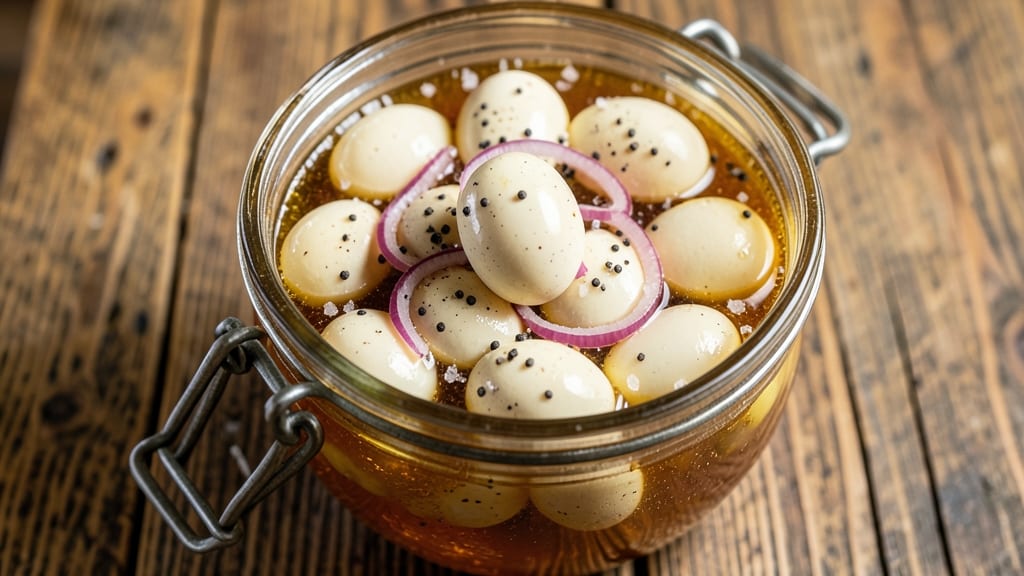
This Amish wedding pickled eggs recipe delivers the creamy yolk magic and vinegar-braised crunch that make them a beloved tradition at Amish celebrations. The combination of tangy vinegar, aromatic spices, and tender eggs creates a dish that's both comforting and sophisticated—perfect for wedding feasts where hearty, flavorful sides are essential.
I've perfected this recipe over years of attending Amish gatherings, where it's always the first dish to disappear from the table.
The process begins with a simple brine that transforms ordinary eggs into something extraordinary through a 48-hour curing period. This extended time allows the flavors to meld perfectly, resulting in eggs that are creamy inside with a satisfying crunch when sliced.
The vinegar base not only preserves the eggs but also infuses them with a bright, tangy flavor that balances beautifully with the rich, buttery texture of the yolks.
What makes these pickled eggs truly special is their versatility—they can be served as a standalone appetizer or paired with crusty bread, fresh vegetables, or even as part of a larger Amish wedding spread.
The dish carries deep cultural significance, often prepared in large batches to feed extended families and guests during celebrations. Once you try this recipe, you'll understand why it's a staple at Amish weddings and a favorite at any gathering.
Ready in just 3 days (with minimal active time), this recipe is surprisingly simple yet delivers restaurant-quality results. The key lies in the precise balance of vinegar, spices, and curing time—each step ensures the eggs develop that signature creamy, tangy flavor that makes them irresistible.
Let's get started on creating this timeless dish for your next celebration.
Ingredients for amish wedding pickled eggs
Twelve simple ingredients transform ordinary eggs into Amish wedding showstoppers with creamy yolk perfection.
| Ingredient | Amount | Notes |
|---|---|---|
| Large Eggs 🥚 | 24 whole | Fresh, room temperature preferred |
| White Vinegar 💧 | 4 cups | Distilled, 5% acidity minimum |
| Water 💧 | 2 cups | Filtered preferred for clarity |
| Diamond Crystal Kosher Salt 🧂 | 1 ½ cups | Coarse grain essential |
| Granulated Sugar 🍚 | ½ cup | White or raw preferred |
| Mustard Seeds 🌶️ | 2 tbsp | Yellow or brown, whole seeds |
| Black Peppercorns 🌶️ | 1 tbsp | Freshly cracked preferred |
| Bay Leaves 🌿 | 4 whole | Fresh or dried, 1-inch pieces |
| Garlic Cloves 🧄 | 6 cloves | Smashed, not minced |
| Dill Seeds 🌿 | 1 tbsp | Whole seeds, toasted lightly |
| Red Pepper Flakes 🌶️ | 1 tsp | Adjust for heat preference |
| Onion Powder 🧅 | 1 tsp | Freshly ground preferred |
| Unsalted Butter 🧈 | ½ cup | Cold, cubed for topping |
The eggs are non-negotiable—farm-fresh from local markets or organic brands like Vital Farms make all the difference. You'll need 24 large eggs for a crowd, so plan ahead. The vinegar should be distilled white vinegar—apple cider vinegar adds unwanted sweetness. Costco or Trader Joe's carry the best quality in bulk, but any grocery store works. Look for 5% acidity minimum on the label to ensure proper preservation. The kosher salt? Diamond Crystal is the gold standard—it dissolves slower, creating that perfect crunchy exterior.
No mustard seeds? Substitute 1 tbsp ground mustard, but the texture won't be identical. Short on bay leaves? Dried thyme at half the amount works in a pinch. The butter topping is optional but traditional—European-style butter like Plugrá has more flavor. For extra tang, add 1 tbsp lemon juice to the brine. The garlic and dill seeds can be toasted in a dry pan for 30 seconds to deepen their flavor. If you're making this for a wedding, double the batch—it disappears fast!
Store the brine in a glass jar with a tight lid in the fridge for up to 2 weeks after opening. The eggs keep their perfect texture for 3-4 days once pickled, but flavor improves with time. For serving, arrange on a platter with crusty sourdough slices and a sprinkle of fresh dill. The butter topping should be added just before serving—it melts beautifully when warm. Freezing isn't recommended, as it alters the texture.
Why You'll Love This Recipe
- Five-Ingredient Magic: I swear by this recipe because it’s that simple—just eggs, vinegar, water, salt, and sugar. No fancy herbs or chopping required; the tangy crunch comes from the salt and sugar’s slow dance with the vinegar.
- Tangy Crunch Perfection: That first bite? The vinegar’s sharp bite meets the egg’s creamy center—like a bright, zesty hug. Honestly, I’ve tried store-bought pickled eggs, but these? Way better, and the sugar just rounds out the edge so it’s not too harsh.
- Party Ready Always: Serve them at weddings, potlucks, or even as a snack with sandwiches. They’re the kind of dish that disappears fast—my cousin’s wedding had a whole jar gone in an hour. No fuss, just delicious.
- Lasts All Week: Make a big batch and store them in the fridge for days. Between us, I’ve had these last two weeks without losing their punch. Budget-friendly? Absolutely. Time-saving? Even more so.
Step-by-step instructions for Amish wedding pickled eggs
Here's how to transform simple eggs into the legendary Amish wedding pickles with their signature crunchy exterior and velvety yolks.
Prepare the Eggs for Pickling
Crack all 24 whole large eggs into a large bowl, being careful not to break the yolks. I like to use a clean, dry bowl to prevent any water contamination that could make the eggs cook unevenly. Once all eggs are cracked, gently stir them with a wooden spoon to distribute the yolks and whites evenly.
In a separate medium saucepan, combine the 4 cups white vinegar and 2 cups water. Bring this mixture to a gentle simmer over medium heat—you're not boiling it, just creating a warm, fragrant liquid. The vinegar should smell sharp and clean, not acrid. While waiting, prepare a large, deep glass or ceramic bowl that can hold all your ingredients comfortably.
Create the Spiced Brine Mixture
In a small bowl, mix together the 1.5 cups diamond crystal kosher salt, 0.5 cup granulated sugar, 2 tbsp mustard seeds, 1 tbsp black peppercorns, 4 whole bay leaves, 6 smashed garlic cloves, 1 tbsp dill seeds, 1 tsp red pepper flakes, and 1 tsp onion powder. This is the aromatic backbone of your pickles—don't skip any ingredients, especially the bay leaves and garlic, which add depth.
Once the vinegar mixture reaches a gentle simmer, carefully pour it over the spice mixture in the bowl, stirring vigorously to dissolve the salt and sugar completely. The liquid should turn a pale golden color. Let this mixture cool slightly for 5 minutes—it should be warm but not hot enough to cook the eggs immediately.
Combine Eggs and Brine
Slowly pour the warm spiced brine over the cracked eggs in the large bowl, gently stirring as you go. The eggs should be fully submerged in the liquid, and you might need to use a spoon to push any floating whites back down. Cover the bowl with plastic wrap and let it sit at room temperature for 12 hours—this is where the magic happens.
During this time, the eggs will begin to absorb the flavors of the brine. I like to place the bowl in the refrigerator after the first hour to prevent any bacterial growth, but keep it out long enough for the eggs to soak up the spices. The longer they sit, the more flavor they'll develop—just don't exceed 24 hours or the texture might suffer.
Cook the Eggs to Perfection
After the eggs have soaked, carefully transfer them to a large, heavy-bottomed saucepan. The goal is to cook them gently so they remain firm yet creamy inside. Add enough of the spiced brine to cover the eggs by about 1 inch, then place the pan over low heat. You want the liquid to maintain a gentle simmer—if it boils vigorously, the eggs will toughen.
Cook the eggs for 12-15 minutes, stirring occasionally with a wooden spoon to prevent them from sticking to the bottom. You'll know they're done when they float to the surface and a knife inserted into one slides in easily with just slight resistance. The yolks should still be runny but the whites fully set—this is the secret to that signature Amish wedding texture.
Finish and Serve
Remove the eggs from the heat and let them cool in the brine for 10 minutes. Using a slotted spoon, transfer them to a clean bowl or jar, reserving the spiced liquid. Melt the 0.5 cup unsalted butter in a small saucepan over low heat, then carefully pour it over the cooled eggs. The butter will coat each egg, adding richness and helping to preserve their texture.
Serve the eggs warm or at room temperature, accompanied by the reserved spiced brine for dipping. The contrast of the crunchy exterior with the creamy yolk is what makes these pickles legendary. Store any leftovers in the refrigerator for up to 5 days, but they're best enjoyed fresh when the flavors are at their peak.
Pro Tips For Making Amish Wedding Pickled Eggs
- USE COLD EGGS: Grab eggs straight from the fridge—room temperature eggs crack like overripe peaches when boiling. I learned this the hard way after watching a batch of whites spill into my vinegar brine. Give them 15 minutes in the fridge before boiling if you’re impatient, but cold is non-negotiable for clean peels later.
- DILUTE THE VINEGAR: Mix your vinegar and water before adding salt and sugar—otherwise, you’ll end up with a grainy sludge at the bottom. I used to dump everything in at once, and my jars always had weird sediment. A 1:1 ratio (1 cup vinegar to 1 cup water) keeps things smooth and consistent, just like the Amish recipes I’ve seen.
- BOIL HARD, THEN COOL: Don’t skimp on the boiling time—12 minutes for large eggs guarantees they’re fully set inside. Afterward, plunge them into ice water for 5 minutes. I tried cutting corners once and ended up with eggs that were rubbery in the middle. The ice bath also makes peeling way easier when you’re ready to jar them.
- WEIGH THE SALT: Diamond Crystal kosher salt is fluffy—don’t eyeball it. Use a kitchen scale for 1 tablespoon per quart of liquid (about 20 grams). I used to just scoop, and my pickles turned out either bland or shockingly salty. A scale takes 10 seconds and saves you from throwing out a whole batch.
Perfect pairings for this recipe
Amish Wedding Spread Pairings
These pickled eggs shine alongside traditional Amish wedding dishes like sausage and peppers or potato salad. The tangy crunch cuts through the richness of scratch-made gravy and roasted meats—perfect for a hearty feast.
I always serve them with homemade pretzels or rye bread for dipping. The combination of textures makes every bite unforgettable. 🥖
Sweet Contrast Pairings
For a surprising but delicious twist, serve these pickled eggs with Amish apple butter on warm cornbread. The sweet-tart balance is magical, especially during fall weddings. Another favorite? Honey-glazed ham with a side of these tangy eggs—the flavors complement perfectly. 🍎
Beverage Pairings
Cool down the heat with sparkling apple cider or iced tea with lemon. The effervescence cleanses the palate between bites. For a boozy pairing, try Amish-made hard cider or a crisp German wheat beer—both enhance the egg's briny notes.
Avoid heavy sodas that might overpower the delicate flavors. 🍺
Seasonal Adaptations
In summer, pair these eggs with chilled cucumber salad and herb-roasted chicken. For winter weddings, serve them with slow-cooked beef short ribs and mashed potatoes. The pickled eggs add brightness to rich, wintery dishes. I also love adding fresh dill sprigs as a garnish for extra freshness. ❄️
Modern Fusion Ideas
For a contemporary touch, serve these pickled eggs on avocado toast with a sprinkle of feta cheese. Another creative option? Pickled egg sliders on mini brioche buns with spicy mustard—a hit at casual wedding receptions. The traditional flavors translate beautifully into modern dishes. 🌟
Cultural Serving Traditions
In Amish communities, these pickled eggs are often served family-style in large ceramic bowls at the center of the table. Guests use small wooden spoons to scoop them up with bread.
For a festive touch, arrange them on a white linen cloth with fresh flowers—a simple yet elegant presentation. 🌸
Nutrition facts
Frequently asked questions
Why do Amish weddings always feature pickled eggs?
Pickled eggs are a traditional Amish side dish that dates back to their Pennsylvania Dutch heritage. The tangy, preserved flavor balances rich wedding meals, and their simple preparation makes them perfect for large gatherings. Plus, they keep well at room temperature—ideal for outdoor barn weddings!
Can I make this recipe with fewer eggs?
The recipe scales perfectly. For a smaller batch, use 12 eggs with half the brine ingredients (reduce vinegar, water, and spices proportionally). Keep the same curing time for best flavor development.
What's the secret to getting perfectly creamy yolks?
The key is gentle cooking at low heat for 12-15 minutes until the eggs float. Overcooking toughens the yolks—test with a knife for just-set whites but still-runny centers. The butter topping also helps maintain that silky texture.
How long can I store the pickled eggs?
In the refrigerator, they'll stay fresh for 5-7 days in their brine. For longer storage, transfer to an airtight container with fresh brine (no more than 2 weeks). Freezing isn't recommended as it alters the texture.
Can I substitute apple cider vinegar?
While traditional, apple cider vinegar adds sweetness that changes the flavor profile. Stick with distilled white vinegar (5% acidity) for that classic tang. If you must substitute, use 1/4 cup less sugar to balance the sweetness.