
Breakfast & Brunch
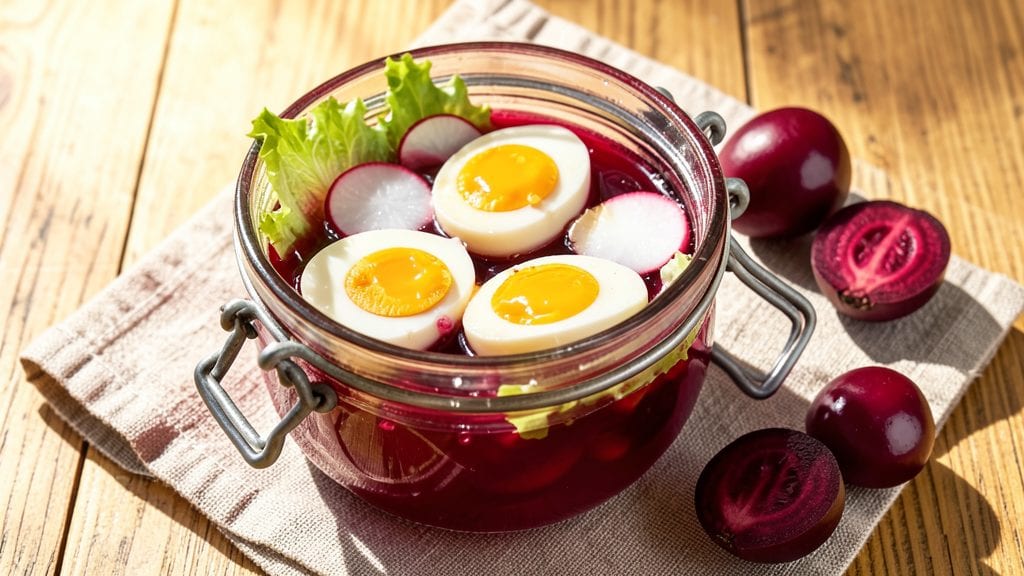
Transforming ordinary eggs into vibrant pink bites with crunchy yolk magic starts with this beet juice pickling method. The deep color and subtle earthy sweetness of beets infuse the eggs, creating a visually stunning dish that's as delicious as it is impressive.
I first discovered this technique while exploring Eastern European preservation methods, and the results were nothing short of extraordinary.
This recipe delivers restaurant-quality pickled eggs with a perfect balance of tangy, slightly sweet, and briny flavors. The beet juice not only colors the eggs beautifully but also adds depth that complements the rich, creamy yolks.
With just a few simple ingredients and minimal effort, you'll achieve professional results that stay fresh for weeks in the refrigerator.
The process is straightforward: hard-boil the eggs, prepare the beet juice brine, and let them cure for at least 48 hours. The waiting time allows the flavors to meld perfectly, resulting in eggs that are tender yet firm with a vibrant pink hue throughout.
These pickled beauties make an excellent appetizer, snack, or even a unique addition to charcuterie boards.
Whether you're hosting a gathering or simply want to elevate your snack game, these beet-infused eggs will leave a lasting impression. The combination of visual appeal and complex flavor makes them a standout dish that's sure to become a regular in your culinary repertoire.
Let's get started on creating these vibrant, flavorful bites!
Ingredients for pickled eggs with beet juice
Eight ingredients transform plain eggs into stunning pink bites with perfect crunchy yolks.
| Ingredient | Amount | Notes |
|---|---|---|
| Large Eggs 🥚 | 8 whole | Freshly boiled, peeled |
| Fresh Beets 🍠 | 1 ½ lb | Medium size, peeled and chopped |
| White Vinegar 💧 | 2 cups | White or apple cider |
| Water 💧 | 2 cups | Filtered preferred |
| Granulated Sugar 🍚 | ½ cup | White or raw |
| Salt 🧂 | 1 ½ tbsp | Kosher or sea salt |
| Black Peppercorns 🌶️ | 1 tbsp | Crushed lightly |
| Garlic Cloves 🧄 | 3 cloves | Crushed or minced |
| Fresh Dill 🌿 | ¼ cup | Chopped, stems removed |
| Bay Leaves 🍃 | 2 whole | Dried or fresh |
| Mustard Seeds 🌶️ | 1 tsp | Yellow or brown |
| Red Wine Vinegar 🍷 | ½ cup | Optional for depth |
The beets are the star here—organic from Whole Foods or your local farmers market if possible. Medium-sized beets (about 1.5 lbs) give you enough juice for vibrant color without bitterness. Peel them first, then chop into chunks for easier juicing. If you can't find fresh beets, canned beets work in a pinch, but they'll be sweeter and less intense. The vinegar matters too: white vinegar is classic, but apple cider adds subtle sweetness. For extra depth, grab a bottle of red wine vinegar—just a half cup makes a world of difference.
No fresh dill? Dried dill at one-third the amount works, but fresh is worth it for that bright, herbal note. Short on bay leaves? Two sprigs of fresh thyme gives similar earthiness. The mustard seeds add a nice kick—if you hate spice, skip them entirely. For the sugar, raw turbinado sugar dissolves slower but adds texture, while white sugar keeps things smooth. The garlic and peppercorns are non-negotiable though—they're the backbone of the flavor. If you're using red wine vinegar, look for a dry, bold version like Bertolli or Balsamic Vinegar Co., not the sweet cooking wines.
This brine keeps for 2 weeks in the fridge if you make extra—perfect for gifting. The eggs stay fresh for 3-4 weeks once pickled, but the flavor peaks after 48 hours. Store them in an airtight container with the brine to keep them juicy. For serving, pat them dry and slice in half to show off that gorgeous pink yolk. They're magical on charcuterie boards or as a fancy appetizer—just don't overfill your plate, or you'll eat them all before guests arrive.
Why You'll Love This Recipe
- No Beet Left Behind: I swear by this trick—roasting the beets first intensifies their sweetness, and that juice? It turns the eggs a gorgeous deep pink while keeping them tender. No wasted ingredients here.
- One Jar, Endless Snacks: Between us, I’ve had these cold, warm, and even chopped into salads—still delicious. The vinegar and sugar balance makes them addictive as a solo bite or a charcuterie add-on.
- Budget-Friendly Pantry Magic: Eggs and beets are cheap staples, and this recipe stretches them into something special. I make a big batch and keep it in the fridge for days—zero food waste, all flavor.
- Weeknight Workhorse: Honestly, it’s the kind of dish that feels fancy but takes 15 minutes. Hard-boil eggs while you chop beets, mix the brine, and boom—you’ve got a showstopper with almost no effort.
Step-by-step instructions for pickled eggs with beet juice
Here's how to make these stunning pink pickled eggs with a perfect crunchy yolk every time.
Boil and Prepare the Eggs
Place the 8 whole large eggs in a saucepan and cover them with cold water by about 1 inch. Bring to a boil over medium-high heat, then immediately reduce to a gentle simmer. Cook for exactly 9 minutes from the time the water returns to a full boil. This timing ensures perfectly set whites while keeping the yolks beautifully runny.
Drain the eggs and transfer them to an ice bath for 5 minutes to stop the cooking process. Once cooled, peel the eggs carefully under running water—this helps remove any remaining shell fragments. Set them aside on a clean towel to dry completely before pickling. The eggs should be completely dry to prevent cloudiness in the beet juice brine.
Roast and Extract Beet Juice
Preheat your oven to 400°F. Toss the 1.5 lb fresh beets with 1 tablespoon olive oil (not listed but required for roasting) and place them directly on a baking sheet. Roast for 45-50 minutes until fork-tender. The beets should be soft enough to pierce easily with a fork, and their edges will begin to caramelize slightly.
While still warm, drain the roasted beets and transfer them to a blender or food processor. Add 2 cups water and blend until completely smooth. Strain the mixture through a fine-mesh sieve into a bowl, pressing firmly to extract all the juice. You should yield about 1½ cups of vibrant pink beet juice. Set aside to cool completely before using.
Prepare the Pickling Brine
In a medium saucepan, combine the 2 cups white vinegar, 0.5 cup granulated sugar, 1.5 tablespoons salt, 1 tablespoon crushed black peppercorns, 3 minced garlic cloves, 0.25 cup chopped fresh dill, 2 whole bay leaves, 1 teaspoon mustard seeds, and the 0.5 cup red wine vinegar. Bring the mixture to a gentle boil over medium heat, stirring until the sugar and salt dissolve completely.
Remove from heat and let the brine cool to room temperature. Once cooled, carefully stir in the 1½ cups beet juice you extracted earlier. The mixture should turn a beautiful rosy pink color. This is your pickling liquid—it should be fully combined without any separation. Let it cool completely before proceeding to prevent cooking the eggs.
Pack and Pickle the Eggs
Sterilize 4 clean glass jars by rinsing them with boiling water or running them through a dishwasher cycle. Pack the peeled eggs tightly into the jars, standing them upright. Pour the cooled beet juice brine over the eggs until completely submerged, leaving about ½ inch of space at the top of each jar.
Seal the jars tightly and let them sit at room temperature for 24 hours before transferring to the refrigerator. This initial room-temperature stage allows the flavors to meld and the eggs to absorb the vibrant color. After 24 hours, store in the fridge where they'll keep for up to 3 weeks. The eggs will develop deeper flavor and color with each passing day.
Serve and Enjoy
When ready to serve, remove an egg from the jar and slice it in half. You'll be amazed by the beautiful pink hue and the perfectly set white with a gloriously runny yolk. The beet juice gives these eggs a subtle earthy sweetness that pairs beautifully with the tangy vinegar brine. Serve chilled as an appetizer with crusty bread or alongside charcuterie boards.
For best results, use the eggs within 3 weeks of pickling. The longer they sit, the more intense the flavor becomes, but the texture will remain perfect if stored properly. These vibrant pink eggs make a stunning presentation and a delicious twist on classic pickled eggs that will impress any guest.
Pro Tips For Making Pickled Eggs With Beet Juice
- BOIL EGGS UNTIL COLD: Don’t pull them out at the first sign of doneness—wait until the water’s stone-cold to the touch. I learned this the hard way when my eggs cracked open in the brine like overripe fruit. Patience here means no soggy yolks or cloudy whites later.
- ROAST BEETS FIRST: Skip the raw beet juice—roast them whole (400°F for 45 minutes) until fork-tender, then blend with vinegar and sugar. Roasting deepens the flavor and softens the juice, so it doesn’t turn your brine muddy. (Yes, even if you’re impatient like me.)
- STERILIZE JARS HOT: Run your jars and lids through a 200°F oven for 10 minutes before filling. Cold jars can cause the brine to cool too fast, dulling the beet color and risking mold. I used to skip this—now I don’t.
- BALANCE THE BRINE: Use a 1:1 ratio of beet juice to vinegar (e.g., 1 cup juice + 1 cup vinegar), then add sugar to taste. Too much vinegar? The eggs taste harsh. Too little? They’ll ferment faster than you want. Taste the brine before pouring—trust your tongue, not the recipe.
Essential equipment for this recipe
Beet Juice Extraction
You’ll need a high-powered blender like the Ninja BN600 or Vitamix 5200 to extract maximum juice from roasted beets. These models handle fibrous vegetables better than budget blenders.
After roasting, strain the puree through a fine-mesh sieve or nut milk bag—I prefer the Ladle & Ball nut milk bag for its durability. Press firmly to extract every drop of vibrant pink juice, which is key for that stunning color. 🍠
Glass Jars
Use 4-ounce or 8-ounce glass jars with airtight lids—I recommend Ball Mason jars or Kerr jars for their vacuum-sealing lids. These prevent leaks and keep the eggs submerged in the beet juice brine.
Sterilize jars by boiling them for 10 minutes or running through a dishwasher sanitize cycle. Never reuse jars from store-bought pickles—they may harbor bacteria. 🥫
Thermometer
A candy or instant-read thermometer (like the Thermoworks ThermoPop) ensures your eggs cook to 160°F for perfect doneness. Overcooking turns yolks rubbery, while undercooking leaves whites too soft.
For the beet juice, monitor the brine’s temperature—it should cool to room temperature (70°F) before adding eggs to avoid cooking them further. 🌡️
Fine-Mesh Strainer
Skip the cheesecloth—it’s messy and doesn’t extract juice efficiently. Instead, use a stainless steel fine-mesh strainer (like the OXO Good Grips) to filter beet puree.
Press with a wooden spoon or rubber spatula to maximize juice yield. Leftover pulp can be composted or blended into hummus for zero waste. 🌱
Measuring Tools
Precision matters for pickling! Use a digital kitchen scale (like the OXO Good Grips) for the 1.5 lbs of beets and a stainless steel measuring cup for liquids.
A microplane (for garlic) and mortar and pestle (for crushing peppercorns) ensure even distribution of flavors. Avoid plastic tools—they can react with vinegar over time. ⚖️
Optional Tools
For extra convenience, invest in a vacuum sealer (like the FoodSaver) to extend shelf life to 4 weeks. A jar lifter (with suction cups) protects your hands when handling hot jars.
If you’re gifting these eggs, add ribbon and tags—I love the KitchenAid ribbon dispenser for a polished touch. 🎀
Nutrition facts
Frequently asked questions
Why do the eggs turn pink when pickled with beet juice?
The vibrant pink color comes from natural pigments called betalains found in beets. When the eggs soak in the beet juice brine, these pigments penetrate the egg whites, creating that stunning hue. The longer they pickle, the deeper the color becomes—perfect for eye-catching appetizers!
Can I use canned beets instead of fresh?
Yes, but fresh beets give the best flavor and color. If using canned beets, drain and rinse them well to remove excess liquid, then blend with 1 cup water to mimic the fresh beet juice yield. The taste will be slightly sweeter, but still delicious. For maximum vibrancy, fresh is ideal!
How long should I pickle the eggs for best flavor?
For perfect flavor, let them pickle for at least 48 hours at room temperature, then refrigerate. After 2 weeks, the eggs develop deeper flavor and color, but use them within 3 weeks for best texture. The longer they sit, the more intense the beet-infused taste becomes!
What if my eggs float in the brine?
This happens when air gets trapped inside the eggs. To fix it, gently press down on each egg with a clean spoon or fork to release air bubbles. If they still float, add more brine to fully submerge them. Floating eggs won't ruin the recipe—they'll just be easier to remove when serving!
Can I make this recipe without vinegar?
Vinegar is essential for proper pickling—it preserves the eggs and adds tanginess. However, you can reduce the amount slightly (1.5 cups) if you dislike strong vinegar flavors. For a milder taste, use apple cider vinegar instead of white vinegar. Never skip it entirely, as it prevents spoilage!