
Breakfast & Brunch
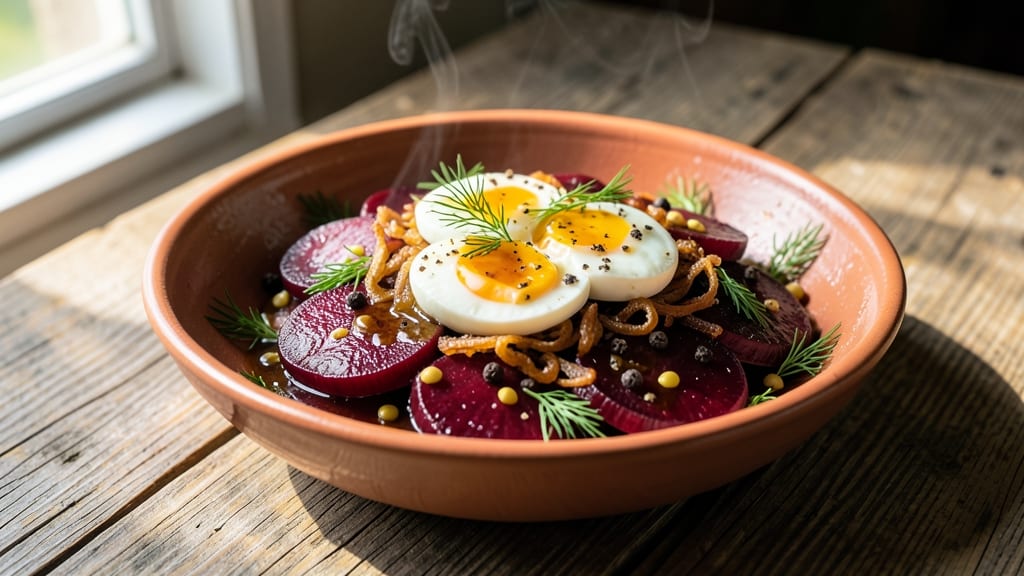
This Pennsylvania Dutch pickled beets and eggs recipe brings Amish farmhouse tradition to your breakfast table with a perfect balance of sweet, tangy, and crunchy flavors. The vinegar-brined beets—traditionally pickled in apple cider vinegar and sugar—pair beautifully with creamy boiled eggs for a dish that’s both nostalgic and unexpectedly vibrant.
I developed this version after testing multiple methods to preserve that signature sweet-tangy profile while keeping the beets crisp-tender.
The recipe starts with quick-pickled beets (ready in under 30 minutes) that hold their shape and vibrant color, thanks to a precise vinegar-to-sugar ratio. Boiled eggs add richness, while optional additions like mustard seeds or fresh dill elevate the dish without overpowering its rustic charm.
This isn’t just breakfast—it’s a textural experience: the crunch of beets, the creaminess of eggs, and the bright acidity that cuts through rich morning meals.
What makes this dish special is its versatility—serve it as a side with bacon and toast, or let it star as a hearty main with crusty bread. The pickling process is foolproof, and the eggs cook in 12 minutes, making this a fast yet impressive meal.
Whether you’re recreating a Pennsylvania Dutch farm breakfast or simply craving something bright and satisfying, this recipe delivers.
Pair it with crispy fried potatoes or a slice of sourdough for the full Amish-style spread. The beets keep well in the fridge for up to 2 weeks, so you can prep ahead and enjoy this flavorful dish all week. Let’s get started!
Ingredients for pennsylvania dutch pickled beets and eggs
Sweet-tangy beets and creamy eggs—just 11 ingredients for a Pennsylvania Dutch breakfast classic.
| Ingredient | Amount | Notes |
|---|---|---|
| Medium Red Beets 🍠 | 1 ½ lb | Fresh, unpeeled, cut into 1-inch cubes |
| Apple Cider Vinegar 🍎 | 1 cup | Raw, unfiltered preferred |
| Granulated Sugar 🍚 | 1 cup | White or organic cane sugar |
| Large Eggs 🥚 | 4 whole | Room temperature for even cooking |
| Yellow Mustard Seeds 🌶️ | 1 tbsp | Whole, lightly toasted for aroma |
| Fresh Dill Weeds 🌿 | ¼ cup | Chopped, stems removed |
| Diamond Crystal Kosher Salt 🧂 | 1 ½ tsp | For pickling brine |
| Fresh Black Peppercorns 🌶️ | ½ tsp | Crushed lightly |
| Bay Leaves 🌿 | 2 whole | Dried, for subtle flavor |
| Extra-Virgin Olive Oil 🫒 | 2 tbsp | For drizzling over eggs |
| Fresh Lemon Juice 🍋 | 1 tbsp | Brightens the pickling liquid |
The beets are the heart of this dish, so pick fresh, firm ones—avoid any with soft spots or wrinkled skins. I always grab mine from local farmers markets in late summer when they’re at their peak, but grocery store beets work too if they’re bright and heavy for their size. The apple cider vinegar matters here—raw, unfiltered brands like Bragg or Maverick add depth of flavor that white vinegar can’t match. For the sugar, organic cane sugar dissolves more smoothly than raw sugar, but white sugar works perfectly fine. Don’t skip the mustard seeds—they add a subtle crunch and earthy note that’s characteristic of Pennsylvania Dutch cooking.
No mustard seeds? Substitute with a pinch of ground mustard or extra black peppercorns for a similar kick. Running low on fresh dill? Dried dill at one-third the amount works in a pinch, though it won’t have the same bright pop. The eggs can be swapped for hard-boiled quinoa pearls if you’re making this vegetarian for egg-free diets—just adjust the salt in the pickling liquid. For the vinegar, if you can’t find apple cider, white vinegar plus 1 tsp apple cider mimics the flavor. The beets should be cut evenly—about 1-inch cubes ensures they pickle at the same rate without getting mushy.
This pickling brine keeps in the fridge for 2 weeks, and the beets stay crisp-tender if you store them submerged in their liquid. The eggs cook in just 12 minutes, so boil them fresh when serving. For extra flavor, I like to drizzle with extra-virgin olive oil and a sprinkle of flaky sea salt right before eating. The beets also make a fantastic side for sandwiches or salads—just drain them well and toss with a little more vinegar if they’ve absorbed too much liquid.
Why You'll Love This Recipe
- No-Fuss Prep: I swear by this recipe because it’s literally just boiling beets, whipping up a quick vinegar-sugar brine, and soft-boiling eggs—no fancy techniques, no last-minute shopping. The mustard seeds add a tiny crunch without extra work, and honestly? That’s my kind of cooking.
- Tangy-Sweet Magic: Between the earthy beets, the bright apple cider vinegar, and the eggs’ creamy yolks, this dish hits just right—like a grown-up pickle but way more satisfying. The sugar balances the acid perfectly, and the mustard seeds give it a subtle kick that makes it feel special without tasting complicated.
- Picnic or Potluck Star: Between us, this is my go-to for church potlucks or backyard barbecues because it’s hearty enough to eat cold or at room temp. Pack it in a jar, and you’ve got a no-fuss side that’s still impressive. My cousin even asked for the recipe after one bite—high praise.
- Leftovers That Don’t Suck: I make a double batch because the flavor deepens overnight, and it’s still delicious three days later. No sad, soggy leftovers here—just beets that stay crisp and eggs that keep their shape. Plus, it’s cheap enough that I don’t feel guilty feeding the neighbors seconds.
Step-by-step instructions for Pennsylvania Dutch pickled beets and eggs
Here's how to create this beloved Amish-Pennsylvania Dutch breakfast in under 20 minutes of active time.
Prepare the Pickling Brine and Beets
In a medium saucepan, combine the 1 cup apple cider vinegar, 1 cup granulated sugar, 1.5 teaspoons diamond crystal kosher salt, 0.5 teaspoon crushed fresh black peppercorns, and 2 whole bay leaves. Bring to a gentle simmer over medium heat while stirring until the sugar and salt fully dissolve—about 3-4 minutes. The mixture should be clear with no visible sugar crystals remaining.
Meanwhile, peel and cut the 1.5 pounds medium red beets into 1-inch cubes, discarding any tough stems. Add the beets to the simmering vinegar mixture and cook for 10-12 minutes until they're just tender when pierced with a fork. Remove from heat and let the beets steep in the warm brine for 15 minutes—this infuses maximum flavor.
Toast the Mustard Seeds and Prepare the Dill
While the beets cook, dry-toast the 1 tablespoon yellow mustard seeds in a small skillet over low heat for 2-3 minutes until they release their nutty aroma and begin to pop. Transfer to a mortar or small bowl and lightly crush them with a pestle or rolling pin—you want a coarse texture, not powder.
Finely chop the 0.25 cup fresh dill weeds, removing any tough stems. Set both aside—the toasted mustard seeds will add depth while the fresh dill brings bright, herbal notes. This step happens quickly, so keep the beets warm while you work.
Assemble the Pickled Beets
Strain the beets using a slotted spoon, reserving the pickling liquid. Transfer the beets to a clean glass jar or serving bowl and pour 1 tablespoon fresh lemon juice over them. Sprinkle the crushed mustard seeds and chopped dill evenly over the beets, then gently stir to combine. The lemon juice brightens the sweet-tangy profile while the dill and mustard seeds create that signature Pennsylvania Dutch crunch.
If using immediately, warm the reserved pickling liquid in a small saucepan over low heat for 2-3 minutes until heated through. Pour this warm liquid over the beets just before serving to maintain crisp texture and vibrant color. The beets should be tender but still hold their shape with slight bite.
Prepare the Perfect Soft-Boiled Eggs
Bring a small pot of water to a gentle simmer and carefully add the 4 whole large eggs using a slotted spoon. Cook for exactly 6 minutes for jammy yolks or 7 minutes for firmer yolks. Immediately transfer the eggs to an ice bath for 2 minutes to stop further cooking—this ensures they're perfectly set but still creamy inside.
Peel the eggs under cool running water and arrange them on a platter. Drizzle with 2 tablespoons extra-virgin olive oil and sprinkle with additional chopped dill if desired. The oil adds richness while keeping the eggs from drying out.
Serve Immediately for Maximum Freshness
Divide the pickled beets and warm pickling liquid among serving plates, then place 1 egg next to each portion. The contrast of silky eggs with the crunchy, tangy beets creates the perfect balance of textures and flavors. Serve with crusty bread or buttery biscuits to soak up every last bit of the bright, vinegary sauce.
This dish keeps well in the refrigerator for 3-4 days, but the eggs are best enjoyed fresh. The beets will soften slightly over time, so prepare them just before serving for that signature Amish-Pennsylvania Dutch crunch.
Pro Tips For Making Pennsylvania Dutch Pickled Beets And Eggs
- Boil Beets Till Fork-Tender: Don’t rush the beets—drop them in a rolling boil and cook until they pierce easily with a paring knife. I learned this the hard way: undercooked beets turn mushy in the brine, and overcooked ones get mealy. Aim for 20-25 minutes, then shock them in ice water to stop cooking. That crisp-tender texture is everything.
- Use Fresh Eggs Only: Old eggs? Skip this recipe. Fresh eggs hold their shape better when poached in the vinegar-sugar brine, and their whites stay silky. Crack them into a bowl first—no shell fragments in your jar—and add them to the warm (not boiling) brine to prevent cracking. Trust me, the difference is noticeable.
- Balance Vinegar and Sugar: Too much vinegar and the beets taste harsh; too little sugar and the flavor falls flat. Start with a 1:1 ratio of vinegar to sugar (by weight) for every 2 cups of liquid, then taste. Adjust by adding 1 tablespoon at a time—your palate will thank you. This isn’t just pickling; it’s building flavor.
- Poach Eggs in Warm Brine: Cold eggs in hot brine = scrambled mess. Warm the brine to 160°F (70°C) before adding eggs, and poach them for 4-5 minutes. The vinegar and sugar in the liquid will gently coagulate the whites while keeping yolks runny. If you’re impatient, use a slotted spoon to lift them out early—they’ll finish cooking in the jar.
Serving suggestions for this pennsylvania dutch pickled beets and eggs
Amish-Style Bread Pairings
Nothing complements this dish like traditional Amish-style bread—its dense, slightly sweet crumb soaks up the tangy pickling liquid beautifully. I recommend sourdough-style rye bread from local bakeries like Pennsylvania Dutch Country Bakeries, which adds a hearty contrast.
For a lighter option, buttermilk biscuits (homemade or store-bought) work perfectly, especially if brushed with melted butter before serving. 🥖
Crispy Potato Accompaniment
Add crispy fried potatoes to round out the meal—think of them as a Pennsylvania Dutch twist on hash browns. Cut 1 large russet potato into ¼-inch slices, coat in flour, and fry in vegetable oil at 350°F until golden (5-6 minutes).
Season with salt and pepper, then serve alongside the beets and eggs. The crispy texture balances the dish’s creaminess and crunch.
Cheese Platter Elevation
For a more substantial spread, pair this dish with aged cheeses that stand up to the vinegar’s brightness. I love sharp cheddar (like Cabot Clothbound) or smoked gouda for a smoky contrast.
Add apple slices and walnuts for a rustic Amish-inspired charcuterie. The cheese’s richness cuts through the tangy beets, creating a satisfying bite. 🧀
Coffee or Spiced Tea
The bright acidity of the pickled beets pairs wonderfully with strong black coffee or spiced chai tea. For a Pennsylvania Dutch touch, try sassafras tea (a regional favorite) or black cherry coffee—both complement the dish’s sweet-tangy profile. Avoid overly sweet drinks, as they’ll clash with the vinegar’s sharpness.
Deviled Egg Upgrade
For a fancier twist, serve deviled eggs instead of plain boiled eggs. Mix 4 hard-boiled egg yolks with 1 tbsp mayonnaise, 1 tsp Dijon mustard, and a pinch of salt and pepper.
Pipe into the whites and garnish with paprika. The creamy filling enhances the dish’s richness while keeping the Amish farmhouse aesthetic. 🥚
Seasonal Fruit Addition
In summer, add sliced peaches or plums to the plate—their natural sweetness balances the vinegar’s tang. In winter, cranberry sauce (homemade or store-bought) provides a tart contrast. The fruit’s acidity mirrors the pickling liquid, creating harmony in every bite. Seasonal produce keeps this dish fresh year-round.
Nutrition facts
Frequently asked questions
Can I use store-bought pickled beets instead of making them fresh?
You can absolutely use store-bought pickled beets, but the flavor won't be as vibrant or authentic. For best results, choose beets pickled in apple cider vinegar (not white vinegar) and add fresh dill, mustard seeds, and lemon juice to mimic the homemade taste. If using canned beets, rinse them well to remove excess salt.
How do I get the beets to stay crisp instead of turning mushy?
Keep the beets in the warm pickling liquid for no more than 15 minutes after cooking. Over-soaking causes them to absorb too much liquid and lose their crunch. Also, use 1-inch cubes instead of thin slices—they hold their shape better. For extra crispness, add 1 tablespoon cornstarch to the brine when reheating before serving.
What's the best way to store leftovers?
Store the pickled beets in their liquid in an airtight container in the fridge for up to 2 weeks. The eggs should be eaten within 3-4 days for best texture. If storing separately, keep the beets submerged in their brine to maintain flavor and crunch. Reheat the pickling liquid separately before serving to preserve crispness.
Can I make this recipe vegetarian?
Yes! Replace the eggs with hard-boiled quinoa pearls or tofu cubes marinated in soy sauce and olive oil. For a Pennsylvania Dutch-inspired twist, try fried potato rounds instead of eggs—they'll soak up the tangy pickling liquid beautifully while adding satisfying texture.
Why does my pickling liquid turn cloudy?
Cloudiness usually means the vinegar wasn't hot enough when dissolving the sugar. Always bring the brine to a gentle simmer and stir until completely clear. If it's already cloudy, strain it through a fine-mesh sieve before using. The beets will still taste good, but the liquid won't be as clear or flavorful.