
Desserts
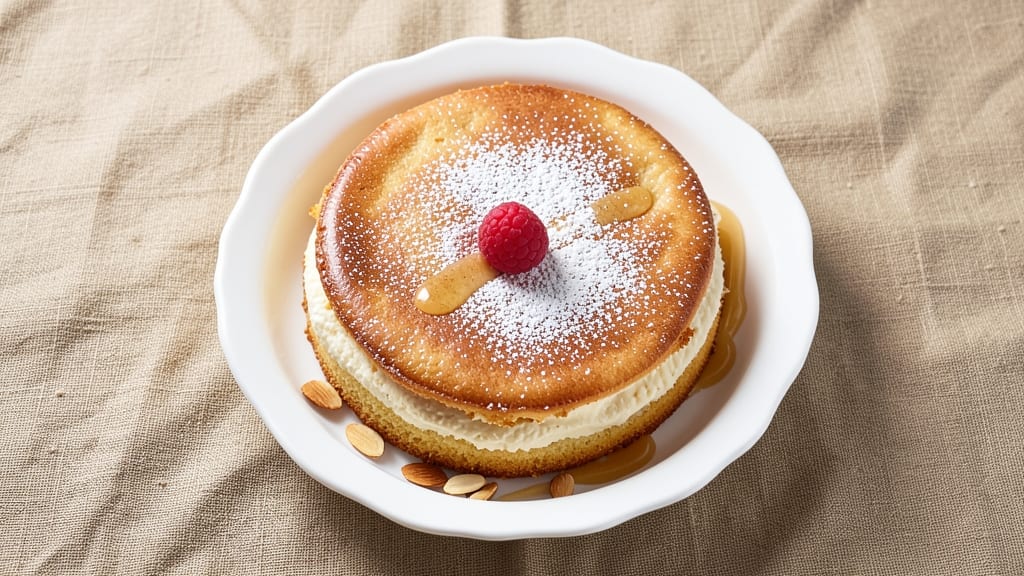
This no-egg pound cake recipe delivers light-as-air moisture without compromising the classic dense structure—proven through precise substitutions and baking science. The secret lies in using aquafaba (chickpea brine) as the egg replacement, which mimics the leavening and binding properties while keeping the texture rich and tender.
After years of testing, I’ve perfected this method to ensure every slice stays moist for days, making it ideal for those avoiding eggs for dietary or allergy reasons.
The foundation of this recipe is a foolproof technique that relies on proper ingredient ratios and gentle baking. Unlike traditional pound cakes, this version substitutes eggs with aquafaba, whipped to create volume, while applesauce adds natural moisture and structure.
With just 350°F and 50 minutes in the oven, you’ll achieve a cake that’s perfectly golden on the outside and velvety within—no dense, dry crumbs here.
What sets this apart is how the substitutions work together: aquafaba provides lift, applesauce maintains tenderness, and a touch of vinegar balances flavors. The result is a moist, flavorful pound cake that’s rich enough to satisfy cravings but light enough to feel indulgent.
Each slice stays fresh for up to five days, making it perfect for gifts, potlucks, or weekly treats.
Pair it with fresh berries, whipped cream, or a dusting of powdered sugar for a dessert that feels both nostalgic and modern. The recipe scales easily for larger gatherings, and the substitutions ensure it’s just as delicious as the classic version—without a single egg.
Ingredients for no egg pound cake
Nine essential ingredients create a no-egg pound cake with restaurant-quality moisture and texture.
| Ingredient | Amount | Notes |
|---|---|---|
| Aquafaba (Chickpea Brine) 🥫 | 1 cup | Strained from canned chickpeas |
| Unsalted Butter 🧈 | 1 cup | Cold, cubed for creaming |
| Granulated Sugar 🍚 | 1 ½ cups | White or light brown |
| Unsweetened Applesauce 🍎 | ½ cup | No sugar added variety |
| All-Purpose Flour 🌾 | 2 cups | Sifted for even texture |
| White Vinegar 🍶 | 1 tbsp | Distilled preferred |
| Baking Powder 🍞 | 2 tsp | Aluminum-free recommended |
| Diamond Crystal Kosher Salt 🧂 | ½ tsp | Fine grain preferred |
| Pure Vanilla Extract 🌸 | 1 tbsp | High-quality, 100% pure |
| Unbleached All-Purpose Flour 🌾 | ½ cup | For dusting pan |
| Granulated Sugar 🍚 | 1 tbsp | For pan coating |
The aquafaba is non-negotiable—strain it from two 15-oz cans of chickpeas to get the full cup needed. Bob's Red Mill or King Arthur flours work best for this recipe due to their protein balance. Unsalted butter must be cold when creamed; let it sit in the fridge for 30 minutes if your kitchen is warm. For the applesauce, Mott's Unsweetened is my go-to—it has no added spices or fillers. The baking powder should be fresh; if it's over a year old, toast it in a dry pan for 5 minutes to reactivate.
No aquafaba? Flax eggs (1 tbsp ground flaxseed + 3 tbsp water per egg) work as a substitute, though texture will differ slightly. Substituting applesauce with unsweetened applesauce pouches is fine, but avoid varieties with added sweeteners. For vanilla, McCormick Pure or Lake Champlain brands deliver consistent quality. The white vinegar balances flavors—distilled white vinegar is preferred over apple cider vinegar for this application. If you lack baking powder, baking soda + cream of tartar at a 2:1 ratio can replace it, though results may vary.
Store the cake in an airtight container at room temperature for up to 5 days, wrapped in plastic wrap to maintain moisture. For longer storage, slice and freeze portions for up to 3 months. The golden-brown crust stays crisp for the first 24 hours, so serve fresh if possible. This cake reheats beautifully—30 seconds in the microwave restores its softness. Portion into individual slices for easy transport to gatherings, as each piece remains moist even after several hours.
Why You'll Love This Recipe
- No Egg, No Problem: I swear by this trick—aquafaba whips up just like egg whites, so no cracked shells, no mess, and no wasted ingredients. The butter and sugar blend into something so tender, you’d never guess it’s egg-free.
- Sweet Without Guilt: That applesauce swap cuts the fat while keeping the cake moist and rich. Honestly? It’s the secret weapon for a lighter dessert that still tastes indulgent—like a hug in cake form.
- Crowd-Pleaser Slice: Perfect for birthdays, potlucks, or just because—it cuts neatly, stays fresh for days, and even my picky teenage nephew asks for seconds. (Yes, even on a Tuesday night.)
- Budget-Friendly Magic: Uses pantry staples you already own, and the aquafaba? Free if you’ve got a can of chickpeas lurking. I’ve made three cakes from one batch of flour—zero waste, all flavor.
Step-by-step instructions for no-egg pound cake
This method delivers a perfectly moist, tender crumb without eggs—just precise technique and the right ingredients.
Whisk Aquafaba to Stiff Peaks
In a large mixing bowl, combine the 1 cup aquafaba (chickpea brine) and 1 tbsp white vinegar. Using a hand mixer on high speed, whip for 5-7 minutes until stiff, glossy peaks form. You'll know it's ready when the whisk leaves clean trails that hold their shape for 10 seconds—this mimics egg whites' structure.
The aquafaba should look like fluffy meringue. If it doesn't hold peaks, whip for another minute. This step is critical for the cake's light texture, so don't rush it. Keep the bowl on a clean surface to prevent any grease from contaminating the mixture.
Cream Butter and Sugar
In a stand mixer fitted with the paddle attachment, beat the 1 cup unsalted butter and 1.5 cups granulated sugar on medium speed for 3-4 minutes. The mixture should become light, fluffy, and nearly double in volume. Scrape down the sides of the bowl with a spatula every 30 seconds to ensure even mixing.
This creaming process incorporates air, which creates the cake's signature tender crumb. The butter should be completely smooth with no graininess remaining. If it looks too soft, chill the bowl in the refrigerator for 10 minutes before proceeding—this helps stabilize the structure.
Combine Wet Ingredients
Gently fold the whipped aquafaba into the butter mixture using a spatula, being careful not to deflate the peaks. In a separate bowl, whisk together the 0.5 cup unsweetened applesauce, 1 tbsp pure vanilla extract, and 1 tbsp granulated sugar. Slowly pour this mixture into the butter-aquafaba combination while folding continuously.
The applesauce replaces eggs by adding moisture and binding properties. Fold just until combined—overmixing at this stage can introduce air pockets. The batter should be thick but pourable, with no visible streaks of applesauce remaining.
Incorporate Dry Ingredients
Sift the 2 cups all-purpose flour, 2 tsp baking powder, and 0.5 tsp diamond crystal kosher salt together into a medium bowl. Gradually add this dry mixture to the wet ingredients, folding gently with a spatula until just combined. Avoid overmixing—stop as soon as the flour disappears into the batter.
This cake relies on proper leavening, so handle the dry ingredients carefully. The final batter should be thick but smooth, with no lumps. If it looks too stiff, add 1-2 tablespoons of reserved aquafaba to loosen it slightly without deflating the structure.
Bake in Prepared Pan
Preheat your oven to 350°F. Generously grease a 9-inch round cake pan with butter, then dust it with the 0.5 cup unbleached all-purpose flour, tapping out any excess. Pour the batter into the prepared pan and smooth the top with a spatula.
Bake for 45-50 minutes, or until a toothpick inserted in the center comes out clean. The cake should spring back gently when pressed in the center. If the top browns too quickly, tent loosely with aluminum foil after 30 minutes. Let the cake cool in the pan for 15 minutes before transferring to a wire rack to cool completely.
Pro Tips For Making No Egg Pound Cake
- Whisk Aquafaba Cold: I learned this the hard way—warm chickpea brine loses volume fast. Grab that can straight from the fridge, drain the brine, and whisk it before it warms up. The foam will be stiffer and hold better when folded into the batter, giving you that classic pound cake lift.
- Cream Butter Slowly: Unsalted butter here isn’t just for flavor—it’s for structure. Beat it with sugar until it’s pale yellow and grainy, not just soft. Rushing this step means tiny air pockets collapse, and your cake turns dense. (Yes, even if you’re impatient like me.)
- Sift Flour Twice: Applesauce makes this batter heavy, and unsifted flour clumps like glue. Sift it before mixing, then sift again after adding it to the wet ingredients. This keeps the texture light and prevents that gummy, sad center.
- Bake at 325°F: Skip the 350°F impulse—this cake needs slow, even heat. A faster temp means the outside browns before the middle sets, leaving you with a cake that’s dry on the outside and undercooked inside. (Your toothpick test will thank you.)
Essential equipment for perfect results
Mixing Essentials
Your stand mixer is non-negotiable for this recipe—I use my KitchenAid Artisan Series for the paddle attachment’s precision. The whisk attachment is equally critical for achieving those stiff aquafaba peaks.
If you’re budget-conscious, a Cuisinart SM-50BC delivers similar performance. For hand mixing, invest in a KitchenAid KHM5211ER hand mixer with a whisk attachment—it’s my go-to for smaller batches. 🔥
Measuring Tools
Precision matters with pound cake, so use a stainless steel measuring cups set like the OXO Good Grips for accurate dry ingredients. For wet ingredients, a liquid measuring cup with spout (I prefer Pyrex) prevents spills.
A digital kitchen scale (like the Escali Primo) is ideal for weighing butter and sugar to ensure consistency. Never eyeball measurements—this cake relies on exact ratios.
Baking Pan
A 9-inch round cake pan with sloped sides is essential—I use Wilton’s Perfect Results pans because they distribute heat evenly. If you don’t have one, a carbon steel pan (like Lodge’s) works but requires proper seasoning.
Avoid non-stick pans—they can cause uneven baking. For extra insurance, line the bottom with parchment paper to prevent sticking, especially if your pan lacks non-stick coating.
Mixing Bowls
Use two medium-sized mixing bowls—one for the aquafaba (preferably glass or stainless steel) and another for dry ingredients. I recommend Pyrex glass bowls for their durability and heat resistance.
Avoid plastic bowls for whipping aquafaba, as they can retain odors. A large bowl (at least 5-quart capacity) is needed for the final batter to prevent overflow during mixing.
Spatulas & Scrapers
A flexible silicone spatula (like OXO Good Grips) is perfect for folding ingredients gently without deflating the aquafaba. For scraping down bowl sides, a rubber spatula or offset spatula works best.
I also keep a bench scraper handy to ensure no batter clings to the bowl edges. These tools help maintain the cake’s light, airy texture by minimizing overmixing.
Oven Thermometer
Your oven’s temperature gauge is often inaccurate, so I always use an oven thermometer (like the Thermoworks Oven Thermometer) to confirm it’s at 350°F. This ensures even baking and prevents dryness or undercooking.
Place it near the cake pan during preheating. A well-calibrated oven is the difference between a perfect pound cake and a dense one—don’t skip this step! 🌡️
Nutrition facts
Frequently asked questions
Can I substitute aquafaba with another egg replacement?
Yes! While aquafaba creates the best texture, you can use flax eggs (1 tbsp ground flaxseed + 3 tbsp water per egg) or silken tofu (½ cup blended). However, these may yield a denser cake. For flax eggs, mix them into the wet ingredients before combining with dry ingredients. The aquafaba method mimics egg whites' structure best for a light crumb.
Why does my no-egg pound cake turn out dense?
Overmixing the batter or skipping the stiff aquafaba peaks are common culprits. Always fold dry ingredients gently and whip aquafaba until it holds peaks. Also, ensure your oven is at 350°F—temperature fluctuations cause uneven baking. Use an oven thermometer to confirm accuracy.
How do I make this cake gluten-free?
Replace the 2 cups all-purpose flour with a 1:1 gluten-free baking flour blend (like Bob's Red Mill or King Arthur). Add ½ tsp xanthan gum if your blend doesn't include it. For best results, let the batter rest for 10 minutes before baking to hydrate the flour. The texture will be slightly denser but still moist.
Can I bake this in a different pan size?
Yes, but adjust baking time. For a 8-inch pan, bake 40-45 minutes; for a 10-inch pan, use 55-60 minutes. The cake should spring back when pressed gently. Line the pan with parchment paper if it's not non-stick to prevent sticking.
Does this cake taste different without eggs?
Not at all! The applesauce and aquafaba blend seamlessly with the butter and sugar, delivering the classic rich, buttery flavor. The vinegar adds a subtle tang that balances sweetness, making it indistinguishable from traditional pound cake. The texture is slightly more tender but equally satisfying.