
Breakfast & Brunch
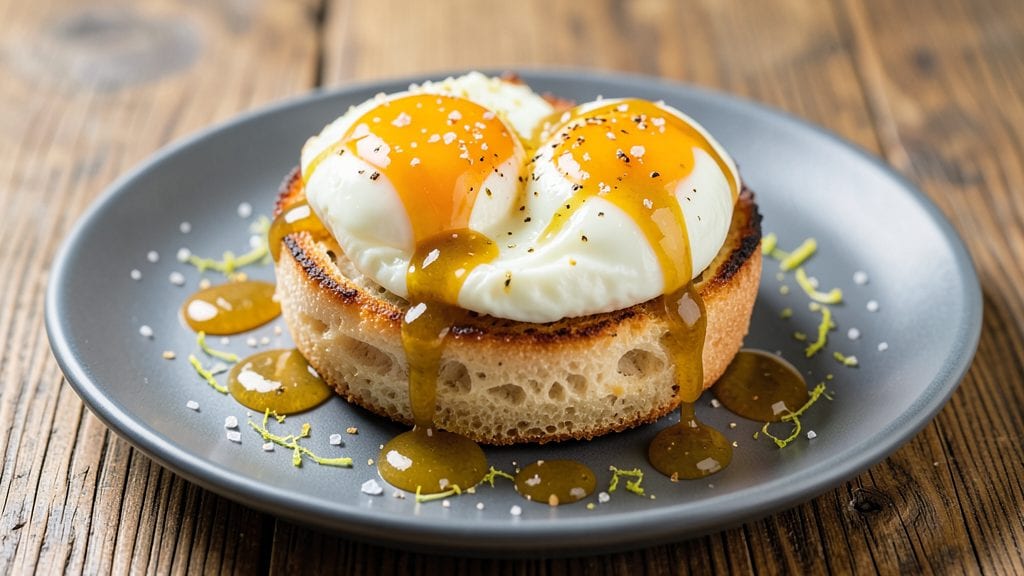
Mastering eggs royale recipe requires precision—crispy hollandaise, perfectly poached eggs, and a base that holds everything together without falling apart. After years of perfecting this classic, I’ve developed a method that delivers restaurant-quality results at home, every time.
The key lies in timing: poaching eggs just before plating ensures they stay warm and runny, while the hollandaise must be emulsified to silky perfection.
This recipe starts with a sturdy base—English muffins or toast—topped with crispy bacon or ham, then crowned with velvety poached eggs. The hollandaise, made from scratch, adds a rich, tangy finish that ties everything together.
What sets this apart is the technique: a double boiler keeps the sauce smooth, and a pinch of cayenne adds subtle heat without overpowering the delicate flavors.
By the time you plate this dish, you’ll have a presentation that looks as impressive as it tastes—golden toast, crispy protein, perfectly round eggs with runny yolks, and a glossy hollandaise drizzle.
The contrast between the crispy base, tender eggs, and velvety sauce creates a harmony that’s both satisfying and elegant.
For those who prefer alternatives, smoked salmon or avocado can replace the bacon, while a lighter hollandaise or bearnaise offers variations. Let’s break down each step to ensure your Eggs Royale is flawless, from start to finish.
Ingredients for eggs royale
Fourteen ingredients transform into a restaurant-worthy Eggs Royale with crispy hollandaise and velvety poached eggs.
| Ingredient | Amount | Notes |
|---|---|---|
| English Muffins 🍞 | 4 whole | Split and toasted to golden brown |
| Large Eggs 🥚 | 4 whole | Fresh, cold from refrigerator |
| Unsalted Butter 🧈 | ½ cup | Cold, cubed for hollandaise |
| Lemon Juice 🍋 | 2 tbsp | Freshly squeezed, strained |
| Dijon Mustard 🍯 | 1 tsp | High-quality, smooth variety |
| Salt 🧂 | ½ tsp | Diamond Crystal kosher preferred |
| White Wine Vinegar 🍶 | 1 tbsp | For poaching liquid |
| White Pepper 🌶️ | ¼ tsp | Freshly cracked for subtle heat |
| Cayenne Pepper 🔥 | ⅛ tsp | Pinch for subtle heat |
| Thick-Cut Bacon 🥓 | 4 oz | Crisped until caramelized |
| Fresh Chives 🌿 | 2 tbsp | Finely chopped for garnish |
| Water 💧 | 4 cups | For poaching liquid |
The butter and eggs form the hollandaise foundation—European-style unsalted butter from brands like Plugrá or Kerrygold emulsifies best due to its high fat content. For the poaching liquid, maintain a simmer at 160°F—any hotter and the whites overcook. Fresh eggs from local farms or Pete & Gerry's yield firmer whites and richer yolks. The bacon should be thick-cut, like Oscars or Applewood smoked, for maximum crispiness without burning. Store butter in the freezer to preserve freshness, and keep eggs refrigerated in their original carton until use.
No fresh chives? Green onions work in a pinch, though chives offer a milder, more elegant finish. Substitute white wine vinegar with apple cider vinegar if unavailable, but reduce to 1 tbsp to avoid overpowering the delicate poaching liquid. For a lighter hollandaise, replace half the butter with light cream cheese—it emulsifies beautifully while reducing richness. If you lack Dijon mustard, whole-grain mustard works but may add texture. The cayenne can be omitted entirely for a completely mild sauce, though it adds subtle depth.
Prep the hollandaise ingredients ahead and store in the fridge until ready to cook—this keeps the butter cold and ensures a smooth emulsion. Poached eggs should be plated immediately after cooking to maintain their perfect doneness. Leftover hollandaise reheats beautifully over a double boiler, adding a splash of warm water to thin it if needed. Store components separately: toasted muffins wrapped in foil, bacon in an airtight container, and hollandaise in a sealed jar with a thin layer of water on top. Assemble just before serving for optimal presentation.
Why You'll Love This Recipe
- Five-Ingredient Magic: I swear, this recipe is one of those rare dishes where you don’t need a grocery list—just eggs, butter, lemon, mustard, and a muffin. No chopping, no blending, no stress. Honestly, I’ve made this on mornings when I forgot to meal prep, and it still felt like a special treat.
- Buttery Lemon Zing: That bright lemon juice cutting through the rich butter and Dijon? It’s the kind of balance that makes you pause mid-bite. The mustard adds just enough tang to keep it from being too heavy, and the toasted English muffin soaks up all the flavor like a dream. Between us, it’s the kind of taste that makes you want to call it breakfast and brunch.
- Weeknight or Weekend Star: I’ve served these for lazy Sunday mornings with coffee, as a quick lunch with a side salad, or even as a fancy-ish appetizer when friends drop by. The English muffin base makes it feel substantial enough for a meal, but the prep is so light it won’t derail your evening. (Yes, even on a Tuesday night.)
- Leftovers That Don’t Suck: Most egg dishes dry out or get rubbery when reheated, but not this one. The butter keeps the eggs creamy, and the muffin stays soft—so I can make a batch on Sunday and grab one for my lunchbox all week. Plus, it’s cheap enough that I don’t feel guilty about making extra. My wallet and I both win.
Step-by-step instructions for crispy hollandaise and perfectly poached eggs
Mastering the perfect Eggs Royale requires precision and patience—here's how to achieve velvety hollandaise and flawless poached eggs every time.
Prepare the Poaching Liquid and Toast the English Muffins
Combine the 4 cups water, 1 tablespoon white wine vinegar, 0.5 teaspoon salt, 0.25 teaspoon white pepper, and 0.125 teaspoon cayenne pepper in a saucepan. Bring to a gentle simmer over medium-low heat—the liquid should shimmer but not boil vigorously. A controlled simmer prevents the eggs from curling or breaking.
While the liquid heats, split the 4 whole English muffins in half horizontally. Toast them in a dry skillet over medium heat until they reach a deep golden brown with crisp edges. Keep them warm while you prepare the remaining components. The toasting step is crucial—it prevents sogginess when the hollandaise is added later.
Crisp the Bacon and Make the Hollandaise Base
Cook the 4 oz thick-cut bacon in a cold skillet over medium-low heat for 8-10 minutes, stirring occasionally, until the fat renders and the bacon reaches deep caramelization. Remove the bacon from the skillet, leaving the rendered fat behind. Drain the bacon on paper towels, then chop it into ¼-inch pieces for garnish.
In a heatproof bowl, whisk together the 0.5 cup cold, cubed unsalted butter, 1 teaspoon Dijon mustard, and 2 tablespoons lemon juice. Place this bowl over a saucepan of barely simmering water, ensuring the bottom of the bowl doesn't touch the water. This indirect heat method creates the perfect emulsion for hollandaise without scrambling the eggs.
Poach the Eggs to Perfection
Crack each of the 4 whole large eggs into a small ramekin. Gently stir the simmering poaching liquid with a wooden spoon to create a gentle vortex. Drop one egg into the center of the vortex and let it poach for 3 minutes for a runny yolk or 3.5 minutes for a firmer set. Use a slotted spoon to remove the egg and drain it on a paper towel-lined plate.
Repeat with the remaining eggs, maintaining the same timing for consistency. The water temperature is critical—if it boils, the eggs will cook unevenly and may break. Strain the poaching liquid through a fine-mesh sieve to remove any loose egg whites or debris before reusing it for the next batch.
Emulsify the Hollandaise and Assemble
With the heatproof bowl still over the simmering water, gradually whisk in the 4 poached eggs, one at a time, allowing the residual heat to gently warm the hollandaise. The mixture should thicken into a smooth, glossy sauce with a silky texture. If the sauce breaks, whisk in 1 teaspoon hot water to re-emulsify it.
Spread 2 tablespoons of the hollandaise evenly over each toasted English muffin half. Top each with a poached egg, the crispy bacon, and a sprinkle of 2 tablespoons finely chopped fresh chives. Serve immediately, as the hollandaise thickens further off the heat. The contrast of crispy muffin, silky egg, and rich sauce is what makes Eggs Royale unforgettable.
Pro Tips For Making Eggs Royale
- Toast Muffins Low and Slow: English muffins burn faster than you’d think—especially on high heat. Toast them at medium-low until golden brown, then finish under the broiler for 30 seconds to crisp the top without turning them into charcoal. (Yes, even if you’re impatient like me.)
- Crack Eggs at Room Temp: Cold eggs from the fridge won’t poach evenly—they’ll clump and take forever to set. Pop them out of the carton 10 minutes before cooking, or run them under warm water for 30 seconds. Smooth, fast-cooking yolks are the difference between "meh" and "wow."
- Butter Must Be Foaming: Skip the melted butter—you want foamy butter for that classic Royale texture. Melt it in a small saucepan until it’s bubbly but not browned, then stir in the Dijon and lemon juice. Cold butter won’t emulsify right, and your sauce will split.
- Salt the Poaching Water: A pinch of salt in the poaching water (about 1 tsp per 4 cups) tightens the whites so they hold shape better. No need to go heavy—just enough to taste if you lick it. (You will lick it. We’ve all done it.)
Essential equipment for great eggs royale
Double Boiler Essentials
Your hollandaise relies on a double boiler—a heatproof bowl set over barely simmering water—to maintain precise temperature control. I use a stainless steel mixing bowl (like OXO Good Grips) with a wide base to maximize heat distribution.
The water should never touch the bowl—keep it 1-2 inches below for gentle, even warming. For extra stability, place a folded towel between the bowl and pot to prevent wobbling. 💡
Precision Poaching Tools
A fine-mesh strainer (like Eberhardt) and slotted spoon are non-negotiable for perfect poached eggs. The strainer removes debris from the poaching liquid, while the spoon ensures clean removal without breaking the whites.
I also recommend a small ramekin (or even a shot glass) to hold eggs before poaching—it prevents cracking when dropping into the water. A thermometer (like ThermoWorks Thermapen) helps monitor water temp at 160°F—critical for consistent results.
Butter and Egg Prep
Cold, cubed European-style butter (like Plugrá) is key for hollandaise—it emulsifies better than softened butter. Use a sharp chef’s knife to cut butter into ½-inch cubes for even melting. For eggs, a small bowl with a lid (like Pyrex) keeps them fresh while poaching.
I also keep a fine-mesh sieve nearby to strain the poaching liquid between batches, removing any stray egg whites that could make the next egg cloudy.
Skillet and Toasting Gear
A heavy-bottomed cast-iron skillet (like Lodge) is perfect for crisping bacon and toasting English muffins—it retains heat evenly and prevents burning. For the muffins, a pizza cutter makes clean, even splits.
I also use a digital thermometer (like Meater) to check bacon internal temp at 165°F for food safety. A wire cooling rack helps drain excess fat from bacon while keeping it crispy.
Garnish and Plating Tools
Fresh chives need a sharp pair of kitchen shears for quick, even chopping. For plating, a small offset spatula (like Mercer Culinary) helps spread hollandaise smoothly without tearing the muffin. I also keep a microplane handy to zest lemon rind for a bright garnish if desired.
A small squeeze bottle (like OXO Good Grips) makes drizzling hollandaise effortless for restaurant-style presentation.
Storage Containers
For leftovers, I store hollandaise in a glass jar with a tight-sealing lid, topped with a thin layer of water to prevent a skin from forming. Toasted muffins go in a foil-lined airtight container, while bacon is kept in a paper towel-lined box to stay crisp.
Poached eggs? Best eaten fresh, but if storing, use a single layer in a sealed container with a damp paper towel to keep them moist. 💫
Nutrition facts
Frequently asked questions
Can I make Eggs Royale without hollandaise?
For a lighter version, try a bearnaise sauce (hollandaise with tarragon and shallots) or a creamy dill sauce. You can also use a simple yogurt or sour cream drizzle with lemon zest and herbs for a quick alternative. The key is balancing richness with acidity to complement the eggs and bacon.
How do I fix broken hollandaise?
If your sauce separates, remove it from heat immediately and whisk in 1 teaspoon hot water at a time until smooth. For extra insurance, whisk in ½ teaspoon cold egg yolk—this helps re-emulsify the fat. The secret is patience: never let the sauce boil or it will curdle permanently.
Can I use smoked salmon instead of bacon?
Yes! Swap bacon for cold-smoked salmon (like Nova or lox) for a vegetarian-friendly version. Toast the salmon skin-side down in a dry pan for 1-2 minutes until crispy, then flake it over the eggs. Add a squeeze of lemon to brighten the flavors. This works especially well with a lighter hollandaise or a creamy dill sauce.
Why did my poached eggs turn gray?
Gray eggs usually mean the water was too hot or the eggs sat too long in the poaching liquid. Keep the water at a gentle simmer (160°F) and poach eggs for no longer than 3.5 minutes. Strain the liquid between batches to remove stray egg whites that can cloud the water. Fresh eggs also poach better than older ones.
What’s the best way to reheat leftover hollandaise?
Reheat hollandaise gently over a double boiler on low heat, stirring constantly until just warm. If it thickens too much, whisk in 1 teaspoon warm water to restore its silky texture. Never microwave—it will scramble the sauce. Store leftovers in an airtight container with a thin layer of water on top to prevent drying.