
Breakfast & Brunch
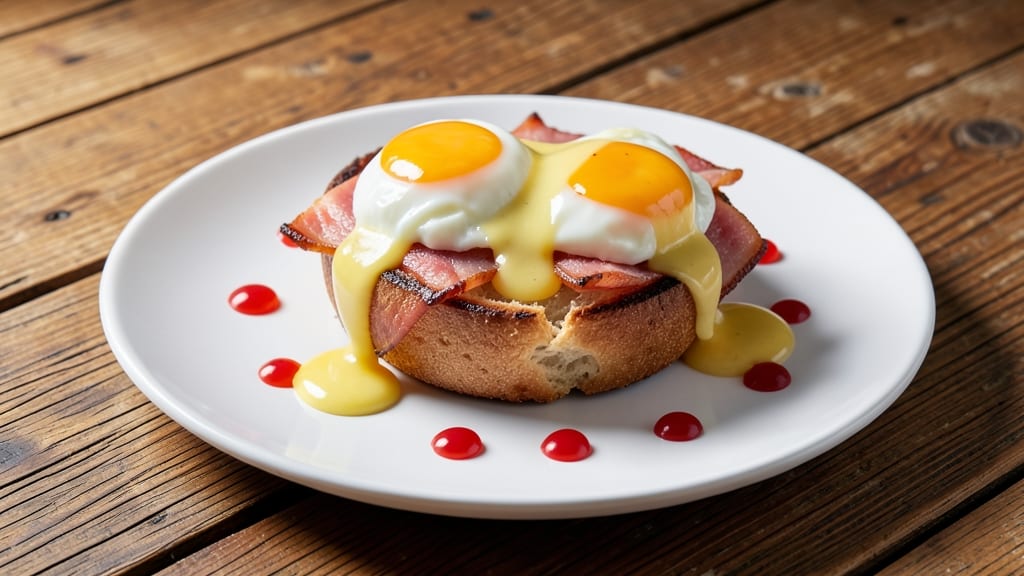
The original Eggs Benedict recipe transforms a simple breakfast into an elegant English classic that's surprisingly quick to prepare. ✨ I've perfected this method over years of weekend brunch hosting, where the combination of perfectly poached eggs, crispy English muffins, and velvety hollandaise creates a dish that feels both luxurious and approachable.
The key lies in timing each component precisely so everything arrives at the table hot and ready.
What makes this recipe truly classic is the hollandaise sauce—rich, buttery, and perfectly balanced between tangy and smooth. I use a foolproof technique that prevents curdling while maintaining that signature golden hue, and the secret weapon is tempering the egg yolks with warm broth rather than hot water.
The ham (or alternative protein) must be cooked to just the right doneness to complement rather than overpower the delicate poached eggs.
By the time you plate this dish, you'll have golden-brown English muffins topped with crispy ham, perfectly runny yolks nestled in their whites, and a generous drizzle of glossy hollandaise that ties everything together.
Each bite delivers the perfect harmony of textures—crisp, creamy, and tender—while the flavors shine with buttery richness and bright lemon notes. This is the kind of breakfast that elevates weekend mornings into special occasions.
The beauty of this classic recipe is its flexibility—you can use smoked salmon instead of ham, swap out the English muffins for toast, or add a sprinkle of fresh herbs for extra freshness.
Once you master the original, you'll understand why this dish has remained a brunch staple for over a century. Let's get started on creating your perfect Eggs Benedict.
Ingredients for eggs benedict original
Eight fresh ingredients transform weekend mornings into elegant English brunch perfection.
| Ingredient | Amount | Notes |
|---|---|---|
| Large Eggs 🥚 | 8 whole | Fresh, room temperature preferred |
| Extra-Virgin Olive Oil 🫒 | ½ cup | High quality, fruity variety |
| Unsalted Butter 🧈 | 1 cup | European-style preferred, cold |
| Lemon Juice 🍋 | 3 tbsp | Freshly squeezed, no seeds |
| English Muffins 🍞 | 8 whole | Split, toasted until golden |
| Canadian Bacon 🥓 | 8 slices | Or smoked ham, cooked crispy |
| Chicken Broth 💧 | ¼ cup | Low-sodium, warm not boiling |
| White Vinegar 🍶 | 1 tbsp | For egg poaching liquid |
| Diamond Crystal Kosher Salt 🧂 | 1 ½ tsp | For seasoning, not iodized |
| Fresh Chives 🌿 | 2 tbsp | Chopped, for garnish |
| Black Pepper 🌶️ | ½ tsp | Freshly ground, light hand |
| Cayenne Pepper 🔥 | ⅛ tsp | Pinch for subtle heat |
| Red Pepper Flakes 🌶️ | ¼ tsp | Optional for garnish |
The eggs are non-negotiable—farm-fresh, room temperature ones poach beautifully. Trader Joe's or Whole Foods carry the best quality, but any large eggs work. For the hollandaise, European-style unsalted butter (like Plugrá) melts smoother than American butter. The Canadian bacon should be pre-cooked and crispy—Oscar Mayer or Hormel are reliable. English muffins? Thomas' or Bristol brands toast to that perfect golden crunch. Fresh chives add that signature brunch freshness, so grab a bunch and chop what you don't use into other dishes.
No Canadian bacon? Smoked ham or turkey bacon works just as well—just make sure it's cooked to crispy perfection. Short on vinegar? Apple cider vinegar gives a slightly sweeter note. The kosher salt is key—Diamond Crystal dissolves perfectly, unlike table salt. For the hollandaise, if you're nervous about curdling, temper the yolks with warm broth (not hot water) and whisk constantly. The cayenne and red pepper flakes are optional but add that classic brunch kick. Need to make this ahead? Poach the eggs and assemble everything except the hollandaise—keep it warm in a 200°F oven while you make the sauce.
This dish shines when served immediately, but the components reheat beautifully. Keep hollandaise warm in a thermos or make it fresh last-minute. The English muffins stay crispy for 10 minutes at most, so assemble just before serving. Leftover hollandaise? Press plastic wrap directly on the surface to prevent a skin from forming. Store components separately—eggs and hollandaise for 1 day max, muffins and ham for 3 days. Freeze the hollandaise base (without yolks) for 3 months
Why You'll Love This Recipe
- No-Fuss Technique: I swear by the olive oil poach—no fancy equipment, just a shallow pan and patience. The eggs stay silky while the butter-toast crunch gives that real Benedict texture, and honestly? It’s the only way I’ll make them now.
- Bright & Tangy: That lemon juice cut isn’t just garnish—it’s the secret weapon. The acidity makes the yolks pop against the buttery muffin, and the olive oil adds a subtle richness you won’t find in heavy cream versions.
- Weekend Brunch Star: It’s fancy enough for lazy Sundays but unfussy enough for a Tuesday. Toast the muffins ahead, keep the poached eggs warm, and suddenly you’ve got a dish that feels special without the stress.
- Budget Breakfast Win: Fresh eggs, butter, and a lemon—what’s cheaper than that? The leftovers reheat beautifully (yes, even the poached eggs) and stretch into lunches or a quick snack when cravings hit.
Step-by-step instructions for classic eggs Benedict
Here's the timeless method that delivers that perfect balance of silky hollandaise and crispy muffin.
🍳 Step 1: Poach the Eggs to Perfection
Bring 4 cups water to a gentle simmer in a saucepan. Add the 1 tablespoon white vinegar and 1.5 teaspoons diamond crystal kosher salt—this helps the eggs hold their shape. Crack each of the 8 whole large eggs into individual ramekins (one per serving) and place them in the simmering water.
Poach for exactly 3 minutes—you'll see the whites set but the yolks remain runny and vibrant. Use a slotted spoon to transfer the eggs to a paper towel-lined plate. Pat them dry immediately to remove any excess moisture that would prevent the hollandaise from clinging perfectly.
👨🍳 Step 2: Prepare the Canadian Bacon
While the eggs poach, arrange the 8 slices Canadian bacon in a single layer on a baking sheet. Bake at 400°F for 8-10 minutes until they're golden brown and crisp around the edges. The bacon should be fully cooked but still retain some flexibility—overcooking makes it tough.
Transfer the bacon to a paper towel-lined plate to drain any excess fat. Here's the thing—if you're short on time, you can also cook the bacon in a skillet over medium heat for 4-5 minutes per side until crispy. Just make sure to drain on paper towels afterward.
🔥 Step 3: Toast the English Muffins
Toast the 8 whole English muffins in a toaster until they're golden brown and crisp on both sides. I like to cut them in half lengthwise right after toasting so they're ready to assemble immediately. Keep them warm in a 200°F oven while you prepare the hollandaise.
Here's my pro tip: If you're using a toaster oven, place the muffins on the middle rack and toast for 3-4 minutes until deeply golden. The key is getting that perfect balance of crispy exterior and soft interior—you'll know it's right when the muffin releases easily from the toaster.
🥘 Step 4: Make the Hollandaise Sauce
In a heatproof bowl, whisk together 6 egg yolks (save the whites for another use) and 1 teaspoon diamond crystal kosher salt. Place this bowl over a saucepan of simmering water, making sure the bottom of the bowl doesn't touch the water. Whisk constantly as you gradually add 1 cup unsalted butter, cut into small pieces, to the egg mixture.
Once the butter is fully incorporated and the sauce has thickened enough to coat the back of a spoon, remove the bowl from the heat. Stir in 3 tablespoons lemon juice and 0.25 cup chicken broth to balance the richness. The sauce should be glossy and smooth with a bright yellow color—if it's too thick, whisk in a few drops of hot water to reach your desired consistency.
🍽️ Step 5: Assemble and Garnish
Working quickly, place a toasted English muffin half on each plate. Top each with a slice of crispy Canadian bacon, then carefully place a poached egg on top. Spoon the hollandaise sauce generously over each egg, allowing it to cascade down the sides for that classic presentation.
Finish with a sprinkle of chopped fresh chives, a crack of black pepper, and if you're feeling adventurous, a pinch of cayenne pepper or red pepper flakes for a subtle kick. Serve immediately while the hollandaise is still silky and the muffin is warm—this dish doesn't wait!
Pro Tips For Making Eggs Benedict Original
- TOAST MUFFINS COLD: English muffins straight from the toaster are dry and crumbly—trust me, I’ve ruined dozens. Toast them before assembling, then pop them back in the toaster for 10 seconds once the hollandaise is ready. This keeps them crisp without turning to dust when the warm sauce hits.
- USE LEMON JUICE LIKE A BOSS: The original recipe calls for lemon juice, but don’t just eyeball it—measure 1 tablespoon per 4 egg yolks. Too little and the hollandaise won’t emulsify; too much and it’ll curdle. Freshly squeezed is best, but bottled works in a pinch if you add a pinch of salt to mimic acidity.
- WHISK HOLLANDAISE FAST: Heat the egg yolk-butter mix slowly over a double boiler, but don’t let it simmer—keep it at a gentle bubble. If it gets too hot, the yolks will scramble instead of emulsify. A splash of warm water in the bottom pan helps control the heat better than you’d think.
- STOP SKIPPING THE SALT: Hollandaise needs salt—more than you’d add to scrambled eggs. Start with ¼ teaspoon per 4 yolks, then taste as you go. Unsalted butter is your friend here, but if you’re using salted, cut the added salt by half. Trust me, bland hollandaise is a crime.
Essential equipment for great eggs benedict original
Poaching Essentials
For perfect poached eggs, you need a slotted spoon (like the OXO Good Grips) to gently transfer eggs without breaking them. A ramekin set (I use Corelle) keeps eggs separate and makes plating easier.
The 4-cup saucepan should have a lid—I recommend All-Clad Stainless Steel for even heat distribution. A fine-mesh strainer helps drain excess water after poaching. 🥚
Hollandaise Tools
The double boiler is non-negotiable—I swear by the Le Creuset stainless steel version. A hand mixer (like KitchenAid KHM5221CU) saves your arms when emulsifying butter into yolks.
A thermometer (I use ThermoWorks Thermapen) ensures the water stays at 160-170°F for tempering. Don’t forget a fine-mesh sieve to strain any potential curdled bits. 🥘
Bacon Prep Gear
For crispy Canadian bacon, a baking sheet (I use USA Pan) with a wire rack prevents soggy bottoms. A skillet (like Lodge Cast Iron) works for stovetop crisping. Tongs (I prefer OXO Good Grips) help flip bacon without tearing.
A paper towel roll is essential for draining excess fat. 🥓
Muffin Mastery
A toaster (like Kitchenaid KTB1506BX) gets muffins perfectly crisp. For toaster oven users, a silicon baking mat (I use EcoBamboo) prevents sticking. A sharp knife (I cut muffins with Victorinox Fibrox) ensures clean halves. Keep a small oven-safe dish for warming muffins at 200°F. 🍞
Sauce Finishing
For garnishing, tweezers (like OXO Good Grips) help place chives precisely. A microplane (I use Barbagroup) zests lemon for fresh brightness. A small sauceboat (like Le Creuset) keeps hollandaise warm while plating. Fine-mesh strainer removes any unwanted bits for a silky texture. ✨
Nutrition facts
Frequently asked questions
Why does the original Eggs Benedict recipe use Canadian bacon instead of regular ham?
The original recipe calls for Canadian bacon because it's leaner and has a more delicate, slightly sweet flavor that complements the rich hollandaise without overpowering the poached eggs. Unlike regular ham which can be salty or fatty, Canadian bacon (back bacon) is cured differently, giving it a milder taste that pairs perfectly with the English muffin's crisp texture and the sauce's buttery richness.
Can I make hollandaise sauce ahead of time?
While you can't make the complete sauce ahead, you can prep the base. Whisk together the egg yolks, salt, and lemon juice, then refrigerate in an airtight container for up to 12 hours. When ready to serve, melt the butter separately and temper the yolks with warm broth before combining. The sauce must be made fresh to stay silky and prevent curdling.
What's the secret to perfectly poached eggs?
The key is using fresh eggs at room temperature and maintaining a gentle simmer—not a rolling boil—in your poaching liquid. Add 1 tablespoon white vinegar to the water to help the whites coagulate faster. Poach for exactly 3 minutes for runny yolks, then pat dry immediately to prevent the hollandaise from sliding off.
Is there a vegetarian version of this classic?
Swap the Canadian bacon for smoked salmon, avocado slices, or grilled mushrooms. For the protein, use tofu bacon or tempeh that's been marinated in soy sauce and maple syrup. The hollandaise and poached eggs remain the same—just adjust the seasoning to complement your vegetarian protein.
Why did my hollandaise sauce break?
Hollandaise separates most often when the eggs get too hot or aren't whisked constantly. Always use a double boiler and keep the water at a gentle simmer (160-170°F). If it breaks, strain through a fine-mesh sieve and try to re-emulsify by whisking in a little warm water or broth. For next time, temper the yolks with warm broth before adding butter.