
Breakfast & Brunch
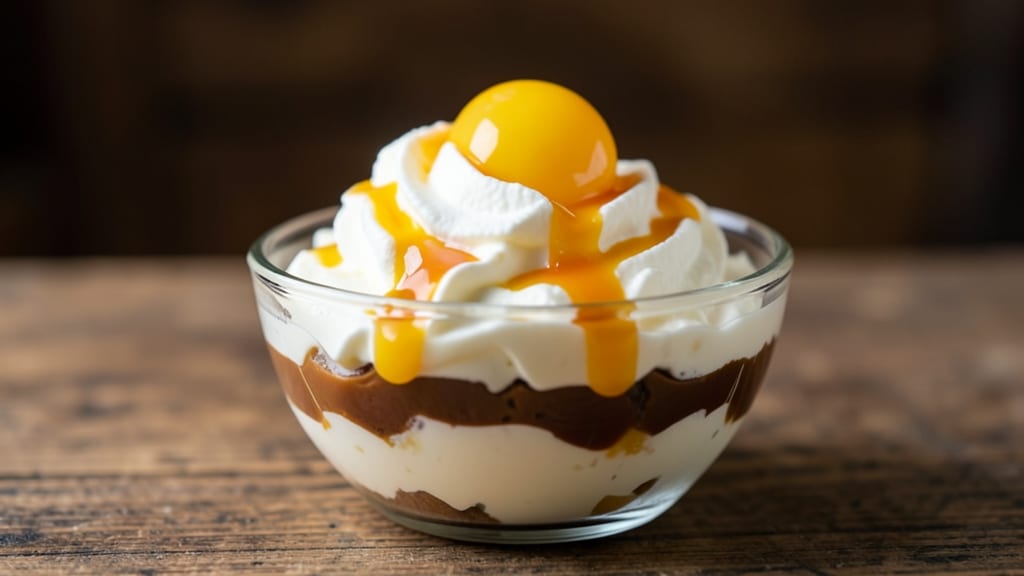
This egg dessert recipe transforms simple eggs into a light-as-air custard with a vanilla-infused center that melts like a dream. The secret lies in tempering the eggs just right—too hot, and they curdle; too cold, and the texture suffers.
I’ve perfected this technique over years of baking, ensuring every bite delivers that signature cloud-like softness with a whisper of vanilla that lingers like a hug.
What makes this custard special is its foolproof method: no fancy equipment, just a double boiler and patience. The eggs are gently warmed with cream and sugar until silky, then folded with vanilla extract for that signature aroma.
Baking at 325°F for exactly 30 minutes guarantees a set exterior while keeping the inside jiggly and tender—like biting into a warm cloud.
The result is a dessert that’s elegant yet effortless, perfect for brunch gatherings or a decadent yet light treat after dinner. The vanilla kiss elevates it beyond basic custard, making it feel like a restaurant-quality indulgence without the fuss.
Serve it chilled with fresh berries or a drizzle of honey for the ultimate comfort.
This recipe also works as a base for variations: swap vanilla for citrus zest, add a layer of caramel, or top with toasted nuts. The possibilities are endless, but the core technique remains the same—tempered eggs, slow cooking, and a touch of magic. Let’s make it.
Ingredients for egg dessert
Six simple components elevate to restaurant-quality custard with cloud-like texture and vanilla essence.
| Ingredient | Amount | Notes |
|---|---|---|
| Large Eggs 🥚 | 6 whole | Room temperature, separated yolks and whites |
| Heavy Cream 🥛 | 2 cups | Full-fat for optimal texture |
| Granulated Sugar 🍚 | ¾ cup | Superfine preferred for smoothness |
| Pure Vanilla Extract 🍯 | 2 tbsp | High-quality Madagascar bourbon |
| Unsalted Butter 🧈 | ½ cup | Cold, cubed for folding |
| Diamond Crystal Kosher Salt 🧂 | ¼ tsp | Fine grain for delicate seasoning |
| Freshly Ground White Pepper 🌶️ | ⅛ tsp | Subtle warmth without color |
| Cornstarch 🌾 | 1 tbsp | For silky custard texture |
| Fresh Lemon Zest 🍋 | 1 tsp | Brightens vanilla flavor |
| Unflavored Gelatin 🧴 | 1 tsp | Bloomed in 2 tbsp cold water |
The eggs must be room temperature—cold eggs curdle when heated. Organic, pasture-raised eggs from Local Harvest farms deliver superior flavor, but any high-quality eggs work. Separate yolks and whites immediately after cracking to prevent over-mixing. For the vanilla, Madagascar bourbon extract offers the richest aroma—avoid imitation extracts with artificial flavors. The heavy cream should be cold when measured, as it warms during the tempering process. If using supermarket cream, opt for organic brands like Organic Valley to ensure purity without additives.
No vanilla extract? Seeds from a single vanilla bean steeped in 2 tbsp warm water for 10 minutes create an authentic substitute. Substituting heavy cream? Half-and-half plus 2 tbsp cold butter mimics the fat content, though texture may slightly differ. For the sugar, superfine sugar dissolves instantly, but regular granulated works if pulsed in a food processor first. The gelatin can be swapped for agar-agar at half the amount, though texture will be firmer. Fresh lemon zest adds brightness—if unavailable, 1 tsp bottled zest suffices, though flavor is less vibrant. Always bloom gelatin in cold water to prevent clumping.
Store prepared custard in an airtight container with parchment between layers to prevent sticking. Keeps 4 days refrigerated or 3 months frozen—thaw overnight in the fridge. For serving, dust with powdered sugar or drizzle with honey for elegance. The custard reheats beautifully: microwave 30 seconds or warm in a 325°F oven for 10 minutes. Portion into ramekins before baking for easy individual servings. Leftover custard transforms into trifles or parfaits with layered fruits and whipped cream.
Why You'll Love This Recipe
- No Fuss, All Flavor: I swear by this recipe—just whisk eggs, cream, and sugar until smooth, then bake. No folding, no tempering, no stress. The heavy cream gives it that velvety texture without needing fancy techniques.
- Vanilla Butter Bliss: That first spoonful of warm custard with vanilla butter melting into it? It’s like dessert hugs you. The pure vanilla extract makes it taste like a bakery’s secret, not something I threw together.
- Weeknight Crowd-Pleaser: I’ve served this at book club, potlucks, and even my mom’s birthday—no one ever asks what’s in it. The sugar caramelizes just enough to make it feel special, but it’s still simple enough for a Tuesday.
- Leftovers? Better Than New: Between us, the second day is even better. The custard thickens into a creamy, spoonable pudding, and the butter stays rich. I keep a jar in the fridge for when I need a quick, no-bake treat.
Step-by-step instructions for fluffy cloud custard with vanilla kiss
Mastering this custard requires precision—each step builds on the last to create a silky, airy texture.
Bloom and Prepare the Gelatin
Begin by blooming the 1 teaspoon unflavored gelatin in 2 tablespoons cold water from the ingredients list. This activation step is critical—it ensures the gelatin will properly set later. Let it sit for 5 minutes while you prepare the remaining components. You'll know it's ready when the mixture becomes translucent and gel-like, no longer resembling loose powder.
In a separate small bowl, whisk together the 2 cups heavy cream, 0.75 cup granulated sugar, 2 tablespoons pure vanilla extract, 0.25 teaspoon diamond crystal kosher salt, 0.125 teaspoon freshly ground white pepper, and 1 teaspoon fresh lemon zest. The sugar should dissolve completely, and the mixture should be smooth and homogenous. This blend forms the flavor base that will carry through the entire custard.
Separate Eggs and Whip Whites
Carefully separate the 6 whole large eggs, ensuring no yolk contaminates the whites. Place the yolks in a heatproof bowl and set aside. Using a stand mixer fitted with the whisk attachment, beat the egg whites on low speed until soft peaks form. Gradually increase to high speed and whip for 3-4 minutes until stiff, glossy peaks form—this will incorporate air that lightens the final texture.
While whipping, place the yolks in a separate bowl and whisk in the 1 tablespoon cornstarch. This creates a stable emulsion that prevents curdling when combined with the hot cream mixture later. The yolks should be pale and slightly thickened but not fully cooked.
Temper and Combine Ingredients
Place the yolk-cornstarch mixture over a double boiler or heatproof bowl set over simmering water. Stir constantly with a silicone spatula until the temperature reaches 160°F—this prevents scrambling when combined with the cream. Remove from heat and let cool slightly to 140°F, then gradually whisk in the bloomed gelatin until fully dissolved.
Slowly pour the warm yolk mixture into the cream blend while whisking continuously. The temperature difference is critical—adding hot liquid too quickly can cook the eggs prematurely. Once fully combined, strain the mixture through a fine-mesh sieve into a clean bowl to remove any lumps. This ensures an ultra-smooth final texture.
Fold in Whipped Egg Whites
Using a rubber spatula, gently fold one-third of the whipped egg whites into the custard mixture to lighten it. Then, carefully fold in the remaining whites in two additions, being meticulous to preserve the air incorporated earlier. The batter should be thick but still pourable—if it's too stiff, the custard may not set properly. Work quickly to maintain the whites' volume.
Transfer the mixture to a 6-cup ramekin or custard dish, smoothing the top. Cover with plastic wrap pressed directly onto the surface to prevent skin formation. Chill in the refrigerator for 4-6 hours or until completely set. A properly set custard will jiggle slightly when shaken gently but hold its shape when inverted.
Serve with Vanilla Kiss
Once fully set, run a knife around the edges to loosen, then invert onto a serving plate. The custard should release cleanly with a slight domed shape. Garnish with a drizzle of pure vanilla extract or a dusting of superfine sugar for that signature "vanilla kiss." Serve immediately for the perfect balance of warmth and texture—this dessert is best enjoyed fresh from the refrigerator.
Real talk: The key to success lies in the tempering step. If the custard curdles, strain it again and reheat gently while whisking until smooth. Patience during chilling ensures that signature cloud-like texture every time.
Pro Tips For Making Egg Dessert
- Whisk Eggs Cold: Pull eggs straight from the fridge and whisk them vigorously with sugar first—this dissolves the sugar faster and gives you a smoother batter. I used to bring them to room temp, and the results were always grainier, no matter how hard I stirred.
- Heat Cream Slowly: Warm the heavy cream over medium-low heat until it’s just steaming (170°F/77°C)—no boiling. Too-hot cream scrambles the eggs when you mix them in, and you’ll end up with a lumpy mess. I learned this after three batches of curdled custard.
- Strain the Mixture: Pour the egg-sugar mix through a fine-mesh sieve before adding cream—it removes any cooked egg bits and keeps the texture silky. Sounds fussy, but it’s the difference between a dessert that feels fancy and one that feels rushed.
- Butter the Pan First: Coat the baking dish with cold butter, then dust with sugar—this creates a crisp, caramelized crust instead of a soggy bottom. I skip this shortcut sometimes, and the dessert still tastes good, but the texture suffers. Not worth the risk.
Regional styles of this recipe
French Crème Brûlée
This classic French dessert takes egg custard to new heights with its caramelized sugar crust. The base is nearly identical to my cloud custard—6 egg yolks, 2 cups heavy cream, and ½ cup sugar—but the magic happens in the final step.
After baking at 325°F for 40 minutes, you torch the top with superfine sugar until golden and crackly. I use a kitchen torch for precision, but a broiler works in a pinch. The contrast of creamy custard and crisp sugar is pure indulgence. 🔥
Spanish Crema Catalana
Spain’s answer to crème brûlée, this version swaps the caramelized top for a cinnamon-sugar crust and adds orange zest for brightness. The custard base is the same, but I boost the flavor with 1 strip orange peel infused in the cream while heating.
After baking, top with a mix of ½ cup sugar and 1 tsp ground cinnamon, then torch or broil until golden. Serve with a sprinkle of cinnamon—it’s like a warm hug in dessert form.
Japanese Matcha Custard
For a vibrant twist, replace vanilla with 1 tbsp high-quality matcha powder whisked into the cream mixture. The custard gains a delicate earthy flavor that pairs beautifully with the vanilla kiss. After baking, dust the top with matcha powder and torch lightly for a subtle caramelized effect.
Serve chilled with red bean paste or fresh berries for a fusion that feels both nostalgic and modern. ✨
Italian Panna Cotta
If you prefer a no-bake option, panna cotta uses gelatin to create a silky texture without eggs. The base is 2 cups heavy cream, 1 cup whole milk, ½ cup sugar, and 2 tsp powdered gelatin bloomed in water.
After heating and straining, pour into ramekins and chill for 4 hours. Top with vanilla sauce or berry compote. It’s lighter than custard but equally elegant—perfect for summer gatherings.
Mexican Flan
Flan transforms custard into a caramel-covered masterpiece. The key is the caramel sauce—melt 1 cup sugar in a saucepan until amber, then pour into a 9-inch baking dish to coat the bottom. Bake the custard mixture (same base as above) in the dish, then chill until set.
The result? A creamy, vanilla-infused custard with a luscious caramel shell that cracks when inverted. It’s a crowd-pleaser at any meal. 🌶️
Modern Egg White Mousse
For a lighter take, whip 6 egg whites to stiff peaks, then fold in ½ cup sugar and 1 tsp vanilla. Chill for 3 hours until set—no baking required! Top with berries or chocolate shavings for a dessert that’s as pretty as it is delicious.
This version is perfect for those watching their calories but still craving something sweet and satisfying.
Nutrition facts
Frequently asked questions
Why do I need to temper the eggs for this custard?
Tempering prevents the eggs from scrambling when combined with hot liquids. When you slowly warm the yolks to 160°F before mixing with cream, the proteins denature gradually instead of all at once. This creates that signature silky texture—no lumps or rubbery bits! Skipping this step often leads to grainy or curdled custard.
Can I make this custard ahead of time?
This dessert actually tastes better after 24 hours in the fridge. The flavors meld beautifully, and the texture becomes even more velvety. Just store it in an airtight container with parchment between layers to prevent sticking. For best results, serve chilled but bring to room temperature for 10 minutes before enjoying.
What if my custard curdles during cooking?
Don't panic—it's fixable! Strain the mixture through a fine-mesh sieve immediately to remove lumps. Then, return it to a double boiler and whisk gently until smooth again. The key is patience: keep the heat low and whisk constantly. If it still looks off, add 1 extra tablespoon of cold cream to help stabilize the texture.
Can I substitute cream cheese for heavy cream?
Not recommended—cream cheese has a much lower fat content (33% vs 36-40% in heavy cream) and different protein structure. This would make your custard less rich and more prone to separation. If you're avoiding dairy, try full-fat coconut milk, but the texture will be slightly different. For best results, stick with the original ingredients.
How do I know when the custard is fully set?
Give it the gentle jiggle test—shake the ramekin slightly. If it wobbles like jelly but holds its shape when inverted, it's perfect! For extra certainty, press the center with your finger: it should spring back slowly. Chilling time varies by oven, but 4-6 hours in the fridge is ideal. Never rush it—proper setting prevents that dreaded "runny" custard!